The fruit of the Spirit can’t be manufactured. Galatians 5 shows us where it grows.
I heard a preacher say something recently that has stayed with me. The United Nations, he said, spends billions of dollars year after year, and the world only grows more chaotic. His diagnosis was simple: there is no fruit of the Spirit. No love. No patience. No self-control. No transformed hearts.
He is right. I want to say that clearly before I say anything else.
Picture a world thick with patience. Neighbors who are gentle with one another. Leaders who are not self-seeking. Rivals who choose kindness over revenge. The fruit of the Spirit really is the answer to the depravity and chaos we live in.
But that answer leaves the real question hanging in the air. The multimillion-dollar question is not what we need. It is how we get there.
The Right Answer, the Missing Power
Here is the danger. If we simply tell people that love, joy, and peace are the goal, and then send them off to try harder, we have turned the fruit of the Spirit into a self-improvement project. Lean in. Do your best. Be a little kinder this week than last.
It will never work.
Paul does not call these things the fruit of effort. He calls them the fruit of the Spirit. They grow out of a life that God himself is working in. This is where Reformed theology shines, because it refuses to flatter us. It says plainly: you cannot do this. But Christ, by his Spirit, can do it in you.
Paul knew the end of his own strength. “Wretched man that I am! Who will deliver me from this body of death? Thanks be to God through Jesus Christ our Lord!” (Romans 7:24–25). And a few lines later: “For the law of the Spirit of life has set you free in Christ Jesus from the law of sin and death” (Romans 8:2).
Set free. Not by trying. By being empowered.
So how exactly does the Holy Spirit do it? Galatians 5 tells us.
Walk by the Spirit
The famous list of the fruit sits in verse 22, but you have to read the whole chapter to understand it. The key is verse 16:
“But I say, walk by the Spirit, and you will not gratify the desires of the flesh. For the desires of the flesh are against the Spirit, and the desires of the Spirit are against the flesh, for these are opposed to each other, to keep you from doing the things you want to do.” (Galatians 5:16–17)
The ESV Study Bible puts it in a sentence I keep coming back to: “The only way to conquer the flesh is to yield to the Spirit.” The notes go on to explain that “walk by the Spirit” carries two ideas at once: direction and empowerment. We make our decisions according to the Spirit’s guidance, and we act in the power the Spirit supplies. And in Scripture, to “walk” describes not a single step but the pattern of a whole life.
Direction and power. We need both.
First, conviction. We have to be persuaded that the desires of the flesh are actually wrong, and only the Holy Spirit can do that in a human heart. Second, strength. Once we know something is wrong, where do we find the power to say no when the temptation arrives? That power, too, comes from the Spirit.
This is what walking by the Spirit means. Our will is not bypassed. It is persuaded and transformed by the Spirit through the Scriptures, until it becomes available to God.
Why You Cannot Out-Muscle the Flesh
Notice what Paul does not say. He does not say, “Fight the flesh, and you will produce the Spirit.” He says, “Walk by the Spirit, and you will not gratify the flesh.”
That order matters. When we try to fight the desires of the flesh with the strength of the flesh, we have already joined the side we are fighting. Fallen human nature drifts toward its own desires automatically. Flesh cannot defeat flesh. Only the desires of the Spirit can stand against the desires of the flesh, because, as verse 17 says, these are opposed to each other.
This is why preaching that exposes the immorality of the world and calls people to bear good fruit, though it is correct, so often leaves them stranded. It hands them the truth without the grace. And grace is not only God’s kind disposition toward us. It is God’s own power in Christ Jesus, the grace that, as Paul tells Titus, trains us to renounce what is wrong and to live what is right (Titus 2:11–12).
Our Default Setting
Paul names the flesh with uncomfortable specificity:
“Now the works of the flesh are evident: sexual immorality, impurity, sensuality, idolatry, sorcery, enmity, strife, jealousy, fits of anger, rivalries, dissensions, divisions, envy, drunkenness, orgies, and things like these. I warn you, as I warned you before, that those who do such things will not inherit the kingdom of God.” (Galatians 5:19–21)
“The desires of the flesh” are not just bodily cravings. They are the whole range of ordinary desires of our fallen nature, from sensuality to rivalry, from idolatry to envy. These are our default settings. Left alone, they keep showing up and popping out.
The only way to weaken them, starve them, and finally put them to death is to walk by the Spirit.
The Spirit Goes on the Attack
Then Paul turns:
“But the fruit of the Spirit is love, joy, peace, patience, kindness, goodness, faithfulness, gentleness, self-control; against such things there is no law.” (Galatians 5:22–23)
The ESV Study Bible makes an observation here that I love. The Spirit does not fight sin only on defense. He also goes on offense, growing in Christians the very marks of godly character that we see in Jesus throughout the Gospels.
This is spiritual warfare. We are not merely bracing ourselves for the next assault from the enemy or from our own hearts. We are not meant to live in retreat. The Spirit advances, and he advances by making us more like Christ.
Look at what he produces. Love comes first, because it is the greatest, and because it most clearly reflects the character of God (1 Corinthians 13). Joy follows close behind: when we rejoice in God’s salvation, it shows our affections are resting in the right place (John 15:11). Peace is what grows when sinners are reconciled to God and are no longer his enemies, so that we can approach him with confidence and freedom (Romans 5:1–2; Hebrews 4:16). Patience means we have surrendered our own timetable, and our own ideas about how the world ought to run, to God’s plan. Kindness is goodness, generosity, and sympathy toward others, and it too mirrors God himself, whose kindness leads us to repentance (Romans 2:4). Goodness, faithfulness, gentleness, and self-control complete the portrait. Put them together and you get a face. It is the face of Jesus.
Do you want that fruit in your life? I hope so, because nothing matters more. The gifts of the Spirit and the fruit of the Spirit belong together, and I thank God for both. But you could cast out demons every day, lay hands on the sick every day, and lead people to Christ every day, and if this fruit is missing, Paul says you are a noisy gong. “If I have not love, I am nothing” (1 Corinthians 13:2).
Keeping in Step
Paul brings the chapter to a point in verse 25: “If we live by the Spirit, let us also keep in step with the Spirit.”
Life comes first. Then the walk. Jesus told Nicodemus, “Truly, truly, I say to you, unless one is born of water and the Spirit, he cannot enter the kingdom of God. That which is born of the flesh is flesh, and that which is born of the Spirit is spirit” (John 3:5–6).
Flesh can only ever give birth to flesh. The Spirit who gave us new birth is the same Spirit we now keep pace with, step by step, day by day. From beginning to end, it is supernatural.
Where the Fruit Begins
So we can never tell people to produce the fruit of the Spirit by gritting their teeth and pressing in harder. It is fruit. It grows from walking by the Spirit, letting him direct our lives and empower our choices.
What does that look like on an ordinary day? Let me give you a picture of how I try to walk by the Spirit.
For me, it begins early in the morning, before anything else. The phone stays face down. The inbox stays closed. Before the day can make its demands, I sit with the Lord who loved me and gave himself for me, and we talk. Not in a stiff, scripted way, but in honest, organic conversation, the way you talk with someone you love.
I do this because Jesus did it. “And rising very early in the morning, while it was still dark, he departed and went out to a desolate place, and there he prayed” (Mark 1:35). If the Son of God began his days in the Father’s presence before the crowds found him, how much more do I need to?
This is not legalism. It is following Christ. And I have been deeply empowered by it. Half an hour or more, first thing, sets the pace for the rest of the day.
In that time, I place the calling of God and the work in front of me into his hands. I acknowledge again Christ’s calling on my life. Often I pray something very simple: O Lord, set me apart for the work you have called me to do.
And I confess, every morning, that I cannot do any of it in my own strength. Paul gave me the words for that long ago: “I have been crucified with Christ. It is no longer I who live, but Christ who lives in me. And the life I now live in the flesh I live by faith in the Son of God, who loved me and gave himself for me” (Galatians 2:20). When I pray that verse back to God, something shifts. I feel his power and his nearness.
I also pray through the Lord’s Prayer, slowly, making it my own. Our Father in heaven, hallowed be your name. Your kingdom come, your will be done, on earth as it is in heaven. I pray it over my wife and my kids, over my family, over the Bible study group in my office, over the people I love, over this city, and over our nation. His kingdom, his will, here, in these lives.
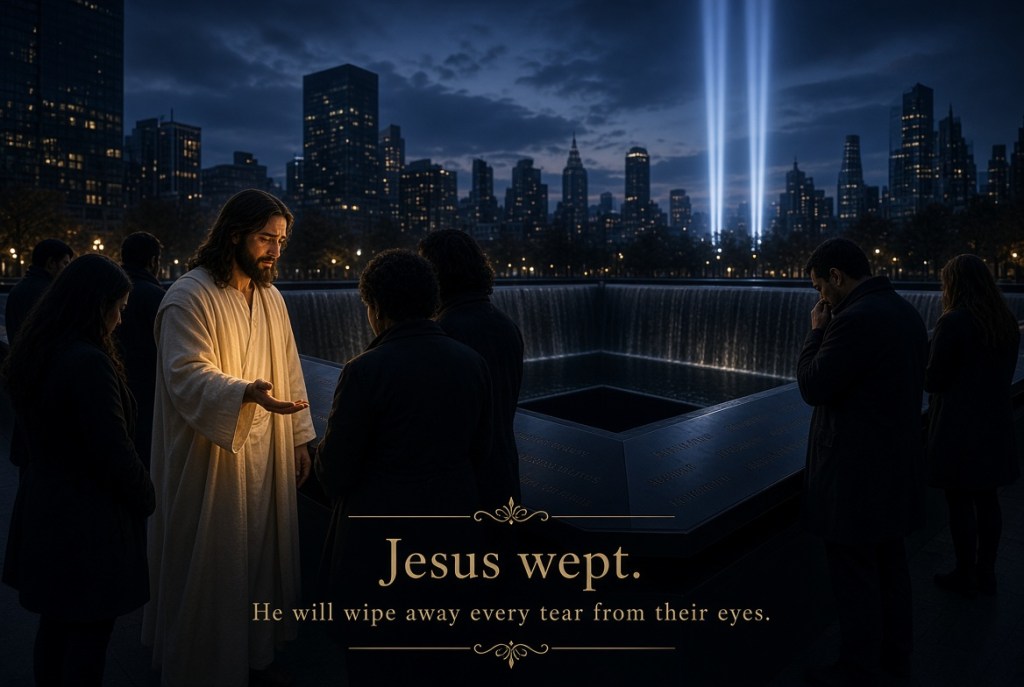
I have been stirred lately by what God is doing among young people in New York. Church of the City New York has seen thousands of Gen Z men and women come into its life, and they have set up hour-long lunchtime prayer gatherings every weekday, even inside places like Goldman Sachs and other major Manhattan firms. Prayer in the towers of finance. That is something.
It prompted me. This coming week, I am starting a thirty-minute prayer time with the Bible study group in my own office.
Set Apart
I say all this to make one point clear. Walking by the Spirit is not only asking God to make me more patient, more kind, more gentle, though those prayers matter deeply. It is also yielding to his call.
In Antioch, as the church was worshiping and fasting, “the Holy Spirit said, ‘Set apart for me Barnabas and Saul for the work to which I have called them'” (Acts 13:2). To be set apart is to be dedicated. It is sanctification: a life handed over to God for his purposes. And a life set apart is exactly the soil where the fruit of the Spirit grows.
Notice, too, that the Spirit spoke. The church in Antioch heard the Holy Spirit’s direction in a gathering of worship, and that is the gifts of the Spirit at work. This is why I believe the fruit of the Spirit and the gifts of the Spirit, prophecy included, go hand in hand. The fruit shapes who we are. The gifts equip what we are sent to do. A Spirit-filled life needs both.
To Change the World
The preacher was right. The world will not be fixed by billions of dollars. To change the world, we must first be changed, from the inside out, until the fruit of the Spirit begins to show in our love, our patience, our self-control.
But the fruit of the Spirit on its own is not the whole story. The same Spirit who grows fruit in us also gives gifts to us, power for the mission he has set us apart to do. That is where I want to go next time.
For now, it starts somewhere small. A dark morning. A quiet room. A person on their knees, saying, Lord, I cannot do this. Set me apart. Christ, live in me.
Then they stand up and take the first step.
Scripture quotations are from the ESV® Bible (The Holy Bible, English Standard Version®), © 2001 by Crossway. Used by permission. All rights reserved.