Podcast
Gospel Centered Life and Theology
Setting the Stage: Awakening in a Dry Land
The Spiritual Climate of the Colonies
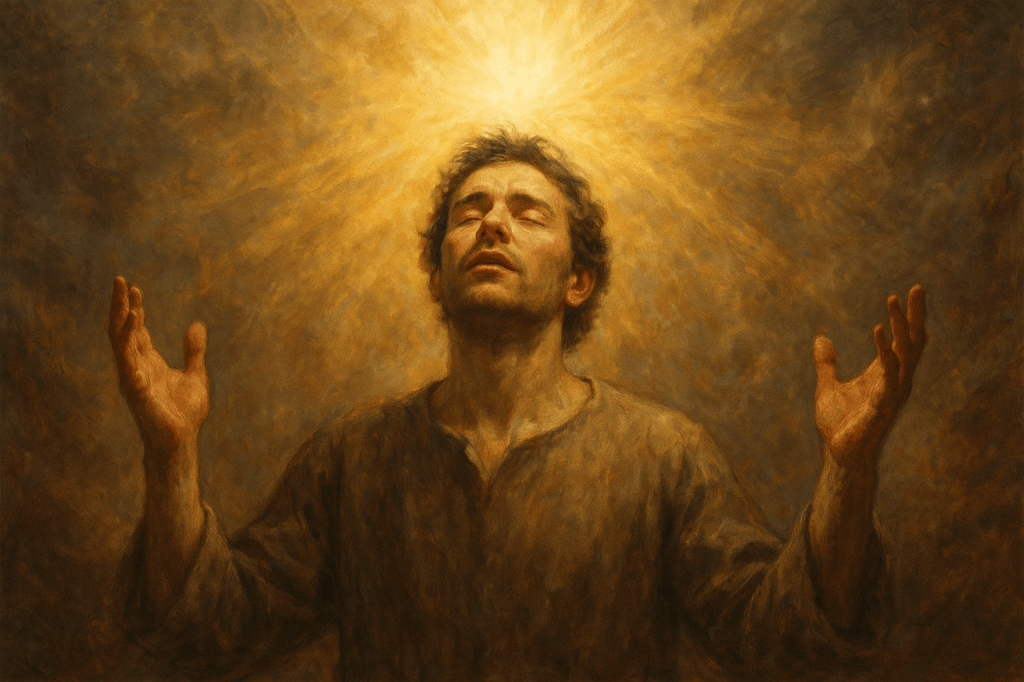
By the early 18th century, the American colonies were marked by spiritual lethargy, formalism in the churches, and moral decline. Into this dry and dusty religious landscape, the Holy Spirit moved with power. The First Great Awakening (1730s–1740s) was not merely an emotional uprising but a sovereign work of God marked by deep repentance, biblical preaching, and spiritual renewal. It stands as an exemplar of revival—one that maintained theological fidelity while opening wide the doors to the supernatural work of the Spirit.
The churches of Edwards’s day were stuck in routine. Spiritual lethargy meant the absence of the convicting power of the Holy Spirit, both personally and corporately. Worship was dry, mechanical, and formalistic. It was precisely in this barren setting that God poured out His Spirit with fresh vigor, igniting revival.
The Marks of True Awakening
The First Great Awakening was not merely emotional, though emotions certainly played a role. Revival touches the whole person—mind, will, and affections. But emotion alone is not revival. True awakening is a sovereign work of God marked by repentance, biblical preaching, and spiritual renewal.
The defining feature of Edwards’s revival was not simply stirring sermons or outward excitement but lasting transformation. Preaching without renewal would have amounted to little more than intellectual “hot air.” But spiritual renewal followed biblical preaching. That is the essence of authentic awakening: repentance undergirded by truth.
The real test of revival is whether new believers persevere in faith and grow in Christ. Are they discipled with grace-filled, God-centered instruction, or left with shallow teaching? A Spirit-born revival must be sustained not only by experience but also by sound doctrine. The First Great Awakening remains astounding for its depth: repentance, tears of remorse, cries to God, and powerful biblical preaching.
This reflects the pattern in Acts 2:
“And they devoted themselves to the apostles’ teaching and the fellowship, to the breaking of bread and the prayers. And awe came upon every soul, and many wonders and signs were being done through the apostles. And all who believed were together and had all things in common.” (Acts 2:42–44, ESV)
The Need for Awakening Today
By comparison, today’s churches fall short. In 21st-century America, do we not also feel spiritual lethargy and moral decline? Perhaps it is less about rigid formalism and more about a pervasive dryness: a lack of passion for God, a weak desire for His gifts, signs, and wonders, and congregations running in “maintenance mode.”
What we desperately need is a fresh spiritual reawakening both inside and outside the church. The First Great Awakening gives us both a model and a warning. It shows us what God can do in a time of deep spiritual drought, and it reminds us not to settle for a faith that is shallow, passionless, or powerless.
Edwards and the Gifts of the Spirit
This Awakening also offers a crucial historical case study for modern Reformed believers wrestling with the legitimacy of charismatic gifts. It demonstrates that the Spirit’s power need not contradict the confessional Reformed tradition but can in fact enrich it.
Jonathan Edwards did not believe the supernatural manifestations of the Spirit were limited to Pentecost or confined to the apostolic age. In A Faithful Narrative of the Surprising Work of God (1737) and other writings, Edwards argued that the dramatic phenomena observed during the Awakening—deep conviction of sin, visions, emotional outpourings—were consistent with the Spirit’s ongoing work in revival, though distinct from the once-for-all, foundational events of Pentecost (Acts 2).
Here Edwards directly challenged a common Reformed cessationist claim: that visions, prophecy, and tongues were confined to the apostolic era for the laying of the church’s foundation, and that once Scripture was complete, such gifts ceased. Edwards disagreed. He personally witnessed and affirmed the Spirit’s extraordinary manifestations and did not believe they were restricted to the first century.
This distinction has massive implications. It clarifies the difference between the revelatory gift of Scripture, which indeed closed with the apostolic age, and the prophetic or supernatural operations of the Spirit, which continue throughout church history.
While Edwards affirmed both the sufficiency and the finality of Scripture, he did not equate every prophetic or supernatural activity with the writing of new Scripture. In doing so, he upheld the authority of the Bible while leaving room for the Spirit’s ongoing, life-giving work—something we too must embrace today.
Conclusion: A Pattern for Reformed Charismatics
The First Great Awakening reminds us that authentic revival is not a contest between doctrine and experience, or between Reformed theology and charismatic gifts. In fact, it shows us that these two realities are meant to converge. The Word of God provides the foundation, guarding us from error and excess; the Spirit of God supplies the fire, preventing our faith from devolving into lifeless formalism.
Edwards’s legacy is a call to hold both together. He upheld the sufficiency of Scripture, yet he welcomed the surprising works of the Spirit. He preached deep, God-centered theology, yet he did not quench the supernatural gifts that brought conviction, repentance, and renewal. This is precisely the pattern modern believers need: a revival that is both theologically rooted and Spirit-empowered.
For Reformed charismatics today, the First Great Awakening is not merely history—it is a prophetic model. It demonstrates that the sovereign God who moved in 18th-century New England is the same God who longs to awaken His church now. The Spirit has not grown weary, nor has He ceased to give His gifts. What is needed is a church hungry for God, grounded in His Word, and open to His power.
To receive, understand, and know the word of God that turns into actions
We are commissioned by Christ to spread his fragrance
We are aroma of Christ to the world who is being saved or being condemned
We are spraying the fragrance of Christ, the knowledge of God
The Personal God of the Bible vs. the Transcendent Allah of the Quran

Al Ngu February 2025– Paper for Christian encounter with Islam
**Introduction & Thesis**
The defining contrast between Christianity and Islam lies in the incarnation of God in Jesus Christ, rendering the God of the Bible profoundly personal and relatable, while the Quran presents Allah as a transcendent sovereign emphasizing submission to His will. I argue that Christianity’s appeal stems from the incarnation, where God entered the world to share in human experiences, contrasting with Allah’s transcendence, which prioritizes a structured framework of obedience for attaining paradise. This doctrine of the incarnation—Immanuel, “God with us”—fundamentally distinguishes Christianity from Islam, as evidenced by the Bible and the Quran.
**The Incarnation of God into This World**
The incarnation of Christ was prophesied throughout the Old Testament, culminating in Jesus as the Logos, the Word of God (John 1:1). Isaiah 7:14 (ESV) declares, “Behold, the virgin shall conceive and bear a son, and they shall call his name Immanuel.” The concept of a transcendent God humbling Himself to become human is transformative. Philippians 2:6–8 (ESV) states, “Though he was in the form of God, [Jesus] did not count equality with God a thing to be grasped, but emptied himself, by taking the form of a servant, being born in the likeness of men. And being found in human form, he humbled himself by becoming obedient to the point of death, even death on a cross.”
This act of humility shatters self-centered ambitions. William Barclay notes that Paul urges the Philippians to emulate Christ’s selfless service, shedding pride and desire for prominence (Barclay, 2003, p. 45). In contrast, Islam rejects the incarnation, viewing it as incompatible with Allah’s absolute transcendence (Quran 4:171), highlighting a key theological divide. For Christians, Jesus as Emmanuel, “God with us,” offers a uniquely personal relationship with God.
**Islam’s Highest Purpose: Submission to God’s Will**
In Christianity, humans are created in God’s image (Imago Dei, Genesis 1:27) and relate to Him through covenants, aiming to glorify and enjoy Him forever (John 17:3). In Islam, humans are not created in Allah’s image, as He is utterly unlike any creature (Quran 112:1–4). The Quran emphasizes submission (*islam*) to Allah’s will as humanity’s purpose (Quran 51:56). Fazlur Rahman explains, “The Qur’an insists on God’s absolute uniqueness… He is not a father or a friend but the Sovereign Lord” (Rahman, 1980, p. 6). Kenneth Cragg adds, “Allah’s sovereignty in Islam lacks the narrative intimacy of the Bible… His will is law, not a dialogue” (Cragg, 2000, p. 68).
However, some Islamic traditions, such as the *mithaq* (covenant of Alast, Quran 7:172), suggest a primordial relationship between Allah and humanity, and Sufi mysticism emphasizes experiential closeness to God through practices like *dhikr* (remembrance). Nevertheless, these differ from Christianity’s incarnational intimacy, as Allah remains transcendent, not immanent.
**Achieving Virtue in Islam: Obedience vs. Empowerment**
The Quran promotes virtues like unity, justice, and compassion, modeled by Muhammad, which align with biblical principles. Muslims view the Five Pillars (e.g., prayer, fasting) as fostering *taqwa* (God-consciousness), a form of spiritual discipline (Quran 2:183). However, Islam lacks a divine figure empowering believers, unlike Christianity’s Holy Spirit. Ephesians 3:16 (ESV) speaks of God strengthening believers “with power through his Spirit in your inner being,” enabling internal transformation. In Islam, the focus on outward observance, as Gary Corwin notes, prioritizes “public observance and social structure” over inner renewal (Corwin, 2004, p. 12).
While Islamic practices cultivate devotion, they rely on human effort without the personal divine empowerment central to Christianity. Muslims strive to balance good and bad deeds (Quran 21:47), a framework that contrasts with Christianity’s reliance on Christ’s redemptive work.
**Divine Justice and Forgiveness: Atonement vs. Divine Will**
Christianity and Islam diverge sharply on divine justice and forgiveness. In Christianity, God’s holiness requires atonement to satisfy His justice, fulfilled by Jesus’ sacrifice (Hebrews 2:17). James White critiques Islam’s approach: “How can Allah be holy and just and yet forgive sins arbitrarily, without reference to sacrifice or the fulfillment of his own law?” (White, 2013, p. 89). Islamic theology, rooted in divine voluntarism, holds that Allah’s will determines justice, as Al-Ghazali argues (Anderson, 2013, p. 23). Quran 112:1–4 reinforces Allah’s unknowability, leading to theological agnosticism about His character.
However, Muslims emphasize Allah’s mercy (*Ar-Rahman*, *Ar-Rahim*), believing He forgives based on repentance and righteousness (Quran 7:156). Muhammad Asad notes, “The Quran underscores the universality of divine forgiveness… a direct relationship between the sinner and God” (Asad, 2003, p. 45). This contrasts with Christianity’s atonement model, where Jesus’ sacrifice fulfills God’s justice, offering a consistent basis for forgiveness absent in Islam’s reliance on divine prerogative.
**The Power of God’s Love in Christianity**
The Bible portrays Jesus as a High Priest who empathizes with human weaknesses, having been tempted yet remaining sinless (Hebrews 4:15). Romans 8:34 (ESV) affirms, “Christ Jesus… is at the right hand of God, who indeed is interceding for us.” This love, epitomized in John 3:16—“For God so loved the world, that he gave his only Son”—culminates in the cross, a proactive act of redemption. During the Transfiguration, God declares, “This is my Son, whom I love. Listen to him!” (Mark 9:7), emphasizing love as Christianity’s core.
In contrast, the Quran ties Allah’s love to obedience. Surah Al-Imran (3:31) states, “If you love Allah, then follow me [Muhammad], Allah will love you and forgive you your sins.” Fazlur Rahman explains, “God’s love is not an unconditional blanket over humanity but a response to righteousness and repentance” (Rahman, 1980, p. 25). While Islam’s *fitra* (innate disposition toward God) suggests a universal capacity for divine connection, Allah’s love remains conditional, unlike Christianity’s unconditional initiative.
**Union with Christ**
The incarnation enables an intimate union with Christ. John 17:23 (ESV) states, “I in them and you in me, that they may become perfectly one, so that the world may know that you sent me and loved them even as you loved me.” N.T. Wright describes this as “the astonishing truth that Christians are drawn into the life of God Himself” (Wright, 2006, p. 102). This relational union, likened to a bridegroom and bride in Revelation, contrasts with Islam’s view of Allah as a sovereign master (Quran 51:56). While Muhammad is a moral exemplar, he is not a divine mediator, unlike Jesus, the sinless God-Man (John 14:6).
**The Hypostatic Union of Christ**
The hypostatic union—Jesus as fully God and fully human—underpins Christian atonement theology. John 1:1 affirms His divinity, while Hebrews 2:17 highlights His humanity as a “merciful and faithful high priest.” Only a sinless God-Man could atone for human sin. Tim Keller notes that John 1:14’s “tabernacled” signifies Jesus as God’s dwelling place among us, bridging humanity to God (Keller, 2013, p. 45). Islam, rejecting divine-human unity (Quran 4:171), lacks a comparable mediator, raising questions about how Allah’s forgiveness aligns with His justice without atonement.
**Conclusion**
The personal nature of the Christian God, revealed through Christ’s incarnation, life, and love, offers grace and intimacy unmatched by the Quran’s transcendent Allah. The Bible’s God empathizes with human struggles, intercedes for believers (Romans 8:34), and sustains the universe (Hebrews 1:3). In contrast, Islamic theology, as Al-Ghazali notes, emphasizes Allah’s unknowable will over His character, prioritizing submission over relational intimacy (Anderson, 2013, p. 23). While Islam’s focus on mercy and *taqwa* fosters spiritual discipline, it lacks the incarnational redemption of Christianity. The Bible’s personal God, revealed in Jesus, radiates grace and love, drawing humanity into a transformative relationship distinct from the Quran’s transcendent framework. [Comment: Replaced “moralistic Allah” with “transcendent Allah”; added *taqwa* for balance.]
**Bibliography**
– Anderson, James. *Christian Encounter with Islam*. Reformed Theological Seminary Global Lectures, 2013.
– Asad, Muhammad. *The Message of the Qur’an*. The Book Foundation, 2003.
– Barclay, William. *The Letters to Philippians, Colossians, and Thessalonians*. The New Daily Study Bible, 3rd ed. Louisville, KY: Westminster John Knox Press, 2003.
– Chapman, Colin. *Cross and Crescent*. Downers Grove, IL: InterVarsity Press, 2007.
– Corwin, Gary. “Ten Things Worth Knowing About Islam.” *EMQ*, 2004.
– Cragg, Kenneth. *The Call of the Minaret*. Oxford: Oxford University Press, 1956; repr., Oneworld Publications, 2000.
– Abdel Haleem, M.A.S. *The Qur’an*. Oxford: Oxford University Press, 2016.
– Keller, Timothy. *Encounters with Jesus*. New York: Penguin Books, 2013.
– Rahman, Fazlur. *Major Themes of the Qur’an*. Chicago: University of Chicago Press, 1980.
– White, James. *What Every Christian Needs to Know About the Quran*. Minneapolis, MN: Bethany House Publishers, 2013.
– Wright, N.T. *Simply Christian*. San Francisco: HarperSanFrancisco, 2006.
–
The difference between old and New Testament as the death and research of Christ
A Prophetic Response to the Charlie Kirk Tragedy

The assassination of Charlie Kirk, the visionary behind Turning Point USA, has sent shockwaves through the nation, stirring a prophetic awakening. Evangelist Daniel Kolenda, in a powerful response, discerns a profound spiritual reality: the bullet that severed Kirk’s vocal cord was not a random act but a deliberate strike by the powers of darkness to silence the voice of God’s Word, particularly to Gen Z on university campuses. As Psalm 94:16 (ESV) declares, “Who rises up for me against the wicked? Who stands up for me against evildoers?” Kirk stood as a voice crying out in the academic wilderness, and his death signals an urgent call for the church to rise in this hour of spiritual warfare.
Campuses: The Battleground for Souls
University campuses are not mere institutions; they are spiritual battlegrounds where the seeds of truth or deception are sown. For decades, these campuses have been fertile soil for teachings that stray far from the Holy Scriptures—ideologies of secular humanism, relativism, and what Kolenda rightly calls dark influences. These seeds, as Jesus warned in the Parable of the Sower (Matthew 13:24-25), are like weeds sown by the enemy while the world sleeps, choking out the good seed of God’s Word. The harvest is evident in the moral and spiritual decay permeating our cities, politics, and culture. Proverbs 22:6 (ESV) reminds us, “Train up a child in the way he should go; even when he is old he will not depart from it.” Tragically, campuses have trained generations in paths leading away from God, shaping leaders who propagate godless worldviews.
Yet, God’s redemptive plan is at work. Charlie Kirk, through Turning Point USA, sowed gospel seeds in this same soil, wielding philosophical rigor and biblical apologetics to proclaim Christ as the Savior of the world. His efforts, unparalleled among modern preachers, turned campuses into fields ripe for revival. As Jesus said in John 4:35 (ESV), “Look, I tell you, lift up your eyes, and see that the fields are white for harvest.” Kolenda’s prophetic word declares Kirk’s death a turning point—a divine moment for the church to reclaim campuses for Christ. Videos of students turning to Scripture in the wake of this tragedy testify to a spiritual hunger among Gen Z, a generation awakening to the truth of 2 Chronicles 7:14 (ESV): “If my people who are called by my name humble themselves, and pray and seek my face and turn from their wicked ways, then I will hear from heaven and will forgive their sin and heal their land.”
Pivoting to Spiritual Warfare
This is no mere cultural clash; it is spiritual warfare of cosmic proportions. Ephesians 6:12 (ESV) reveals the true nature of the battle:
“For we do not wrestle against flesh and blood, but against the rulers, against the authorities, against the cosmic powers over this present darkness, against the spiritual forces of evil in the heavenly places.”
The enemy’s assault on Kirk—a symbolic silencing of a prophetic voice—exposes Satan’s desperation to maintain control over campuses, where future leaders are shaped. As 1 Peter 5:8 (ESV) warns, “Your adversary the devil prowls around like a roaring lion, seeking someone to devour.” The severed vocal cord is a chilling metaphor for the enemy’s attempt to mute the gospel’s proclamation. Yet, God’s Word assures us that no weapon formed against His purposes will prosper (Isaiah 54:17). To fight this battle with human strategies—cultural arguments or political solutions—is to wield straw against a furnace. We must put on the full armor of God (Ephesians 6:11), wielding the sword of the Spirit, which is the Word of God (Ephesians 6:17), to counter the principalities seeking to dominate these sacred grounds.
Campuses are strategic in this spiritual war. They are where worldviews are forged, where the seeds of revival or ruin take root. The enemy knows this, targeting young minds to perpetuate darkness. But God is raising up laborers, as Jesus instructed in Matthew 9:38 (ESV): “Pray earnestly to the Lord of the harvest to send out laborers into his harvest.” Kirk’s martyrdom has ignited a fire, with students turning to Christ in unprecedented ways. His death, though tragic, has become a catalyst, fulfilling Romans 8:28 (ESV): “And we know that for those who love God all things work together for good, for those who are called according to his purpose.”
What’s Next for Christendom?
The question remains: what’s next for the church in this battle for souls? We cannot abandon the campuses, for to do so is to surrender the harvest field to the enemy. Kirk’s legacy calls us to equip a new generation of believers—apologists, evangelists, and disciples—who will carry the gospel into the heart of academia. As Isaiah responded to God’s call, “Here am I! Send me” (Isaiah 6:8), so must we answer with urgency. This is our moment to sow gospel seeds with boldness, to water them with prayer, and to trust God for a mighty harvest. Let us proclaim, as Habakkuk 2:14 (ESV) envisions, “For the earth will be filled with the knowledge of the glory of the Lord as the waters cover the sea.”
The church must act swiftly, training young warriors to stand firm in the truth, as 2 Timothy 2:15 (ESV) urges: “Do your best to present yourself to God as one approved, a worker who has no need to be ashamed, rightly handling the word of truth.” Let us reclaim campuses as places where God’s voice resounds, where revival takes root, and where Gen Z encounters the transformative power of Christ. For the glory of God, let us seize this turning point to take our campuses—and the world—for the Kingdom. Amen.
“I Desire Mercy, Not Sacrifice”: A Call to Embody God’s Heart

Picture a lively dinner in a first-century Jewish home. Jesus reclines at the table, surrounded not by the religious elite but by tax collectors and sinners—outcasts shunned by society. Laughter and conversation fill the air as Jesus offers hope to the broken. Outside, the Pharisees peer in, their faces twisted in disapproval. “Why does your teacher eat with tax collectors and sinners?” they demand of His disciples (Matthew 9:11, ESV). Their question betrays a heart hardened by legalism, more concerned with ritual purity than compassion. Jesus overhears and responds with piercing clarity: “Those who are well have no need of a physician, but those who are sick. Go and learn what this means: ‘I desire mercy, and not sacrifice.’ For I came not to call the righteous, but sinners” (Matthew 9:12–13).
This moment, recorded in Matthew 9:10–13, is a theological earthquake. By quoting Hosea 6:6, Jesus reveals the heart of God: mercy triumphs over ritual. The Pharisees’ obsession with external piety blinded them to the transformative power of compassion. Their error challenges the church today: Are we embodying God’s mercy, or are we, like the Pharisees, clinging to comfort, tradition, or legalistic routines? Jesus’ call to mercy is a wake-up call for believers to prioritize compassion, evangelism, and prayer for the sick over empty religious forms.
Exegesis of Matthew 9:10–13
To grasp the weight of Jesus’ words, we must unpack the context of Matthew 9:10–13. The setting is the home of Matthew, a tax collector who had just left his booth to follow Jesus (Matthew 9:9). Tax collectors were despised in Jewish society, seen as traitors who collaborated with Roman oppressors and extorted their own people. “Sinners” likely included those who violated the Torah’s ritual laws or lived immoral lives. For Jesus to dine with them was scandalous—it signaled intimacy and acceptance, defying cultural norms.
The Pharisees’ question—“Why does your teacher eat with tax collectors and sinners?”—reveals their legalistic mindset. In their view, associating with such people risked ceremonial defilement. Their focus was on “sacrifice,” a term drawn from Hosea 6:6, which in this context refers to strict adherence to the Torah’s ritual laws, such as avoiding “unclean” people. Jesus’ response, “Those who are well have no need of a physician, but those who are sick,” uses a medical metaphor to underscore His mission. The “sick” are sinners in need of spiritual healing, not rejection. His quotation of Hosea 6:6—“I desire mercy, and not sacrifice”—is a direct rebuke of the Pharisees’ priorities. In Hosea, God criticized Israel for offering sacrifices while neglecting justice and compassion (Hosea 6:4–6). Jesus applies this to the Pharisees, urging them to prioritize merciful love over ritualistic observance.
The final statement, “I came not to call the righteous, but sinners,” clarifies Jesus’ mission. The “righteous” here likely refers to the self-righteous—those like the Pharisees who believed their law-keeping earned God’s favor. Jesus came for those who recognize their spiritual brokenness, like Matthew, who left everything to follow Him. This passage reveals God’s heart: mercy is not just an attribute but a call to action, inviting sinners into relationship with Him.
The Beauty of God’s Mercy
Mercy is the heartbeat of the gospel. At the cross, we see its ultimate expression: the blood of Jesus, the Son of God, poured out for a broken world. Without mercy, we would all stand condemned. As Lamentations 3:22–23 declares, “The steadfast love of the Lord never ceases; his mercies never come to an end; they are new every morning.” This mercy isn’t passive—it’s dynamic, compelling us to act. Jesus dined with sinners because He saw their spiritual sickness and longed to heal them. His mercy propelled Him to the marginalized, the hurting, and the lost.
Yet, I confess, like many Christians, I often feel numbed by the world’s brokenness. Poverty, addiction, and spiritual despair surround us, and it’s tempting to retreat into apathy or routine. We may feel helpless, fearing rejection if we evangelize or doubting God’s power if we pray for miracles. But Jesus’ words in Matthew 9 challenge us to overcome these barriers. Mercy, rooted in God’s love, should stir our hearts and move us to reach the spiritually and physically sick.
Mercy Over Legalism
The Pharisees’ error wasn’t their devotion to the Torah but their elevation of ritual over relationship. On a Sabbath, when Jesus healed a man with a withered hand, they grumbled, accusing Him of violating the law (Matthew 12:9–14). Jesus challenged them: “If your sheep falls into a pit on the Sabbath, won’t you rescue it? How much more valuable is a person?” (cf. Luke 14:1–6). This echoes the mercy of God—prioritizing people over rules, compassion over convention.
The modern church can fall into a similar trap. We excel at mercy ministries—feeding the poor, mentoring youth, advocating for justice. These are vital expressions of God’s love, reflecting Micah 6:8’s call to “do justice, love mercy, and walk humbly with your God.” But what about the physically and spiritually sick? How often do we follow James 5:14–15: “Is anyone among you sick? Let them call the elders of the church to pray over them and anoint them with oil in the name of the Lord”? Too often, we pray for doctors’ wisdom but hesitate to lay hands on the sick, fearing failure or doubting God’s power. Jesus, Paul, and Peter made healing a hallmark of their ministries (e.g., Acts 3:1–10; Acts 19:11–12). Why don’t we?
Overcoming Numbness and Fear
Why do we struggle to show mercy? First, the world’s brokenness can overwhelm us, leading to a sense of helplessness. It’s easier to “move on” than to engage with the spiritually or physically sick. Second, fear of rejection hinders evangelism. Sharing the gospel feels risky—what if we’re mocked? Praying for healing feels even riskier—what if nothing happens? Yet Jesus faced similar criticism from the Pharisees, who accused Him of being “defiled” by sinners. His response was unwavering: mercy comes first.
This numbness and fear often stem from a lack of spiritual renewal. Romans 12:2 urges us, “Be transformed by the renewing of your mind.” When we seek the Holy Spirit’s refreshment, God’s mercy stirs compassion within us, propelling us to act. Seeing the broken—those in tears, sickness, or spiritual despair—ignites a desire to pray, share the gospel, and offer hope.
A Call to Action
Jesus’ call in Matthew 9 is clear: God desires mercy, not sacrifice. To embody this, the church must:
1. **Pray Boldly for Healing**: Every Sunday, stretch out hands in faith, trusting God’s power as James 5:14–15 instructs. Healing may not always come instantly, but our obedience honors Him.
2. **Reach the Lost**: Evangelism flows from mercy. Share the gospel with the broken, trusting God to work despite our fears (Mark 16:15).
3. **Seek Spiritual Renewal**: Ask the Holy Spirit to break our apathy and fill us with compassion, renewing our minds to see the hurting as God does (Ephesians 3:16).
Living God’s Mercy
God’s mercy is powerful and beautiful. It moved Jesus to the cross and compels us to act. Let’s reject the Pharisees’ legalism and embrace the compassion that transforms lives. When we see the spiritually sick, let’s offer the gospel. When we encounter the physically hurting, let’s pray with faith. As Jesus said, “I came not to call the righteous, but sinners.” Let’s go and do likewise.
—