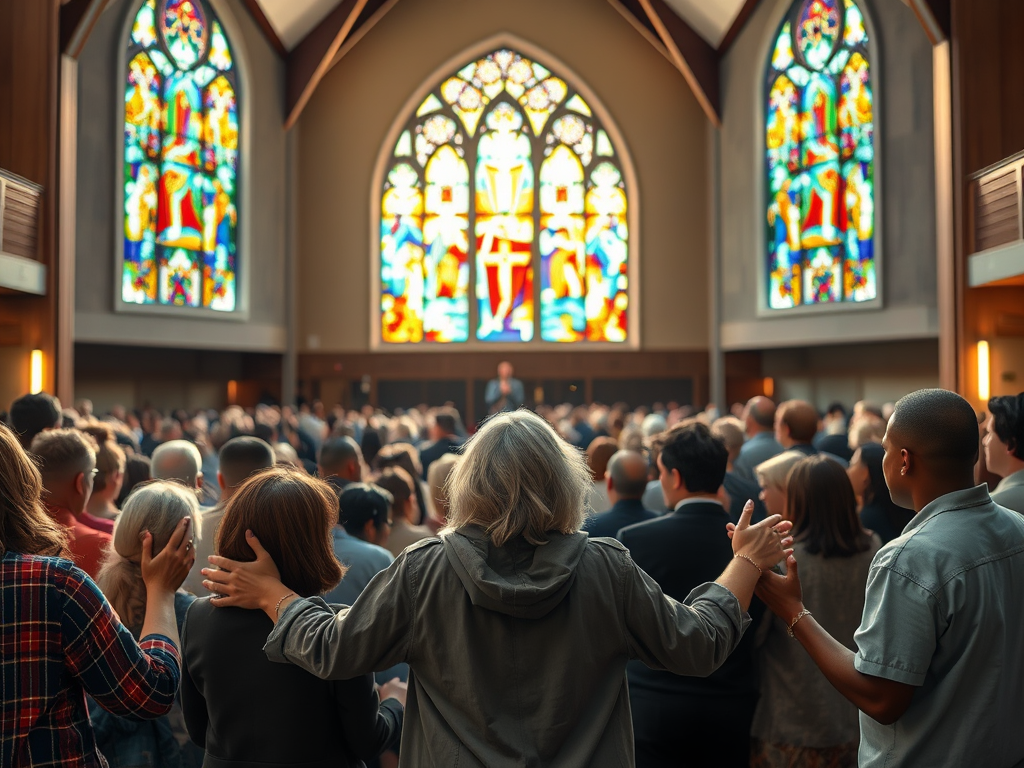
Saya telah dibesarkan di Gereja Methodist semasa kanak-kanak beralih kepada persekutuan Kristian intervarsiti di sekolah pada masa sekolah menengah dan seterusnya, dan pada asasnya saya sentiasa terdedah kepada ibadat normatif. Ibadah normatif termasuk unsur-unsur yang tidak dilarang secara jelas oleh kitab suci, selagi ia konsisten dengan prinsip alkitabiah dan menggalakkan pembangunan. Itu akan meliputi seluruh spektrum ibadat antara mazhab, malah gereja tinggi seperti gereja tinggi Anglikan dengan ibadat liturgi selagi ia berkaitan dan selaras dengan prinsip alkitabiah dan menggalakkan pembangunan, saya tidak akan mempunyai masalah malah saya akan mempunyai pertalian yang hebat dan untuk itu.
Apakah itu dan mengapa Ibadat Regulatif
Tetapi apakah ibadah yang mengatur? Saya tidak pernah mendengarnya sehinggalah saya memasuki seminari pada tahun terakhir saya. Saya mengikuti kelas jam kredit selama dua jam mengenai ibadah kawal selia oleh Dr Duncan dan saya hairan ada perkara sedemikian yang dipanggil ibadah kawal selia. Pada asasnya hujah untuk itu sebenarnya terdapat dalam:
Keluaran 20:1–5 (ESV) Dan Allah mengucapkan segala firman ini, berfirman, 2 “Akulah TUHAN, Allahmu, yang membawa kamu keluar dari tanah Mesir, dari rumah perhambaan. 3 “Janganlah kamu mempunyai tuhan lain di hadapan-Ku. 4 “Jangan membuat bagimu patung pahatan, atau apa pun yang menyerupai apa pun yang ada di langit di atas, atau yang ada di bumi di bawah, atau yang ada di dalam air di bawah bumi. 5 Jangan sujud menyembah kepadanya atau beribadah kepadanya, sebab Aku, TUHAN, Allahmu, adalah Allah yang cemburu, yang membalaskan kesalahan bapa kepada anak-anaknya, kepada generasi ketiga dan keempat dari orang-orang yang membenci Aku.
Dalam Keluaran 20, Tuhan menetapkan 10 perintah untuk Musa memberitahu semua orang Israel, dan sebelum itu Dia memberi mereka latar belakang mengapa Sepuluh perintah kepada bangsa Israel. Saya suka fakta bahawa Tuhan mula berkata, “Akulah Tuhan, Tuhanmu yang telah membawa kamu keluar dari Rumah perhambaan, jangan kamu mempunyai tuhan lain di hadapan-Ku.” Dia menetapkan kredibilitinya, Dia menetapkan siapa Dia sebelum memberitahu Israel apa yang perlu dilakukan. Saya percaya bahawa perkara yang menarik tentang agama Kristian ialah anda perlu mengetahui siapa Tuhan agama Kristian sebelum cuba melakukan moral dan perintah agama Kristian. Jika anda cuba melakukan atau mematuhi 10 perintah itu sendiri dengan berfikir bahawa itu akan menyenangkan Tuhan dan mendapat tiket untuk pergi ke syurga, tanpa mengenali Tuhan yang memberikan Sepuluh perintah, anda benar-benar salah dan dalam kesusahan. Inilah yang anda panggil legalisme, dan ia sebenarnya cukup berleluasa di dunia kita hari ini semata-mata kerana kejahilan tentang kebenaran firman Tuhan. Dan itulah sebabnya saya bersemangat untuk membawa semua ini dalam tulisan saya dan podcast saya dan dakwah dan pengajaran saya.
Sekarang dalam ayat berikutnya Tuhan berkata kamu tidak boleh membuat bagimu patung pahatan atau apa-apa rupa apa-apa yang ada di langit di atas atau di bumi di bawah atau air di bawah dan kamu tidak boleh sujud kepadanya atau beribadah kepadanya kerana Aku adalah Tuhan yang cemburu. Saya telah membacanya selama beberapa dekad yang lalu berfikir bahawa Tuhan memberi amaran kepada kita untuk tidak menjadikan apa-apa di dunia ini sebagai berhala untuk sujud dan bagi saya itu cukup jelas. Dan itu bersambung dengan ayat 3 yang mengatakan, “jangan ada tuhan lain di hadapan-Ku.” Dalam erti kata lain, jangan jadikan penyembahan berhala imej patung apa-apa yang ada di bumi atau di dalam air ini sebagai Tuhan. Dalam aplikasi zaman moden kita, ia hanya bermakna tidak mencintai apa-apa atau meletakkan harapan anda pada apa-apa yang melebihi siapa Tuhan seperti Augustine berkata masalah kita bukan cinta dunia, masalah kita adalah cinta yang tidak teratur. Sama seperti jika kita cintakan wang, cintakan keselesaan duniawi yang OK ke tahap yang besar, tetapi jangan jadikan ia sebagai alas yang sama dengan Tuhan kerana cinta apa pun di dunia ini yang setanding atau di atas Tuhan akan membawa kita ke dalam masalah melanggar perintah penyembahan berhala ini.
Walau bagaimanapun, dalam dunia yang telah diperbaharui, prinsip penyembahan yang mengatur sebenarnya berhujah bahawa:
3 “Janganlah kamu mempunyai tuhan lain di hadapan-Ku. 4 “Jangan membuat bagimu patung pahatan, atau apa pun yang menyerupai apa pun yang ada di langit di atas, atau yang ada di bumi di bawah, atau yang ada di dalam air di bawah bumi. 5 Jangan sujud menyembah kepadanya atau beribadah kepadanya, sebab Aku, TUHAN, Allahmu, adalah Allah yang cemburu, yang mengunjungi
Apabila Tuhan memerintahkan Israel untuk tidak membuat apa-apa gambaran apa-apa di bumi atau syurga atau air di bawah dan mereka tidak akan sujud kepada mereka dan berkhidmat kepada mereka, ajaran reformasi sebenarnya mengajar kita bahawa apa yang Tuhan katakan ialah jangan menyembah saya dalam bentuk patung yang berukir atau rupa apa pun di bumi, di syurga atau di dalam air. Sekarang ini sukar untuk ditelan kerana dalam ayat 5 Tuhan berkata kamu tidak akan sujud kepada mereka atau beribadah kepada mereka kerana Aku, Tuhan, Tuhanmu dan Tuhanku yang cemburu. Tuhan tidak mengatakan anda tidak akan sujud kepada mereka dengan menyangka bahawa saya sedang diekspresikan dalam patung-patung yang diukir itu. Tuhan jelas membezakan antara berhala-berhala itu dan dia, kerana Dia berkata jangan tunduk kepada mereka atau menyembah mereka.
Tetapi bagaimanapun, ini adalah bagaimana doktrin penyembahan yang mengawal selia datang melalui fakta bahawa Tuhan memerintahkan cara bagaimana Dia disembah dan tidak disembah melalui gambar-gambar itu. Contohnya, mungkin anak lembu emas yang Israel tunduk kepada anak lembu emas, adakah itu penyembahan berhala kepada anak lembu emas, atau adakah Israel berfikir bahawa Tuhan yang maha kuasa menampakkan diri dalam bentuk anak lembu emas? Dalam fikiran saya yang terakhir ini jelas satu kekejian.
Kecuali itu jika kita pergi dengan hujah mengenai ketetapan beribadat yang bermaksud:
• Prinsip Regulatif Ibadah: Ibadah mesti mengandungi hanya unsur-unsur yang diperintahkan atau dibenarkan secara jelas dalam Kitab Suci. Apa-apa yang tidak ditetapkan adalah dilarang.
• Prinsip Penyembahan Normatif: Penyembahan mungkin termasuk unsur-unsur yang tidak dilarang secara jelas oleh Kitab Suci, selagi ia konsisten dengan prinsip alkitabiah dan menggalakkan pembangunan.
Ibadah kawal selia termasuk hanya unsur-unsur yang diperintahkan atau dibenarkan secara jelas dalam kitab suci. Apa-apa yang tidak ditetapkan adalah dilarang. Itulah sebabnya ibadah peraturan dipanggil ibadah preskriptif. Walaupun penyembahan normatif mungkin termasuk unsur-unsur yang tidak dilarang secara eksplisit oleh kitab suci selagi ia konsisten dengan prinsip alkitabiah dan menggalakkan pembangunan.
John Calvin, Jonathan Edwards, dan Herman Bavinck semuanya condong ke arah penyembahan yang teratur. Walau bagaimanapun, untuk kejutan dan kegembiraan saya, saya mendapati Augustine lebih cenderung kepada penyembahan normatif.
Augustine & Ibadah Normatif—Pewatakan hati & pusat kitab suci
Dalam karya seperti On Christian Doctrine and City of God, Augustine menekankan bahawa penyembahan harus memuliakan Tuhan dan membina gereja. Dia memfokuskan pada watak hati dan pusat Kitab Suci, khotbah, dan sakramen (pembaptisan dan Ekaristi), tetapi dia tidak secara eksplisit mengehadkan penyembahan hanya kepada unsur-unsur yang diamanatkan oleh kitab suci.
Augustine menekankan bahawa penyembahan harus memuliakan Tuhan dan membina gereja, saya rasa dia betul-betul memahaminya. Sekarang apa yang dia tulis pada baris seterusnya adalah menarik kerana dia menulis dia memfokuskan pada watak hati dan pusat kitab suci, khutbah dan sakramen, dan itulah yang saya akan lalui. Saya fikir perkara yang paling penting ialah perkataan, “pewatakan hati dan pusat kitab suci.” Selagi ibadah itu mengandungi watak hati pengarang komposer dan dengan genre sentraliti kitab suci, saya fikir itu akan menjadi bentuk ibadat terbaik yang berlaku secara normatif. Jika anda melihat Augustine, seorang lelaki yang menulis salah satu buku penyayang yang paling menarik dan menarik dan sengit dalam dunia teologi Kristian, The Confessions, tidaklah sukar untuk melihat mengapa dia akan menumpukan perhatian kepada watak hati dan sentraliti kitab suci dalam ibadat. Malah saya berpendapat bahawa ibadah tanpa perwatakan hati sebenarnya akan menjadikan ibadah menjadi lebih tegar dan kering.
Saya rasa Tuhan tidak mahu mengambil watak hati itu daripada kita dalam penyembahan kita kepada-Nya dan itulah yang dimaksudkan dengan keseluruhan kitab mazmur. Daud menulis sebahagian besar penyembahan, pemujaan, doa, ratapan kitab mazmur dari lubuk hatinya dan itu adalah watak hati. Sebaiknya kita belajar daripada Daud dan menyatakan kecenderungan hati terhadap Tuhan dalam penyembahan kita, dalam penulisan lagu kita, dan penyembahan liturgi pada kebaktian gereja hari Minggu. Saya akan berpendapat bahawa Daud menulis mazmur dengan watak hatinya yang diilhamkan oleh Roh Kudus. Oleh itu, saya akan berhujah bahawa pada zaman moden Tuhan memberi kita ruang dalam ruang untuk kita menyatakan watak hati kita dalam lirik ibadat dan ibadat liturgi kita dengan intipati kitab suci. Selagi kita selaras dengan pemusatan kitab suci ia akan menjadikan ibadah lebih tulen dan ghairah.
Ibadah Normatif dalam liturgi gereja tinggi Anglikan dan Lagu Hill kontemporari dll.
Sebenarnya penyembahan normatif termasuk penyembahan gereja tinggi Anglikan gereja tinggi dengan banyak ungkapan liturgi dan kata-kata yang tidak secara langsung daripada kitab suci tetapi mengalir selaras dengan pusat kitab suci dan pembangunan gereja, saya pasti akan menyokongnya dan pergi dengan itu. Jadi ibadah normatif bukan sekadar lagu seperti Lagu Bukit, Lagu Ketinggian, lagu Bethel dan lain-lain. Saya sangat menyedari beberapa kesalahan teologi dalam beberapa gereja tersebut. Tetapi ada lagu-lagu yang bagus dari mereka dengan ekspresi hati yang spontan atau watak kepada Tuhan dengan kepusatan kitab suci walaupun agak berulang-ulang dan kurang format kata-katanya, namun, adalah penyembahan yang luar biasa sebenarnya saya fikir itulah yang menarik ramai orang muda ke gereja.
I have grown up in a Methodist Church as a kid switched over to intervarsity Christian fellowship in school in the middle school time and onwards, and essentially I’ve always been exposed to the normative worship. Normative worship includes elements not explicitly forbidden by scripture, as long as they are consistent with biblical principles and promote edification. That will cover the whole spectrum of interdenominational worship, even high church like Anglican high church with liturgical worship as long as they are related and in being consistent with biblical principles and promote edification, I will have no problem in fact I will have great affinity and for it.
What is and why Regulative Worship
But what is regulative worship? I never heard of it until I entered seminary on my last year I took a two-hour credit hours class on the regulative worship by Dr Duncan and to my amazement there is such a thing called regulative worship. Essentially the argument for such is actually found in:
Exodus 20:1–5 (ESV)
And God spoke all these words, saying, 2 “I am the Lord your God, who brought you out of the land of Egypt, out of the house of slavery. 3 “You shall have no other gods before me.4 “You shall not make for yourself a carved image, or any likeness of anything that is in heaven above, or that is in the earth beneath, or that is in the water under the earth. 5 You shall not bow down to them or serve them, for I the Lord your God am a jealous God, visiting the iniquity of the fathers on the children to the third and the fourth generation of those who hate me,
In Exodus 20, God established the 10 commandments for Moses to tell all the Israelites, and before that he gave them background why the Ten commandments to the nation of Israel. I love the fact that God started off saying, “I am the Lord your God who brought you out of the House of slavery, you shall have no other gods before me.” He established his credibility, He established who He is before telling Israel what to do. I believe that that’s the cool thing about Christianity is you need to know who the God of Christianity is before trying to do the morals and the commandments of Christianity. If you try to do or obey the 10 commandments yourself thinking that that will please God and get yourself a ticket to go to heaven, without knowing the God who gives the Ten commandments, you are really deeply wrong and in trouble. This is what you call legalism, and it is actually pretty rampant in our world today simply because of the ignorance of the truth of the word of God. And that’s why I’m passionate of bringing all this out in my writings and my podcasts and my preaching and teaching.
Now in the next verse God said you shall not make for yourself a carved image or any likeness of anything that is in heaven above or the earth below or the water below and you shall not bow down to them or serve them for I’m a jealous God. I’ve been reading them for the last few decades thinking that God is warning us not to make anything in this world as an idol to bow down and to me that’s pretty clear. And that is connecting to v 3 that says, “you shall have no other gods before me .” In other words don’t make this idolatry of the images of carved images of anything on earth or in the water as God. In our modern-day application it will simply mean don’t love anything or put your hope in anything that’s above who God is like Augustine says our problem is not the love of the world, our problem is the disordered love. Just like if we love money, love worldly comfort that is OK to a great extent, but just don’t make it the same pedestal with God because any love for anything in this world that is on par with or above God will get us into the trouble of breaking this commandment of idolatry.
However in the reformed world the regulative worship principle actually argues that:
3 “You shall have no other gods before me.4 “You shall not make for yourself a carved image, or any likeness of anything that is in heaven above, or that is in the earth beneath, or that is in the water under the earth. 5 You shall not bow down to them or serve them, for I the Lord your God am a jealous God, visiting the
When God commanded Israel not to make any imagery of anything on earth or heaven or water below and they shall not bow down to them and serve them, the reformed teachings actually teach us that what God is saying is don’t worship me in the form of a carved image or the likeness of anything on earth in heaven or in the water. Now this is hard to swallow because in verse 5 God said you shall not bow down to them or serve them for I the Lord your God and my jealous God. God didn’t say you shall not bow down to them thinking that I am being expressed in those carved images. God clearly makes a distinction between those idols and him, because he says don’t bow to them or serve them.
There is no indication whatsoever to think that don’t worship the Lord your God in the form of those images.
But anyhow, this is how the regulative worship doctrine comes through by the fact that God commands the way how he is worshipped and not to be worshipped through those images. Case in point perhaps is the golden calf that Israel bowed down to the golden calf, is that an idolatry of the golden calf, or did Israel think that the almighty God manifests himself in the form of golden calf? In my mind the latter is clearly an abomination.
That aside if we go by that argument regarding regularity for worship which means:
Regulative Principle of Worship: Worship must include only those elements explicitly commanded or authorized in Scripture. Anything not prescribed is forbidden.
Normative Principle of Worship: Worship may include elements not explicitly forbidden by Scripture, as long as they are consistent with biblical principles and promote edification.
Regulative worship includes only those elements explicitly commanded or authorized in scripture. Anything not prescribed is forbidden. That’s why regulative worship is called prescriptive worship. While normative worship may include elements not explicitly forbidden by scripture as long as that consistent with biblical principles and promote edification.
John Calvin, Jonathan Edwards, and Herman Bavinck are all leaning towards regulative worship. However to my pleasant surprise and joy, I found Augustine more leaning towards normative worship.
Augustine & Normative Worship—Heart’s disposition & centrality of scriptures
In works like On Christian Doctrine and City of God, Augustine emphasizes that worship should glorify God and edify the church. He focuses on the heart’s disposition and the centrality of Scripture, preaching, and sacraments (baptism and the Eucharist), but he does not explicitly restrict worship to only scripturally mandated elements. [1]
Augustine emphasizes that worship should glorify God and edify the church, I think he’s got it exactly on the point. Now what he wrote the next line is fascinating because he wrote he focuses on the hearts disposition and the centrality of scripture, preaching and sacraments, and that’s precisely what I would go by. I think the most important point is the word, “hearts disposition and the centrality of scripture.” As long as the worship contains a hearts disposition of the author of the composer and with a genre of the centrality of the holy scripture, I think that will be the best form of worship which happens to be normative. If you look at Augustine, a man who wrote one of the most fascinating and engaging and intense thought-provoking affectionate books in the Christian theology world, The Confessions, it is not hard to see that why he would focus on the heart disposition and the centrality of scripture in worship. In fact I would argue that worship without heart’s disposition would actually make worship to be more rigid and even dry.
I don’t think God wants to take away that hearts disposition from us in our worship towards him and that’s precisely what the entire book of psalms all about. David wrote majority of the worship, adoration, prayer, lament of the book of psalms from deep down his heart and that is heart disposition. We would do well to learn from David and expressed that hearts disposition towards the Lord in our worship, in our writing of songs, and the liturgical worship on Sunday church service. I would argue that David wrote the psalms with his heart’s disposition inspired by the Holy Spirit. I would therefore argue that in modern day God gives us space in room for us to express our hearts disposition in our worship lyrics and liturgical worship with the centrality of scriptures. As long as we are in line with the centrality of scriptures it will make worship so much more authentic genuine and passionate.
Normative Worship in Anglican high church liturgy and contemporary Hill Songs etc.
In fact normative worship includes high church Anglican high church worship with lots of liturgical expression and words which are not directly from the holy scripture but flows in line with the centrality of scriptures and edification of the church, I would definitely support that and go with that. So normative worship is not just songs like Hill Songs, Elevation songs, Bethel songs etcetera. I’m keenly aware of some of the theological faults in some of those churches. But there are good songs from them with spontaneous heart expression or disposition to the Lord with the centrality of scripture albeit somewhat repetitive and less words format it, nevertheless, is superb worship in fact I think that’s what draws in a lot of young people to church.
[1] Augustine, On Christian Doctrine and City of God
God promised Jeremiah 29:14 that says. “I will be found by your declares the Lord, and I will restore your fortunes and gather you from all nations that I have driven you.” This is truly a very comforting and reassuring verse showing the promise of God. But I want to explore with you why does God want us to call upon him and pray to him and seek him?
Well the answer is pretty simple and that is in v 11, “… for I know the plans I have for you, declares the Lord, plans to prosper you and not to harm you, and to give you a future and a hope.” Now v12 is significant because it says, “Thenyou will call upon me and come and pray to me, and I will hear you.”
The word ‘then’ is a result of verse 11 talking about God’s plan to prosper you and not to harm you but to give you a future and hope. This is Israel going through exile in Babylon, was sent to Babylon because of their disobedience to God and their sin before him and God exiled them to Babylon for 70 years for a purpose essentially to discipline them and to teach them to humble themselves.
Motivation to seek him and pray to God
V11 …for I know the plans I have for you, to prosper you, to give you a future and a hope
v10 God said, “I will fulfill to you my promise and bring you back.” v11 “…for I know the plans I have for you, to prosper you, to give you a future and a hope” is a mighty motivation. That is a promise. A big promise.
The word ‘prosper’ in Hebrew:
—1. prosperity, success: a) Lv 26:6 Nu 6:26 Dt 23:7 Is 48:18 60:17, 48:22 = 57:21 52:7 = Nah 2:1 שְׁלוֹם הָעִיר Jr 29:7, מַחְשְׁבוֹת שָׁ׳ Jr 29:11 (rather as 7b).
Ludwig Koehler, Walter Baumgartner, M. E. J. Richardson, and Johann Jakob Stamm, The Hebrew and Aramaic lexicon of the Old Testament, 1994–2000, 1507.
That’s the kind of thing you want to know so that you can have the strength and the determination and stamina to continue to wait upon the Lord and not to give up because God promised. But how long does it take we don’t know but a lot of times God uses this kind of situation to mold and shape us. So if you are going through a times of waiting and crying out to God for a long time and have yet to hear from him, this kind of verses will be very strengthening to you and I, so we need to hang on to the promise of God.
Jeremiah 29:11–12 11 For I know the plans I have for you,” declares the Lord, “plans to prosper you and not to harm you, plans to give you hope and a future. 12 Then you will call on me and come and pray to me, and I will listen to you.
Because those words that he said “I know my plans for you plans to prosper you and not to harm you, plans to give you hope and the future”, it’s the premise or the basis for God to say in v 12 “Then you will call upon me and pray to me and I will listen to you.”
And God is so kind to promise to assure us he has a plan for us to prosperous and and to give us a hope in the future first before he said in v12 then you will call upon me and come and pray to me and he promised to listen to us.
Meditate over “I know the plans for us, a plan to prosper us not to harm us, a plan to give us hope and a future”
So folks it is incredibly important to understand verse 11 first and internalize it because once we are really knowing that God’s promise: viz “I knows the plans for us, a plan to prosper us not to harm us, a plan to give us hope and a future,” then we can settle down settle in the presence of God and call upon God and pray to him over short period or long period even until he listens to us and responds. How long does it take for him to respond, we don’t know. But what we do know is based on his promise for the plan to prosper us and to give us hope and future, we can therefore persevere and put our hope in God in Christ without being wavered. Based on that promise we must internalize in our hearts that God would do it for us therefore we will call upon him continually and without giving up. I think this is really important for us to continue to pray to him even in the absence of response from him because he promised and we shall plough on.
Jeremiah 29:12–14 12 Then you will call on me and come and pray to me, and I will listen to you. 13 You will seek me and find me when you seek me with all your heart. 14 I will be found by you,” declares the Lord, “and will bring you back from captivity. I will gather you from all the nations and places where I have banished you,” declares the Lord, “and will bring you back to the place from which I carried you into exile.”
Any verse 13 God says, “You will seek me and find me when you seek me with all your heart.” Now the condition is to seek God with all our hearts which means never give up even over a long period of time.
God promised, “I will be found by you declares the Lord and I will bring you back from captivity.”
You can apply that to yourself whatever that’s lost in your lives and whatever you struggled, whatever you pray for restoration. God promised to bring us back from the loss of what the enemy has ravished your family or lives or ministry or whatever. And the time of restoration will come and God will prosper us.
I love the fact that He has a plan for me and I’m gonna stick to that. And I hope you will be too. Amen.
This is an article about what God said in Isaiah 42:4 that he would not rest until he established justice on earth. As we all know justice is such a huge topic today in our modern world and including many Christians today. But there is a difference between the justice that’s being fought today which is commonly called social justice, compared to the justice God is fighting for in Isaiah 42. I will have to qualify that the what God fights for also includes that social justice which is really oppression, ethnic oppression, the poor by the rich abuses etcetera.
So this is really important to understand what is God talking about in Isaiah 42.
Behold my servant, whom I uphold, my chosen, in whom my soul delights; I have put my Spirit upon him; he will bring forth justice to the nations. 2 He will not cry aloud or lift up his voice, or make it heard in the street; 3 a bruised reed he will not break, and a faintly burning wick he will not quench; he will faithfully bring forth justice. 4 He will not grow faint or be discouraged[a] till he has established justice in the earth; and the coastlands wait for his law.
You can see that the Lord said that He puts His Spirit upon him, and His servant will bring forth justice to the nations V1-2. And then verse 4 God says He will not grow faint or be discouraged till He’s established justice in the earth. So we want to find out what is this word ‘justice’ all about. In order to understand what that word justice mean in Isaiah 42:4 we need to look at Isaiah 41 first.
Justice that God fights for is the justice between Him and the idols
Isaiah 41:21–24 (ESV)
Set forth your case, says the Lord; bring your proofs, says the King of Jacob. 22 Let them bring them, and tell us what is to happen. Tell us the former things, what they are, that we may consider them, that we may know their outcome; or declare to us the things to come.
God is challenging the idols to speak to Him, and ask them to set forth their case! And even bring their proofs! Do you know this is how God speaks to the idols in your life my life because the God of the universe the creator of the whole cosmic powers totally transcends and overpowers any idols of the cosmic darkness in this society in our culture.
God blasts idols as “nothing”
Here God is challenging the so called idols to tell God what happened before and what’s going to happen. God is really talking down on them because they are nothing exactly what the Bible says.
24 Behold, you are nothing, and your work is less than nothing; an abomination is he who chooses you.
Behold you are nothing, here is the most blatant and blazoned calling out of who these idols are really are and they are nothing. And God warned whoever chooses them will become an abomination.
My point is seeing how God talks down and condescendingly upon the idols and calling the idols as nothing, whereas they are beholden as precious to so many people including Christians in this world. The lesson here is they really are nothing and we must be liberated and set free from them.
Examples of who idols are in our life could be money, power, sex, culture overall as commonly portrayed in the city of New York or any Hollywood movies. Whenever we struggle with these idols in our lives just remember the Lord God we worship talks down on them and calling them as nothing. It’s best that we remember this and be cognizant of this wherever we go and bear this in mind and in our prayers and never be like a fool.
Now we are moving into the exciting part now:
Isaiah 42:3 (ESV) 3 a bruised reed he will not break, and a faintly burning wick he will not quench; he will faithfully bring forth justice.
So the question is what is this “justice”?
What is this “justice”?
Justice (mišpāṭ) is the leading idea of this first Servant Song, pointing to the scope of the servant’s work, his reliability in its discharge and his perseverance through to its accomplishment.[1]
The word mišpāt is versatile, but its sense is plain in context. In the light of the foregoing court scene it must retain its meaning of ‘judgment at law’, the result of the trial between the Lord and the idols. The servant thus carries to the world the message that there is only one God. [2]
The word justice as depicted here is almost like the prime calling of the anointed servant of the Lord, which is really the Son of God himself, our Lord Jesus Christ. Therefore it’s really important to know its meaning in the context here. Justice is usually understood as equity or fighting against oppression or injustice, and very often understood as ‘social justice’ against the rich oppressing or colonizing lords.
But here justice is understood as ‘judgement at law’, the result of the trail between the Lord and idols. After you read Isiah 41, you will understand the anger, wrath, God vents at those idols, calling them as nothing! ’
Justice means God’s Kingdom, power & Glory
Therefore in effect, God is seeking to judge them with law, and bring about justice, as in a sense, God has been unjustly treated, as the idols robbed God’s honor and authority as the Lord over Israel and our lives today. God is seeking that ‘justice’.
So it’s really God seeking to re-establish His dominance, as the Lord’s prayer says “:For thine is the kingdom, power and glory forever.” And that’s our God. But the idols in our lives robbed that from our God, and hence Jesus has come to this world to seek to establish ‘justice’. And He accomplished that above all things, at the cross, where He died, and resurrected from the dead, having broken the power of death and Satan who holds the power of death.
Amen
[1] J. A. Motyer, The Prophecy of Isaiah: An Introduction & Commentary, (Downers Grove, IL: InterVarsity Press, 1996), 318–319.
[2] J. A. Motyer, The Prophecy of Isaiah: An Introduction & Commentary, (Downers Grove, IL: InterVarsity Press, 1996), 319.
Been thinking about the congruent power of the Spirit and the reformed theology how’s that going to work out in practice which is something I would love to see being implemented. There is a remnant of reformed pastors with the charismatic background are doing some of both, I have my own vision of what it should look like that I would love to see.
Make it spontaneous and authentic
Recently we visited a church and I saw their charismatic inclination or to have people coming up to be prayed for. I see there is positive and negative on that. The negative is that after a while, because this is being performed week in and week out, it almost feels like the congregation looks forward to be prayed for and making this whole exercise rather routinely repetitive. It sort of takes off the supernatural edge to it meaning it can become mundanely routine. I think this will cultivate a psyche for people to long to be touched by the Lord which I fully understand, from my charismatic church background, however I really do not see that scenario in the Bible, in the case of the Lord Jesus or Paul or Peter. I think if people long to be touched by the Lord and be blessed by God’s healing and touch because of a great need, they should act like the blind, the crippled crying for Jesus, or the woman with the bleeding problem pushing in among men to reach Jesus to be healed. That makes it so authentically real and powerful.
God responds to hungry hearts, longing hearts
God is not interested in amnesia kind of desire or lukewarm Christianity. What I’m saying is that from the scripture I see the initiative of the people to come to Christ to be healed came to Christ, and not the other way round. I recognize that we are not in the realm of Christ or anywhere remotely near him, but I would say that a better way to execute and not perform healing, is to have a general prayer from the pulpit for all people who have needs of healing of sicknesses perhaps by them putting their hands on on the body that need healing. Or to save time we can also ask that anyone who needs healing to put your hands up, which is in line with the scripture because the crippled or the blind always come to Christ to make themselves known. I think there’s a far better way of executing the healing power of Christ to the congregation without dragging the meeting or spending too much time on everyone else.
Depth of Preaching
The second really important aspect I observed is the lack of depth in preaching. It is not something to criticize or any sort but this is really falling far short of the reformed preaching of exposition of the scripture the reformed theology is doing so well. That’s why it’s my burden to exhort my charismatic church pastors’ leaders, pastors to consider to look into learning theology in a far deeper way or else we will end up speaking in rather superficial way in a very fast to application format of preaching. And also I see that there is a lack of argument for a case in the sermon because there is none. It is pretty much more towards experiential and application types straight away without much exegesis at all. And I will say using “the Lord told me” in certain direction of preaching is rather questionable because this can form a shortcut in doing proper research and study of exegetical requirements of the word of God. I was really awakened to the contrast in the depth of preaching in the argument in preaching like Martin Lloyd Jones said “preaching is logic on fire” and that’s exactly what I want to do, and would love to see in reformed pulpit or charismatic pulpit.
Learn from our tradition & history
My last point would be just to emphasize the depth and the theological understanding insight from the reformed world like Calvin, Augustine, bathing, Edward is really something that we should take hold of and run with. For example I did a 30 minutes teaching on Christology taken mostly from Bavinck and I’ve found that astonishingly rich theology that I was not aware of even after gotten my own MDiv. But the beautiful thing is after you got your MDiv, you are kind of being trained to dissect and to analyze any theology books you read and make your own decision whether it is in line with the scripture, in context. I would say the non reformed world has missed a lot in this, the intellectual and pastoral great minds of our history.
This is a brilliant analysis by Herman Bavinck and I totally agree with that. I find it tremendously difficult to follow the line of supra, Lapsarian theology.
Its the God of compassion responding to the fall that he started to elect some humans to salvation in Christ and pass over others which is called reprobation. The logical sequence is what is making sense here. Eph 1:4-5 says even as he chose in him before the foundation of the world, that we should be holy and blameless before him. He in love he predestined us for adoption to serve his son through Jesus Christ, according to the purpose of his will. Bavinck explains that God’s council is a single, eternal, and indivisible act of his will, and creation, the fall, election, and redemption. Eph 1:4-5 highlights the election occur before the foundation of the world, this refers to the eternity of God’s decree, not as logical priority over the fall. In God’s timeless eternity, all aspects of the decree, creation, fall, election are also simultaneous, but theology distinguishes the logicality to understand their relationships.
Infra Lapsarian is about the logical, not temporal, order of God’s decrees
Bavinck argues that God’s election Eph 1:4-5 presupposes of fallen humanity in need of redemption. The phrase he chose us in him ( Christ) indicates the elections always in Christ, the media of redemption.
The goal of election that we should be holy and blameless and for adoption himself points to God redemptive purpose to a fallen state
Bavinck argues the election addresses human sinfulness, aiming to restore and adopt sinners into God’s family. This alliance with infra Lapsarian emphasizes on election as God’s mercy response to the fall, rather than a supra Lapsarian view: election seem to necessitate the fall to display God’s glory.
Addressing the tension
The apparent tension Eph 1:4-5, before the foundation of the world may seem to favor supra Lapsarian in that election precedes the fall. Bavinck resolved this by distinguishes logical and temporal order. The phrase does not imply the election logically proceeds the fall, but that all God’s decrees are eternal.
Infra Lapsarian orders the decrees logically ; God’s decree to create, permit the fall, and then elect some to election salvation in Eph 1:4-5 affirm that eternity of this plan, not its sequence.
Critique supra Lapsarian for potentially making the fall and necessary means to display God’s glory, which would imply God authored sin. Infra Lapsarian in his view, better preserved God’s justice, and mercy by seeing election as a response to the fall, not its cause.
I think this whole thing is brilliant. It really helped me– praise be to God.
This is really my first time studying philosophy in a Christian seminary context. I’ve always been used to systematic theology, biblical theology but it is really interesting to be able to intersect that with philosophy. This class covered the Greek philosophers like Plato, Aristotle and I think the most influential is Plato who influenced people well known theologians like Aquinas and to a little extent even Augustine. I come to appreciate that Greek philosophy has capitalized some kind of abstract conceptual almost divine being that is being the master of all kinds of things and thoughts, the initiator of them all. They move so close to who God is conception is but just can’t get there, and hence it is very sad. This truly speaks of the vanity and frustration of the worldly wisdom and forces in this world to try to mimic God or try to reach the ultimate transcendent. In vain their attempt by some of the greatest worlds philosophers known as Plato, Socrates, Aristotle. They all have come to some kind of conceptualization like the ruler of all rules kind of thing but have just fallen short of it.
The biggest problem is that their supreme conceptual idea it’s only an idea but not a being and hence cannot communicate, they cannot love, and interact with humans as the God in Christianity. I think that kind of situation will bring civilization to annihilation simply because it cannot land but it floats in the thin air forever. Therefore it becomes a breeding ground to some of the great influencing philosophers of the modern age like Nietzsche, like a lot of French and other philosophers in trying to deny God but come up with a substitute which is totally devastating and self-defeating. Their philosophies unfortunately have influenced a lot of our schoolbooks and colleges and writings for example Karl Marx thought about communism and a host of others. All these philosophies are conceptual pit problem because of denying and running away from the almighty God who is well perceived and known by the world as in Romans 1
Romans 1:18–21 (ESV)
18 For the wrath of God is revealed from heaven against all ungodliness and unrighteousness of men, who by their unrighteousness suppress the truth. 19 For what can be known about God is plain to them, because God has shown it to them. 20 For his invisible attributes, namely, his eternal power and divine nature, have been clearly perceived, ever since the creation of the world, in the things that have been made. So they are without excuse. 21 For although they knew God, they did not honor him as God or give thanks to him, but they became futile in their thinking, and their foolish hearts were darkened.
Did you see the unleashing of the wrath of God against all ungodliness and unrighteousness of men it’s God’s judgment upon all the philosophical work so they’re trying to detract or distract human beings from knowing and following the only God the creator of the world? As a matter of fact the wrath of God specifically against ungodliness and unrighteousness of men and that is a direct product of any philosophies centering on anything outside of Christ and that is defined as godlessness. Godlessness is commonly understood as doing things that are very ungodly and that is the result of not focusing on the only one true God Jesus Christ and God the Father. And not only that these people not only practice ungodliness, but they actually suppress the truth about Christ as well as exactly what these philosophers are doing like Plato, French Foucault and all these guys.
You can see how the intersection of Christianity’s biblical and systematic theology comes in really powerful together with the worldly and ungodly philosophies of the world. If you don’t have enough grounding on the philosophy like in this class, you won’t know exactly how to engage them by knowing their strengths and weaknesses and how to portray Christ and the gospel as the answer to human brokenness.
Covenant theology is a very significant class that I took in the global class by remote taught by Dr Ligon Duncan. To say that it is a central theme of reformed theology is an understatement because it really encompasses the relational outworking of the divine sovereign almighty God with his creation human beings, whom He loved even before the foundation of the world.
Ephesians 1:3–5 (ESV)
3 Blessed be the God and Father of our Lord Jesus Christ, who has blessed us in Christ with every spiritual blessing in the heavenly places, 4 even as he chose us in him before the foundation of the world, that we should be holy and blameless before him. In love 5 he predestined us for adoption to himself as sons through Jesus Christ, according to the purpose of his will,
I mean even that sentence itself, requires a covenantal and definitely the sovereign God way of thinking to even grasp that. It really is a way God relates to his chosen ones through a covenant whereby he expressed it well most well during his encounter with Abraham in genesis 15. In genesis 15 God asked Abraham to cut some animals into carcasses and spread it on the floor and how he’s going to establish a covenant with Abraham:
Genesis 15:7–21 (ESV)
7 And he said to him, “I am the Lord who brought you out from Ur of the Chaldeans to give you this land to possess.” 8 But he said, “O Lord God, how am I to know that I shall possess it?”
The powerful thing about this passage how God revealed himself to Abraham when Abraham asked innocent naive question that, ” How I know that I will possess the land and have thousands of children when I am childless.” And instead of answering him directly God did the following.
9 He said to him, “Bring me a heifer three years old, a female goat three years old, a ram three years old, a turtledove, and a young pigeon.” 10 And he brought him all these, cut them in half, and laid each half over against the other. But he did not cut the birds in half. 11 And when birds of prey came down on the carcasses, Abram drove them away. 17 When the sun had gone down and it was dark, behold, a smoking fire pot and a flaming torch passed between these pieces.
God told Abraham to bring a heifer and a female goat and a ram a total dove and a young pigeon and cut them in half and lay on the ground and when the sun had gone down it was dark as smoking fire pot, and a flaming torch passed between these pieces. Do you know what is this flaming torch? The answer is God himself passed between these pieces of Caucasus on the ground. The question is what does it mean? In the olden days at those time it is the culture and custom of that time the vassal and the suzer in making a covenant of promise, the lesser party in this case is Abraham should pass between the carcasses meaning to say that if he breaks the covenant, he will be torn apart like the animals’ carcasses on the ground. However in this covenant making ceremony, God actually put himself in the lesser party of vassal and passed between the Caucasus in the form of a flaming torch.
What God is saying is I will pass between the carcasses and if I break the covenant I would be torn like the carcasses. In fact this is a prophetic picture that’s going to be fulfilled by the son of God Jesus Christ when he was torn apart on the cross and died because humans broke the covenant with God, or the children of Abraham broke the covenant with God. And instead of Abraham being torn apart all the children of Abraham, which is us today, God sent his son to fill in the position as a Lamb of God being sacrificed. This is precisely what happened when God passed between the carcasses in the field in the form of a flaming torch because he is prophetically saying one day God will be torn as a God man to fulfill this covenant that I’m making with Abraham and his children.
To me this is one of the most moving pictures of who God is and what God has done for us through the Abrahamic covenant. I would never forget this story and this biblical exegesis by Dr Duncan on this event that I have used it numerous times in my preaching, and it has impacted my life, and this is part of a covenant theology class.





 Al Ngu sermons & devotion