Podcast
Gospel Centered Life and Theology
祈禱就像一個小孩向父親懇求
上帝喜歡無恥的大膽祈禱
就如創立世界以前,他在基督裡揀選了我們
Why is the absence of God so devastating in our lives and society?
Why is the absence of God so devastating in our lives and society?
Many think and yearn for freedom to be whoever they want to be, and do whatever they want to do, but not realizing that there is a big ramification for that, a huge price that comes with it, because its ultimately a destructive path. Who can trust themselves to do whatever they want to in this world? Can you?
The danger is what holds the universe, truth, reason, purpose together in our cosmos, in the world. If there is nothing that hold sus together, we will go into the abyss of nihilism, which means a total meaningless in life, yes, a lot of self-created freedom, but eventually we lose meaning of any purpose in life. The natural decent to that path will be insanity. Imagine you live in a world without meaning at all.
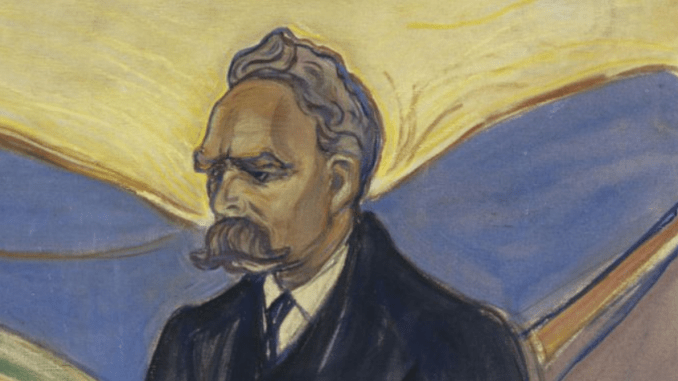
Postmodernism teaches that there is no inherent meaning for anything, and we are just a bunch accident. Its more than dehumanizing that anything I have heard. Let me introduce the father of post modernism, Nietzsche in the 20th century.
Nietzsche wrote a book called the “Death of God” in which he means theism died. He laments God has less and less an impact on society. He understand God as a transcendent source of meaning, value, and purpose, which means that if you believe in God, you believe in all truths and values comes from him. So when he writes that book called ‘death of God”, he bears the consequence mentally of the loss of that source of transcendent values purpose and truths, which is very depressing and scary, and that is why he calls it humans without God will descend into nihilism.
Nietzsche perceived the failure of natural theology. The rise of psychological accounts of religious belief helps people get through life, rise of natural sciences , thereby pushing God to the edges of our understanding, and with the rise of Darwinism of evolution against the creator God, all these make people feel they need God less and less. He also didn’t like the ethics of monotheistic religion.
With all that mindset and worldview, his philosophy ass demonstrated in the book “Death of God” ushers in the ‘advent of Nihilism”. In Nihilism, there is no objective moral norms, no objective working and purpose, the only meaning is we ourselves invented and imposed upon ourselves. No objective truth and knowledge, he believes that all thought is radically perspectival, there are no facts, only interpretations, and they are only our interpretations induvial which may be different from others. To say that we are all the accidental evolution is the single most depressing thing in the world, and no wonder all these lead to the eventual nihilism. And indeed he died an insane man with his sickness, a really sad man and ending.
Nietzsche thinks we need to find an alternative to the Christian/Platonic view of the world they carries transcendent values. He sees it our only option is to create our own meaning a morality and values because we can’t find it outside of us.
He posits a theory of the “Overman” or “Superman” which is his personification of the will to power. He is embodied to will for power. It’s a savior system to save us. He celebrates this earthly world. It combines the 2 Greek gods, apollo and Dionysian, and created a new value system, disposing the traditional.
Calvin will respond to reject all that Nietzsche has embraced and taught. First and foremost is Nietzsche’s rejection or unbelief in the transcendent God who is really the cause for all his depressive line of thought towards nihilism where there is a bleak nothingness meaning in life, such a depressing dark existential philosophy. Calvin will assert and affirm that the Almighty Creator God is very much alive after He died on the cross to redeem mankind, and He upholds the universe, and hence there wouldn’t be any event of losing meaning in life downward spiral spin like Nietzsche who admits it’s going to head to nihilism, meaning a complete loss of meaning in life. Calvin will insist it’s the mighty God who defines our very fabrics of life, the good and evils, and his mighty predestination and sovereignty in running the whole cosmos in exactly his plan. Life is thus full of meaning with God in charge.
As regards to Nietzsche’s will to power “Overman” philosophy, meaning of life comes from God, and not up to us individually frame our life purpose etc. The fact that this “overman” who is not a person, but only a conceptual thought is someone or rather something that will show us the way to create our own meaning and morality and values is simply unreal and untrue. It has no personal power. But the will to power is human instinct to seek power and to express strength over others. Calvin will respond to say that our strength comes from our submission to the Lord who is the mighty God who displayed his power through the cross to destroy the devil who holds the power of death, thereby give us hope for immortality and eternal life. The will to power is wrong in that its very human centered, while we rise and fall with our relationship with our maker. The world does need a new savior system. Man doesn’t not get saved through a system. We get saved by the death of a person, the Son of God, the lamb of God who took away our sins. And also to celebrate this world only by the Overman, is severely shortsighted without seeing the Kingdom of God that’s coming when Christ returns.
就不要硬著心, 好像在曠野惹他發怒
耶穌將捲起天地,所以要為他而活!
The outpouring of the Spirit on Pentecost
邪惡欺騙,但上帝裝備我們去對抗它們-evil deceives, but God equips us to fight them
We need a Pentecost
The Quest for the gifts of the Holy Spirit
Immanuel Kant, the prince of philosophers of the 18th century, famously wrote about Enlightenment: “Enlightenment is man’s emergence from his self-imposed immaturity. Immaturity is the inability to use one’s understanding without guidance from another. This immaturity self-imposed with its cause lies not in lack of understanding, but it was but lack of resolve, courage to use it without guidance from another.” [1]
Laziness and cowardice is what blocks us
He writes, “Laziness and cowardice are the reasons why so great proportion of men, long after nature has released them from alien guidance, nevertheless gladly remains in lifelong immaturity, and why it is so easy for others to establish as their guardians. ”[2] It is so easy to be immature. It is so easy to rely on others because easy access to all commodities and help. So they have us made dumb, and having made sure we become docile creatures. And the guardians show us the danger of walking out of their thinking, and making us to be what’s called inadvertently docile who will not take a single step without the go-cart to which they are harnessed without their guidance.[3]
Laissez-faire Attitude– Gifts of the Spirit have ceased
This can also be applied to modern day dilemma regarding the quest for spiritual gift or to simply give up because of so many easily accessible seemingly impressive scholars who say the otherwise, i.e. gifts of the Spirit have ceased. The cessation of spiritual gifts is taught because the Apostolic age is over, has been the teaching among reformed Christians, inadvertently contributed to believers today into a state of Laissez-faire cowardice. Laziness in a sense that we are intimidated by the amount of theology that has really overwhelmed the amateur pastors in terms of theology and the average Christian on the street to the point of giving up the quest of evidently and clearly required by the holy scripture as Paul wrote in first Corinthian 14 eagerly desired the spiritual gift especially the gift of prophecy. (1 Cor 14:1) Follow the way of love and eagerly desire gifts of the Spirit, especially prophecy.
You see this is a domestication process that has contributed to the body of Christ unintentionally. You see how powerful and piercing is the power of knowledge and teaching? Doctrines changed the world, not sword and arms or bombs. This, by the way, applies to all wrong or inaccurate teachings, not to just zero in on the cessation of gifts. Example, the salvation by grace alone by faith in Christ alone, combating against wrong teachings of moralistic salvation by human efforts, rightly reformed the church. The case with cessation of gifts will not be in the category of “heretical” , but definitely not correct.
Kant further argued that it is therefore difficult for any individual man to work himself out of the immaturity that has all but become its nature. He has become even fond of his state and for the time beings actually incapable of using his own understanding, for no one has ever allowed him to attempt it.[4]
You see this is the power of conditioning after an extended period of time when we are so used to a certain way of thinking and cultural imposition and circumstances, it’s going to be hard for any man or woman to come out of it. Kant has verbalized this beautifully conceptually psychologically. We certainly do need to break out of this mold that has been imposed and help fellow brothers and sisters in Christ for the spiritual gift of prophecy and tongues and healing et cetera. This certainly is also applicable to our friends or church that has believed in moralistic salvation not knowing we are saved by grace alone in Christ. But this article is about being sunk into the condition mindset for long time to the point it becomes one’s second nature.A person is even fond of this state! You see how much we need help? It’s almost the circumstances around us dictate how we should think move and act and live. The problem is about the interpretation of the Bible on the spiritual gift of God in Christ Jesus by the Holy Spirit.
Kant says if folks were allowed freedom, enlightenment is almost inevitable. I would argue that his enlightenment towards the wrong things because he failed to grasp and believe in the supernatural revelation of God but continue to dwell and sink in the power of reasoning and logic al thinking.
Lets bring back the gifts of the Spirit. The church needs it. We need the Pentecost again.
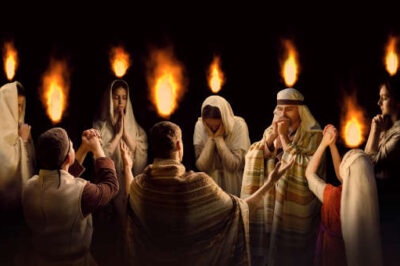
Acts 2 When the day of Pentecost came, they were all together in one place. 2 Suddenly a sound like the blowing of a violent wind came from heaven and filled the whole house where they were sitting. 3 They saw what seemed to be tongues of fire that separated and came to rest on each of them. 4 All of them were filled with the Holy Spirit and began to speak in other tongues[a] as the Spirit enabled them.
[1] Immanuel Kant, What is Enlightenment? 1784, 1
[2] Ibid
[3] Ibid
[4] Ibid
 Al Ngu sermons & devotion