My cultural conditioning and cultural context in church planting

I come from a culture in church upbringing of charismatic evangelical church background, and later in involved in planting churches. From the childhood days, I grew up in a Methodist church background with my mom. I would say the charismatic worship in churches have impacted me a lot since university days.

My wife and I have sensed the call of God in planting church and pastoring. It has been a real joy and challenging in the midst of it.  It is without any shadow of doubt it is the Lord who directed our path as a family in doing rather radical things. We are from an international church planting movement, and we have planted churches back in Malaysia, and then God called us to come over here in the US to continue the ministry as a bi-vocational ministry , very much like what’s called tent-making ministry of Paul in the NT. We have seen churches successfully planted and pastored, however the latest one in Manhattan has stalled. So with that background, I have struggled to understand the culture here in New York, and also what I should be doing.  Saying all these we with our children had moved from Malaysian culture to Californian culture, and just over 10 years ago, to the New York culture, it has to be the Lord who strengthens us and been our hope.

In trying to reach out to New Yorkers, it really depends on which part of the city you live in. The city is notoriously expensive, and for any church planting, finance is of the utmost in one’s head immediately. From what I see, most church planters raise funds, forgo their own vocation professional jobs, and heavily depend on the more lucrative income from their wives., without which it is undoable for the cost of living.  I will list down some of the major cultural adjustment contextualization.

The Culture of Bi-Vocational Ministry

That’s my background and working as an engineer and doing weekend pastoring. Coming to do that in NYC, I can see why church planters flopped. First, it is such a vast city, the transportation commute just takes too long to do any ministry, and hence Keller in City to City has emphasized the need of cultural immersion, i.e. living in the neighborhood where you want to plant. And that’s also in full time capacity, and I see that that’s beyond my reach, just because we are not financially able to do that also considering the school factors for children. So we ended in Long Island to pastor a weekend church in Manhattan, it has been not the most effective. I struggled in this church plant model. I think if we live among the people neighborhood, even with just mainly a weekend ministry, it would have been much more doable. The cultural be with your people is so very important.

Theological & Philosophical Understanding & Equipping

This has been a real joy in worshipping the Lord in the house of God and sustained me a lot in facing setbacks, struggles with ministry, work, relationship etc. It’s the source of encouragement and strength in worshipping that I would never forget.  In the midst of struggling , I have to say the church planting culture that my church movement sent me, is not in line with the style in New York, because you need finance and group support for launching a church, which I have neither. So I was kind of parachuted into Manhattan, and living far away in Long Island, making that church plant incredibly challenging. That’s a huge cultural shock for me, although we had some college students who came and started our church together, but the theology and philosophy of church plant was largely absent from my mind in the American context.

But I would say the lack of theological understanding especially the sovereignty of God in reformed tradition and to be able to see and preach the redemptive narrative of God in Christ are the two most important transformations I received since coming to New York and having met Tim Keller whose sermons are full of these two. After listening to many of his sermon for years, I began to see why it’s so attractive and compelling for people to come to church.

First the divine sovereignty of God

This subject is not something I have ever heard or learnt from my cultural background. My background belongs to the Arminianism theology, with a passion to spread the love of God in Christ and making disciples. And pastors, almost all, do not have formal education training in seminary schools. It’s all about your calling and in trusting God, to plough the land for sowing the seed of the gospel and nurture a church.

Since coming to NYC, I heard enough of Keller’s sermons that I sensed that aspect of who God is missing with me. To see God as sovereign brings a lot of fresh air, comfort and edification to my heart, because I being to realize that, even in the time of failure (my church plant failed), and time of waiting, there is a sense of which, I can rest in Him, and wait for his timing and way to launch. That’s what calmed me down, given me rest in Him.  And that’s the divine providence of God out of his goodness and grace. This changed my outlook tremendously, about life, ministry, and families. It’s hard for people not to be hardened and discouraged at times when things are going tough, without the assurance of the sovereignty and divine providence of God. That’s why many blame God when they don’t get what they asked for after long time, without such understanding and hence trust in the almighty God and all wise God.

Second, the entire theological education

From my culture background, theology training is not held high, because its very practical driven theology, and  experiential type. As long as you love the Lord and serve him, you are good to go, regardless of whatever your theological trancing is. While heart condition is number one in all things with God, knowledge of theology is right there  number two, and without the word of God theology, a good heart can only operate on a far diminished form from the richness of the word of God which has great transformation power. I would say therefore this has brought tremendous blessing to my life. It’s also about that time, Tim Keller brought in RTS to New York city, and when I heard that, I was overjoyed and joined the 3rd cohort. It’s an incredible blessing that I could get my theological training in the fold of Tim Keller. I would say that’s really the divine providence of God, and looking back, that’s probably the best thing happened to my life for a long time. To me, that’s really a turning point tin my life and our ministry. And above all, my own relationship with the Lord has taken on a breath-taking wider horizon, simply because I now know Him much better.

Thirdly on the area of worship

I see that my background worship differs quite substantially from reformed worship which is generally the case with most professors and student in RTS, though there are some charismatics, and Baptists etc. I would say, this is a strange culture, and I do see the beauty of singing hymns, as theology is rich, and combining it with the more contemporary songs with hands lifting and expression of celebration is what I look for. Worship is a place of where we meet God corporately on Sundays, and this can be the most beautiful moment that can be and should be built upon. I do know the regulative worship in PCA, and certainly some charismatic worship songs tend to run too shallow theologically, and this is where I, after all my training in school, would be able to discern and adapt what’s best theologically, and worship tune wise. I think my desire and planning is to see a church that combines both styles of worship, Word based centered, and Spirit empowered.

Fourthly the New York culture is really a very busy hectic culture driven by work in an expensive city.

So for us to reach out to them, I love the most from what Keller teaches as in adaptation to the culture (seeing the common grace), and later the confrontation of their culture idols to meet their real needs. To bring in the redemptive messages to show them what they hope for can never be fulfilled by their normal ways unless they come to the God who created us. This is easy said than done, and requires a lot of relationship building etc. As all known too well, work is among the idols

I do see the possible opening of the gospel and that’s through the daily burdens of life.  There is value system in my background that’s totally different from the post Christian America today.  And to meet the New Yorkers, the personal touch of it doesn’t come easy, obviously a lot of community building is required, and this needs manpower and time.  

Fifth is the area of prayer

This is an incredibly important and powerful area form my church culture background. I see there is hardly any organized meetings for prayer. In our backgrounds, we hold prayer meeting once a week, and we poured our hearts to God together and believe God will do the rest. It’s a real uplifting times as we spend time together and humble ourselves before God. People see the hearts of leadership, and that goes a long way. I would love to gather folks together regularly for prayers. Prayer needs to be seen by people and so we can all ray together, instead of just listening to one person praying. The corporate prayers, or break into small groups prayers, has been. So conducive for church growth and touching the people outside.

Conclusion

In conclusion, I thank God for my upbringing culture. To be able to continue to develop the call of God and in the culture, God has put us in, is the most exciting thing and I look forward to what the Lord has for us coming up. I see the charismatic spiritual gift culture that I received will fit in very well, if operated like 1 Cor 13, coupled with good God centered expositional messages, I foresee a great future reaching the folks right in New York city or anywhere else.  The strength from my cultural background has propelled me and family gone that far with God in this land, however, it will take the next move of God to see the Spirit of God working .
Transformationist model engagement with Culture

I agree with what Keller talked about what transformation excited is not  building up the church but penetrating the bastions of cultural influence for Christ. I can see that like what Keller said that, much of the excitement & creative energy ends up focusing on cosmic or social redemption rather than bringing about personal conversion through evangelism and discipleship. And I can also see what his quoted James K Smith who insisted the liturgy and practices of church communities are critical for the formation of worldview. I would say just as Keller said, pietism tended to lift up full time ministry and denigrates secular vocations, transformations can lead to the opposite extreme, I think we should not drop the transformationist model just because their tendency is on the outside of church redemption rather than inside, because I think if we could do both, it will be fantastic. Pietism mode of building up the internal church through conversion, the evangelism, discipleship should be a given for any church, however the transformationist model for the outside of the church redemption is rare.

I agree that transformationist has the potential danger of being triumphalist  for self-righteous and overconfident ,it’s ability both to understand God’s will for society and to bring it about. I think essentially this due to conservative biblical evangelical upbringing seeing what should be happening in the society from the word of God. The reality is the world outside the church is not the same as the church per se, and it will be impractical, totally unrealistic to impose of such changes on the society i.e. culture outside the church.

I also agree transformationism has often put too much stock in politics as a way to change culture. He quoted  James Hunter saying government politics is only a set that is downstream from the true sources of cultural change which happens in the Academy, the arts, the media companies, and the cities. The real influence happens in teaching schools, publishing books producing, plays movies, slowly the public opinions begins to shift. I somewhat agreed to this however if we were to follow strictly this route, and not following the transformationist route, we would have another million babies aborted if it were not for the changes that was brought about by political Presidential change in the White House and consequently in the Supreme Court justices. As much as it is highly controversial and difficult to bring about political change, I will stand by the transformationisms approach bringing up about changes in the politics i.e. by prayers, evangelism, and preaching the word of God.

I agree one of the weak points of transformationism is the apparent absence on the concern for the poor which is really a big agenda in the mind of God as we read from the scriptures. Keller talks about coerciveness from the transformationist, it would be hard to see that happening anytime soon in America, and I do not see that as a concern. On the contrary, for right now the woke is on top of her, canceling anyone who wants to speak of conservative voice case in point including the church.

Christian & Culture Engagement

I am most sympathetic and liking towards the Transformationalist model of Christian and culture engagement, because it is active in influencing culture. It has the Kuyperian touch of Neo Calvinism, which spreads the influence of Christ over all aspects of culture. This model looks at the secular work in the world as important way to serve Christ and his Kingdom, and calls for the importance for Christians excelling in the work, and their spheres of influence. Christians must bring their distinctive Christian commitment to Public Square. And make them as part of the identity. I do have reservation of their triumphalism, self-righteousness, and overconfidence, which comes from the lack of theological understanding of the common grace outside the church. And their politically active in wanting to change politics is attractive, and compelling as Kuyper’s view on Christ rules overall including politics. However, excessive confidence in politics as a means of changing culture may be backfiring, though it’s the right direction as part of the overall package.

The Countercultures model is the saddest because they withdraw or separatist from the world, with a dispensationalist mentality. Saying that the return of culture is imminent, so no point in saving the culture. Basically, leaving the world to rot, and the spiritual darkness takes over the governments, and implement whatever godless culture to our kids and families and society. And they downplay penal substitutional redemption because they don’t believe God will endorse a violent atonement. The other problem is this philosophy undermines communication with the fallen world as Christians are so separated from the world, the culture.

The Two Kingdom Model places high value on secular vocations, like teacher, lawyer, etc. They believes in a strong doctrine of common grace in the public sphere. Christians and non-Christians can work together well. I do not like the low expectations for cultural reformation prior to the eschaton, in the Amillennialism viewpoint, resulting in the mindset that Church is going to be a minority. And it’s not big for cultural transformation and will not have a great deal of influence and power in the world. This is problematic in my view.

They tend to accept secularism. They encourage the church not to take action against society’s ills. Church only does gospel ministry and not meant to get involved in politics, social issues. Not to speak out on social political. And not act to organize on social issues. All these are problematic. In my view.

The Relevance model. They have such great optimism about cultural trends. Instead of influencing the culture, they’re bringing the culture into the Christian life. They emphasize on the common good and human flourishing. That Christians needs to promote the common good, and not just the welfare for the Church, but all of society and seeking to rectify injustices, which is a very good. Mindset of this model is to treat Christian and church as synonymous. There are groups like Liberation Theology, Black, Liberation Theology, Feminine Theology. And seeker sensitive movement like Willow Creek and Emerging Church Movement.

The biggest problem of this model is they have a low view of theological precision or orthodoxy and Christian tradition. And this another huge problem is this supplanted evangelism and conversion by emphasis on social action. There’s not much preaching of the gospel and asking for repentance, but move to social action and social gospel, false gospel. There is an erosion of the biblical distinction between the church and the world. And they regard any distinction will be problematic by them. They have a lack of enthusiasm for membership and discipline under authority of eldership. To me, this doesn’t sound like they’re even a born again group of Christians.

Tim Keller., Loving the City., Zondervan,  2016.

H Richard Niebuhr,  Christ and Culture, Harper one,  2001.

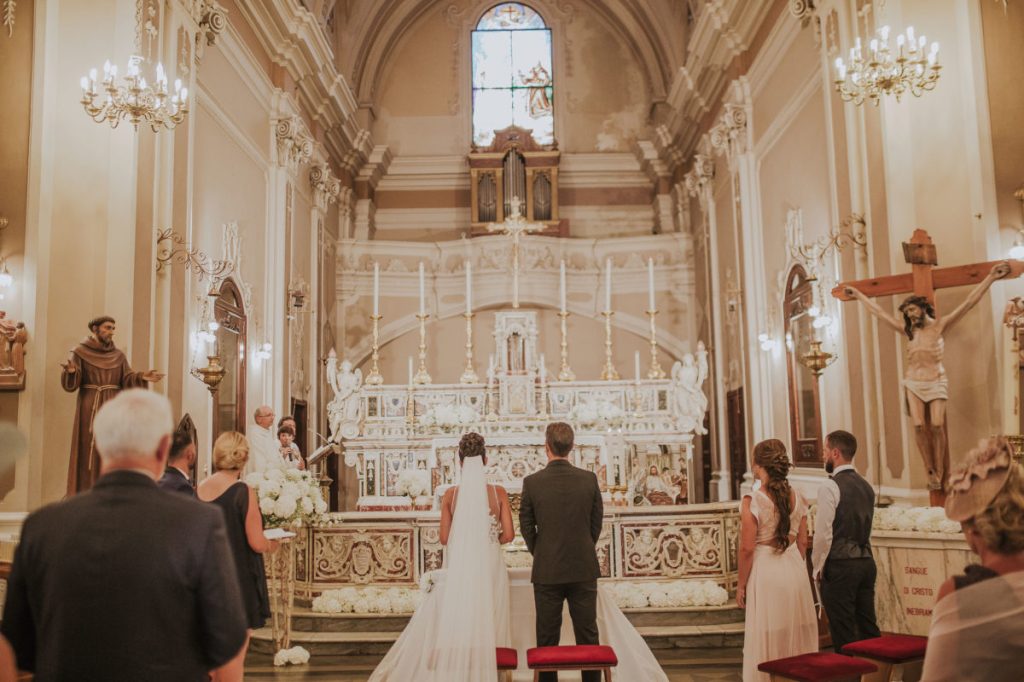
Wedding Sermon Reflection and Plan

Al Ngu       December 14, 2023

My philosophy of performing weddings as a Pastor

I am to officiate the ceremony in the presence of God in front of invited guests and families. In other words to be solemnized.

59-2. Christians should marry in the Lord; therefore it is fit that their marriage be solemnized by a lawful minister [1]

This is based on Genesis 2, when God brought Eve to Adam.

Genesis 2:22–23 (NIV) 22 Then the Lord God made a woman from the rib he had taken out of the man, and he brought her to the man. 23 The man said, “This is now bone of my bones and flesh of my flesh; she shall be called ‘woman,’ for she was taken out of man.”

This is a very important verse or I call it as the foundational principle of marriage, the goal and meaning of it. God brought the woman to the man. That will be the basis of foundational principle of the union between a man and a woman. Its God who brought them together. Not by human effort only. The divine providence and human responsivity working together.  Therefore a flourishing marriage will have to be a God centered marriage. In fact, there is no other definition of marriage. So how would God bring nonbelieving people together? Or one believing person, while the other is not? It would not make sense.

Also marriage is a covenant between a man and a woman before God . It’s not a contract, but a covenant in God’s presence, who also instituted his covenant through the bread and wine with us by our Lord Jesus in the last supper, which we celebrate in all churches monthly if not weekly.

“The covenant made between a husband and a wife is done ‘before God’ and therefore with God as well as the spouse. To break faith with your spouse is to break faith with God at the same time.” [2]

Therefore I would only conduct marriage:

Between two believers, and of course, it will be between a man and a woman, as in the design of God’s bringing a woman to the man. Not two women to one man, but one to one. So in order for marriage to flourish, God will have to be the centrality. Not only that:

24 That is why a man leaves his father and mother and is united to his wife, and they become one flesh.

There will be a leaving of parents and cleaving to his wife in marriage, and that’s from the bible which also prophetically points to the ultimate marriage between Christ and the church.

Logically therefore I would refuse to perform a wedding ceremony to be solemnized in the presence of our Almighty God if they are not believers in Christ and walking in their faith in Christ. Also I will not conduct a wedding ceremony for any other violations of what God instituted as marriage like same sex marriage, as He brought a woman to the man.

BOCO writes: 59-3. Marriage is to be between one man and one woman, in accordance with the Word of God. [3]

Ceremony, music and photography:

Should point to the joyous uniting of a man and a woman as a covenantal way. Commitment is the message in the love and providence of God. Music worship songs should reflect that.

Reflect on your research and develop a personal plan for performing a wedding ceremony

I will quote this verse as a wonderful shower of blessing and joy and confidence to the joyous couple in the presence of the witnesses, friends, and families.

“ The Lord bless you, and keep you; the Lord make His face shine upon you, and be gracious to you; the Lord lift up His countenance upon you, and give you peace (Numbers 6:24-26).[4]

I will also read out the scriptures of the call of God for the husband’s duty towards his wife, and also the wife’s duty towards her husband as in this wonderful, glorious verses.

“Husbands, love your wives, just as Christ also loved the church, and gave Himself for it” (Ephesians 5:26). “Wives, submit to your own husbands, as to the Lord” (Ephesians 5:22).

The happiness contemplated by this union is realized only by those who fully appreciate its sacredness and are faithful in the performance of the mutual obligations growing out of it, and seek daily God’s blessing.[5]

I will expound the significance of this sentence from BOCO which says beautifully that a married couple’s happiness is realized only by those who fully appreciate its sacredness.[6] Marriage is sacred, and therefore it means God is in the center of our blessed marriage, and hence sacred and holy. It’s not some kind of play around, and try around ritual, but a lifelong covenantal commitment.

Also, it says happiness only realized by those who are faithful in the performance of the mutual obligations growing out of it, and see daily God’s blessings. I believe such performance of mutual obligations is only possible as the couple both seek daily God’s blessings. [7]

Finally, as BOCO puts it that the new relation is consecrated by heaven’s benediction. Consecrated means set apart for God and hallowed by all that is tenderest and truest in human affection.[8] I love it that it’s a combination of God’s blessing and consecration, and also blessed by the tender and true human affections. It’s important that couples express their affections towards one another continually through their lives.


[1] THE BOOK OF CHURCH ORDER OF THE PRESBYTERIAN CHURCH IN AMERICA, 59-2

[2]  Tim Keller in The Meaning of Marriage, p 83

[3] Ibid, 59-3

[4] Ibid, Appendix A

[5] Ibid, Appendix A

[6] Ibid, Appendix A

[7] Ibid, Appendix A

[8] Ibid, Appendix A