The Role of Conviction by the Holy Spirit in Cultural Apologetics

Cultural apologetics refers to the defense and commendation of the Christian faith through deep engagement with culture—its art, stories, values, longings, and narratives—rather than relying exclusively on intellectual arguments or evidential proofs. Its goal is not merely to show that Christianity is true, but that it is beautiful, meaningful, and fulfilling.

A biblical model for this approach is found in Paul’s address at Mars Hill (Acts 17). Paul did not begin with Scripture quotations alone, but with Athenian poets, altars, and philosophical assumptions. He entered their cultural world in order to redirect their deepest longings toward Christ. Christianity was presented not as foreign or absurd, but as the true fulfillment of what their culture was already searching for.

Modern proponents of cultural apologetics—such as Paul Gould—emphasize the renewal of the Christian voice (reason), conscience (moral awareness), and imagination (a sense of awe and wonder) in an increasingly secular and disenchanted world. Yet at the heart of cultural apologetics—and indeed all apologetics—lies one indispensable reality: the conviction brought by the Holy Spirit.

The Necessity of the Holy Spirit’s Conviction

Jesus makes this unmistakably clear in John 16:8–11:

“And when he comes, he will convict the world concerning sin and righteousness and judgment…”

No apologetic method—cultural, philosophical, historical, or scientific—has the power to bring a sinner to Christ apart from the convicting work of the Holy Spirit. Arguments may persuade the mind, but only the Spirit can awaken the heart.

Conviction targets the whole person. In contemporary culture, Christianity is often rejected not because of a lack of information, but because it is perceived as irrelevant, unattractive, or morally oppressive. The Spirit convicts in three interconnected ways:

  • Concerning sin: exposing unbelief and revealing moral inconsistencies embedded in cultural ideals such as radical autonomy and moral relativism.
  • Concerning righteousness: unveiling Christ as the true standard, in contrast to the counterfeit moralities of the age.
  • Concerning judgment: revealing the ultimate futility of worldly systems operating under the dominion of the “ruler of this world.”

Cultural apologetics prepares the soil by highlighting truth, beauty, and goodness within culture and redirecting them toward Christ. But it is the Holy Spirit who causes the seed to take root, transforming the gospel from merely reasonable to deeply desirable.

Re-Enchanting a Disenchanted World

Modern secular culture is profoundly disenchanted—materialistic, utilitarian, and spiritually hollow. Yet beneath the surface lies a deep and persistent longing for meaning, identity, love, and transcendence. Cultural apologetics engages films, music, literature, and moral debates to re-enchant the imagination, showing that Christianity does not suppress human desire but fulfills it.

In this sense, cultural apologetics is spiritual warfare. The gospel confronts and subverts the idols of the age—wealth, sexuality, power, self-definition—exposing their inability to satisfy the deepest longings of the human soul. These idols promise fulfillment but deliver bondage. Christ alone offers true freedom, joy, and restoration.

Biblical Illustrations of Conviction and Desire

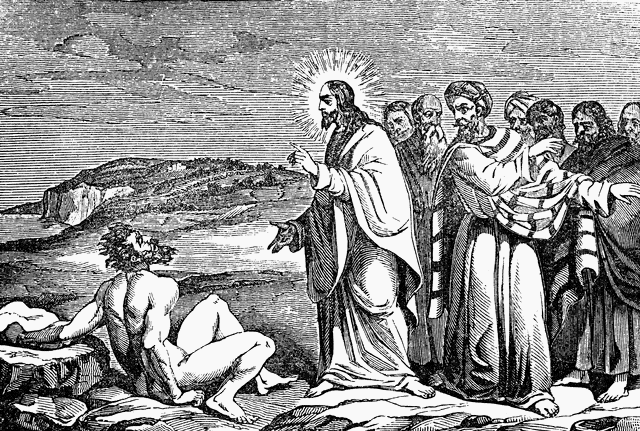
Consider the woman with the issue of blood (Mark 5). Socially ostracized, ceremonially unclean, and physically exhausted after twelve years of suffering, she heard of Jesus and believed that even touching the fringe of His garment would heal her. Her desperation overcame fear, shame, and cultural barriers. When she touched Him, she was healed instantly.

This story illustrates the triumph of gospel power over the false hopes of the world. Everything her culture offered had failed her. Christ alone satisfied her deepest need. Her faith was not produced by argument, but by conviction and hope awakened within her.

Contrast this with the rich young ruler. He was morally disciplined and religiously sincere. Yet when Jesus exposed his idol—wealth—and called him to surrender it, he walked away sorrowful. The allure of money proved stronger than his desire for the kingdom of God.

This is a sobering reminder that cultural apologetics does not guarantee conversion. When idols are cherished more than Christ, even the clearest invitation to eternal life can be refused.

Sexuality, Identity, and Cultural Confusion

Few issues reveal the need for cultural apologetics and spiritual conviction more than the modern crisis surrounding sexuality and gender. Among Gen Z, confusion regarding identity has surged in recent years, fueled by postmodern assumptions that sexuality is infinitely fluid and socially constructed.

At its core, this movement is not merely political or psychological—it is theological. Young people are asking profound questions: Who am I? Why do I exist? Where do I belong? The tragedy is that they are being offered identities that cannot bear the weight of the soul.

Scripture addresses this crisis not by beginning with prohibition, but with creation. In Genesis, God created humanity male and female, designed for covenantal union, fruitfulness, and shared dominion. Sexual difference is not arbitrary—it is purposeful, relational, and life-giving.

The distortion of sexuality described in Romans 1 is not merely moral failure; it is the result of exchanging the truth of God for a lie. When the Creator is rejected, creation itself becomes confused.

Cultural apologetics here must do more than argue ethics. It must present a better story—one where identity is received rather than constructed, where desire is ordered rather than suppressed, and where fulfillment flows from alignment with God’s design rather than rebellion against it.

Yet even here, persuasion alone is insufficient. Only the Holy Spirit can convict hearts, unveil deception, and awaken a desire for truth that leads to repentance and restoration.

Conclusion: Conviction Is Central

Cultural apologetics is valuable, necessary, and biblical. It clears obstacles, challenges false narratives, and exposes cultural idols. But it is not the engine of conversion. The Holy Spirit is.

Without conviction, apologetics becomes intellectual theater. With conviction, even a single word, gesture, or encounter with Christ can overturn a lifetime of deception.

Ultimately, the gospel advances not by cultural dominance or rhetorical brilliance, but by the Spirit of God awakening dead hearts to the beauty, truth, and sufficiency of Jesus Christ—the incarnate Son of God, the Messiah of the world, and the only source of eternal satisfaction.

Gazing Upon the Beauty of the Lord

In the middle of a psalm filled with enemies, danger, and warfare, King David pauses to voice the deepest desire of his heart: Ps 27:4

One thing I ask from the Lord,
    this only do I seek:
that I may dwell in the house of the Lord
    all the days of my life,
to gaze on the beauty of the Lord
    and to seek him in his temple.

One thing. Not ten things. Not even two. In a life threatened on every side, David declares that everything else can wait; only one pursuit is non-negotiable: to behold the beauty of the Lord.

We rush past that phrase too quickly. Beauty. We immediately picture symmetry, color, or physical attractiveness—the categories our culture has trained us to notice. Yet the Hebrew word David chose, noʿam, carries a far richer freight. It means pleasantness, delightfulness, sweetness, favor—the quality in something that makes it irresistibly attractive and life-giving all at once. When Scripture elsewhere speaks of the “beauty of holiness” (Ps 29:2; 96:9) or the “beauty of the Lord” resting upon His people (Ps 90:17), it is this noʿam that is in view.

David is not imagining God as a handsome statue. He is longing for the radiant sum of all God’s perfections—His holiness, goodness, mercy, faithfulness, power, wisdom, and love—shining forth together in perfect harmony. To gaze upon the beauty of the Lord is to have the heart ravished by who God is and what God does rather than merely by how God appears. It is the moment when covenant promises cease to be ink on a page and become fire in the bones.

The Sweet Burning of Jonathan Edwards

Few have described this gaze more vividly than Jonathan Edwards. In his Personal Narrative he recounts seasons of private prayer when the glory of God in Christ suddenly overwhelmed him:

“The sense I had of divine things would often of a sudden kindle up, as it were, a sweet burning in my heart; an ardor of soul, that I know not how to express… Sometimes only mentioning his name would cause my heart to burn within me… I had an inward, sweet sense of Christ and the beauty of His person… My soul was melted, and tears gushed from my eyes.”

Notice the language: sweet burning, ardor of soul, heart melted, tears gushing. This is not cerebral appreciation; it is whole-souled captivation. Edwards was not abnormal; he was simply awake to what every believer is invited into. The beauty of the Lord is meant to be tasted, felt, and enjoyed—not merely assented to.

Answered Prayer and the Disclosure of Beauty

One of the most common ways Christians actually experience this beauty is through answered prayer. When we cry out in desperation and God bends low to meet us—when the doctor’s report turns, the prodigal texts “I’m coming home,” the marriage that was dead breathes again—we are granted an undeniable glimpse of God’s noʿam breaking into history. Answered prayer is the beauty of God made tangible. It is the moment abstract attributes become concrete faithfulness, and we taste that the Lord is good (Ps 34:8).

The presence of God and the beauty of God are inseparable. Wherever the Holy Spirit grants comfort in grief, strength in weakness, or joy in obedience, there the beauty of the Lord is being unveiled. The same Spirit who hovered over the waters at creation now hovers over our chaos, whispering, “Behold your God.”

A Beauty the World Can See

For those who do not yet know Christ, this beauty must first be displayed rather than merely described. Unbelievers cannot see what we see until it is translated into deeds of justice, kindness, and sacrificial love.

William Wilberforce spent decades in Parliament fighting the British slave trade. When he finally succeeded, the beauty of Christ—the worth of every human being made in the image of God—shone so brightly that even secular historians still speak of it with awe. On a smaller scale, every act of forgiveness in a fractured family, every refusal to gossip at work, every meal shared with the lonely widow is a public witness to the same beauty.

Jesus Himself made the connection inescapable: “When I was hungry you fed me… when I was in prison you visited me… Whatever you did for one of the least of these brothers and sisters of mine, you did for me” (Matt 25:35–40). Feeding the hungry and visiting the hopeless are not merely social obligations; they are living demonstrations of the beauty of Christ.

When Christians live this way, the world is forced to ask, “Where does this kindness come from? Why do they love the unlovely?” The answer, whether spoken or unspoken, is always the same: we have seen the King in His beauty, and we cannot help reflecting what we have beheld.

Made for an Infinite Beauty

Augustine famously wrote, “You have made us for Yourself, O Lord, and our heart is restless until it rests in You.” The Latin is even more poignant: Fecisti nos ad te—“You have made us toward Yourself.” We are, by constitution, theocentric. Our intellect, will, memory, and especially our capacity to love are oriented toward the Infinite. We are capax Dei—capable of God.

This built-in restlessness is not a flaw; it is a mercy. It is the ache that keeps us from permanently settling for counterfeits. C. S. Lewis later reframed it memorably: “If I find in myself a desire which no experience in this world can satisfy, the most probable explanation is that I was made for another world.”

Every lesser beauty—however genuine—is finally too small. A sunset can stun us, but it cannot forgive us. A spouse can cherish us, but cannot justify us. Achievement can exhilarate us, but cannot ultimate satisfy us. Only the infinite beauty of God is large enough to fill the God-shaped cavity in every human soul.

From Duty to Delight

In recent decades, preachers like Tim Keller have recovered a vital emphasis: Christianity is not finally about fear-driven duty or cold legalism. It is about being captivated by the surpassing beauty of Jesus until loving and obeying Him becomes the most natural thing in the world.

Legalism says, “I must.” The gospel says, “I want to.” The difference is everything. When we behold the beauty of the Lord, our affections are re-tuned organically. Worship flows spontaneously. Obedience becomes delight. Evangelism is no longer a grim obligation but an overflow of joy: “Come and see!”

This is why David’s single request in Psalm 27:4 is so revolutionary. In the midst of real danger he sought refuge—not first in strategy or allies, but in the presence of the Beautiful One. There he found courage, comfort, and unshakable joy.

Learning to Linger

How, then, do we cultivate this gaze? The primary place Scripture appoints is gathered worship on the Lord’s Day and the daily rhythm of Scripture-soaked prayer. We come expectantly, asking the Spirit to “open our eyes that we may behold wondrous things out of Your law” (Ps 119:18). We linger in adoration longer than feels efficient. We sing until the truth moves from head to heart. We meditate on the gospel until we see fresh facets of Christ’s loveliness.

The promise is sure: those who look to Him are radiant (Ps 34:5). Beholding is how we become. As we gaze upon His beauty, we are slowly transformed into the same image from one degree of glory to another (2 Cor 3:18).

One day the gaze will be perfect. Faith will give way to sight, and we shall see Him as He is (1 John 3:2). Until then, may David’s prayer become ours: Ps 73:25-26

Whom have I in heaven but you?
    And earth has nothing I desire besides you.
26 My flesh and my heart may fail,
    but God is the strength of my heart
    and my portion forever.

The Beauty and Presence of the Lord: A Reformed-Charismatic Vision for Cultural Apologetics

By Al Ngu, MDiv

In an age where culture pulses with the raw longings of the human heart—from the defiant beats of hip-hop anthems to the introspective shadows of arthouse films—Christians are called to offer something more compelling than critique. We must present a vision of Christ that captivates the imagination, reshapes desires, and confronts the principalities of our time. To do this effectively, we need a theology that marries the profound beauty of the Lord, as emphasized in Reformed traditions, with the tangible presence of the Lord, as cherished in Charismatic circles. Far from being at odds, these streams form a symphony: one exalting the transcendent glory of Christ, the other inviting us into the awe-filled encounter of His nearness.

This synthesis is not merely academic; it is apologetics for the heart. As Lesslie Newbigin observed in *The Gospel in a Pluralist Society*, the gospel thrives when it addresses the deepest yearnings of culture—not just with arguments, but with a beauty and presence that satisfy. When we combine these emphases, we equip the church to engage a world enthralled by fleeting entertainments, offering instead the eternal fulfillment found in Jesus.

The Beauty of the Lord: Transcendent Glory Beyond the Physical

In Reformed theology, the “beauty of the Lord” is no superficial aesthetic. It is the radiant holiness that draws the soul into worship, as the psalmist declares: “Worship the Lord in the beauty of holiness” (Ps. 96:9, NKJV). This beauty is profoundly appealing because it transcends the physical, pointing us to the moral and relational splendor of God Himself.

Consider the prophetic portrait in : 

Isaiah 53:2–3 (ESV)
2  For he grew up before him like a young plant,
and like a root out of dry ground;
he had no form or majesty that we should look at him,
and no beauty that we should desire him.
3  He was despised and rejected by men,
a man of sorrows and acquainted with grief;
and as one from whom men hide their faces
he was despised, and we esteemed him not.

Here, the Suffering Servant—Christ Himself—is “marred beyond human semblance,” unrecognizable in His humiliation. Yet this very One is the most beautiful person in the universe. Why? Because His beauty is woven from threads of transcendent kindness, unwavering compassion, covenantal love, unyielding justice, sovereign power, and blazing glory—all perfectly united in the God-Man.

Jesus embodies our threefold need: as **Priest**, He intercedes for us before the Father; as **Prophet**, He reveals truth to our wandering hearts; as **King**, He rules over the spiritual cosmos now and will consummate His reign physically in the new heavens and earth. This is no abstract doctrine; it is an invitation to behold a Savior whose loveliness reorients our affections. As Jonathan Edwards wrote in his *Treatise on Religious Affections*, true faith awakens the soul to “the excellency of Christ,” a beauty so supreme it eclipses all earthly rivals.

In a culture obsessed with Instagram filters and fleeting idols, this Reformed vision calls us to a higher gaze—one that finds delight in the Lord Himself, reshaping our desires from the inside out.

The Presence of the Lord: Tangible Encounter and Heart-Moving Awe

If Reformed theology lifts our eyes to the *what* of God’s beauty, Charismatic streams draw us into the *how* of experiencing it: the tangible presence of the Lord. This is the fire that fills worship gatherings, where the Holy Spirit descends like a holy weight, stirring hearts with holiness, awe, and uncontainable joy.

Scripture abounds with such encounters—from the pillar of cloud and fire leading Israel (Ex. 13:21) to the upper room blaze at Pentecost (Acts 2:3). In charismatic practice, we sense this presence in the hush of prayer, the swell of congregational song, or the conviction of a preached word. It is not mere emotion but a divine reality: “The glory of the Lord filled the house” (1 Kings 8:11). Here, God’s nearness moves us—convicting sin, igniting passion, and imparting strength.

This emphasis complements the Reformed focus beautifully. Where one declares, “Behold your God!” (Isa. 40:9), the other cries, “Come, Holy Spirit!” Together, they remind us that theology without encounter risks aridity, while experience without doctrine veers into subjectivism. As one charismatic-Reformed hybrid voice might say, the beauty of the Lord is not just proclaimed; it is *felt* in the bones, transforming worship from ritual to revival.

The Power of Synthesis: What the Church Needs Now

Why does this matter? Because a divided church mirrors a fractured gospel. We need not choose between heady doctrine and heartfelt worship. Imagine Reformed precision fueling Charismatic passion: sermons unpacking Isaiah’s Servant alongside spontaneous prayers for the Spirit’s filling. This union births a faith that is intellectually robust and experientially alive—precisely what our polarized age craves.

In my view, this synthesis is the antidote to spiritual burnout. It honors the full counsel of Scripture, where God’s beauty (Ps. 27:4) meets His presence (Ps. 16:11). Churches embracing both will see renewed vitality: deeper discipleship, bolder evangelism, and a witness that draws the lost not by coercion, but by irresistible allure.

Culture’s Deep Longings: From Stadiums to Screens

Turn now to the arena of cultural apologetics. Everything from a coach’s sideline roar at a packed stadium—betraying hopes and fears—to the confessional lyrics of a hip-hop track reveals society’s soul-hunger. These are not distractions to dismiss but signposts of desire: for belonging, transcendence, justice, and meaning.

Social psychologist Jonathan Haidt captures this dynamic: “Reason may steer, but intuition moves. What the heart wants, the head will rationalize.” In the Augustinian tradition, cultural apologists recognize desire as faith’s prime motivator. We do not argue skeptics into the kingdom; we invite them to *fall in love* with a better story. And that story pivots on Psalm 37:4: “Delight yourself also in the Lord, and He shall give you the desires of your heart.” Note the divine initiative: *He* gives the desires. As we savor His beauty and dwell in His presence, God rewires our longings—from consumerism’s itch to Christ’s contentment.

Offering Christ Against the Powers: Hope in Community

Thus, cultural apologetics contrasts the ugliness of “principalities and powers” (Eph. 6:12)—the dehumanizing lords of nationalism, exploitation, and despair—with the lordship of Christ. Against Western cultural nihilism, we proclaim hope: beauty that endures, justice that triumphs, peace that heals, truth that liberates, and goodness that satisfies.

This hope is most vividly encountered in the church community, where gospel effects shine through transformed lives. Here, the church becomes a “counter-climate”—a life-giving atmosphere amid cultural storms. It is in shared meals, fervent prayers, and honest testimonies that seekers glimpse the beauty and presence they crave.

Toward a True and Satisfying Faith

Our goal? To embed the Christian voice, conscience, and imagination so deeply in culture that faith is seen as both *true* and *satisfying*. If Christ is only intellectually credible, hearts drift to idols. If only experientially thrilling, truth erodes into illusion. But when He is both—the beauty that orders the mind, the presence that fills the soul—discipleship endures, and culture bends toward the kingdom.

Let us, then, build churches where Reformed depth meets Charismatic fire. Let us carry this vision into streets, screens, and stadiums, offering a greater glory to a world parched for it. In Christ, the marred Servant becomes the radiant King—and in His beauty and presence, we find our home.

Al Ngu is a writer and thinker exploring faith, culture, and apologetics. Follow him on X https://x.com/alngu ; https://www.youtube.com/@AlNgu https://alngu.com/ https://www.tiktok.com/@alngu2?is_from_webapp=1&sender_device=pc

### References

1. Newbigin, Lesslie. *The Gospel in a Pluralist Society*. Eerdmans, 1989. 

2. Haidt, Jonathan. *The Righteous Mind*. Pantheon, 2012 (adapted). 

3. Newbigin, *The Gospel in a Pluralist Society*. 

4. Hansen, Colin, and Paul Gould (eds.). *The Gospel and the Christendom*. Zondervan Reflective, 2025. 

5. Gould, Paul. *Cultural Apologetics*. Zondervan, 2019.

Faith is the key that unlocks heaven’s storehouse.

Mark 5:24–34 (ESV)

24 And he went with him. And a great crowd followed him and thronged about him. 25 And there was a woman who had had a discharge of blood for twelve years, 26 and who had suffered much under many physicians, and had spent all that she had, and was no better but rather grew worse. 27 She had heard the reports about Jesus and came up behind him in the crowd and touched his garment. 28 For she said, “If I touch even his garments, I will be made well.” 29 And immediately the flow of blood dried up, and she felt in her body that she was healed of her disease. 30 And Jesus, perceiving in himself that power had gone out from him, immediately turned about in the crowd and said, “Who touched my garments?” 31 And his disciples said to him, “You see the crowd pressing around you, and yet you say, ‘Who touched me?’ ” 32 And he looked around to see who had done it. 33 But the woman, knowing what had happened to her, came in fear and trembling and fell down before him and told him the whole truth. 34 And he said to her, “Daughter, your faith has made you well; go in peace, and be healed of your disease.”

The faith of this building woman healed her from her 12 years of bleeding problem as she touched Jesus’ rope. You know why? After pushing in in the midst of so many men and women in the state of being dirty and shameful and rejected by society because of her bleeding problem, Jesus saw her faith. It is her faith in Christ that gave her a strength encouraged to push through a crowd that would’ve rejected her. In spite of the social stigma because of bleeding, she overcame it and pushed it through, and Jesus saw that faith.

Why did Jesus say “Woman your faith has made you well?

And that’s why Jesus said woman it’s your faith that healed you. Of course it’s not only her faith alone because it is her faith Christ as the Savior & healer that opens the door of healing. Faith in God does not bring healing per se, but rather it is the faith in God that opens the door for Jesus to release the healing. Because without faith, it is impossible to please God.

Hebrews 11:1 (ESV)

Now faith is the assurance of things hoped for, the conviction of things not seen.

Faith is assurance of things we hope for, and the heart conviction of the things that we do not see yet. Conviction and assurance go hand in hand and there’s definitely the work of the Holy Spirit only know something achievable by human effort. We can preach we can exhort but deep down conviction and assurance comes only from God.

And without faith it is impossible to please God.

Hebrews 11:6 (ESV)

And without faith it is impossible to please him, for whoever would draw near to God must believe that he exists and that he rewards those who seek him.

And whoever would draw near to God must believe he exists and that he awards those who seek him. Our God is a very motivational God, it is his desire to reward those who seek him. He doesn’t want us to travel without any motivation and he knows this is more than just a motivation but this is actually a reward.

The concept of rewarding is a very much a divine godly attribute and we must understand that better.

It’s no shame to seek after God’s reward as long as we are seeking him. And seriously it doesn’t make sense if we just seeking after God’s reward or blessing without seeking him. That would be totally childish and unacceptable.

Pastors, we need to encourage our folks in church to strengthen and grow in their faith through preaching

So that our people will grow in their faith which will release the power of God in the supernatural. This can be best achieved by preaching and also by exhortation ad ministry in the power of the Holy Spirit amen.

Romans 10:17 (ESV)

17 So faith comes from hearing, and hearing through the word of Christ.

Faith comes from hearing the word of scripture, hearing the word of Christ. Especially the spoken word of Christ creates faith in our spirits. The more we listen to the word of Christ the more we grow in our faith. In a sense it is different differently manifested and its effect through preaching the word of God depending on the spirit of the preacher which is shaped by his theological understanding and background. For example a reformed conservative preacher orthodox type will expound the word of God in great exegesis doesn’t quite produce the kind of faith for the supernatural example healing. On the other hand a charismatic pastor may be preaching with lesser exegetical understanding but with greater intuition in the realm of the supernatural will release more faith in the supernatural like healing and so forth. Therefore the congruent power of the word reformed theology in the charismatic gifting is phenomenal way to go fourth.

1 Corinthians 2:4–5 (NIV)

My message and my preaching were not with wise and persuasive words, but with a demonstration of the Spirit’s power, so that your faith might not rest on human wisdom, but on God’s power.

This is where the rubber hits the road. Paul said, “ my speech and my message were not with wise and persuasive words, but a demonstration of the spirit’s power.” Now that word demonstration is something tangible, feeling, perception or encounter with the Holy Spirit. Because Paul is saying his preaching comes with a demonstration of the power of the Holy Spirit and that is exactly all of us preachers and pastors need to develop and acquire. So that we just don’t preach intellectual mind sermon, but one that carries the power of the Holy Spirit. It is really interesting Paul said that this is for the purpose that our faith may not rest on human wisdom come upon God’s power. It is not God’s wisdom but God’s power.

The demonstration of the power of the Spirit of God in the souls of the congregation as we listen to the preaching of the word, something begins to stir within us and it is the conviction of the Holy Spirit and it is the power of God to stir our minds and souls and open our eyes . And I simply love to see more of that. And Paul also writes in the scripture thereafter regarding things that eyes have not seen nor ears heard what God has prepared for those who love him and that is an astonishingly profound statement.

1 Corinthians 2:9–10 (ESV)
9 But, as it is written,

              “What no eye has seen, nor ear heard, 
  nor the heart of man imagined, 
              what God has prepared for those who love him”— 

10 these things God has revealed to us through the Spirit. For the Spirit searches everything, even the depths of God.

And that’s the result of what he calls in verse 10– things that God has revealed to us by his Spirit. It is only revealable by the Spirit of God or Holy Spirit. And that’s precisely why preachers should move in the gift of the power the spirit of God.

A sense of Faith preaching with destiny goal and preaching it’s based on the promises of Jesus for his disciples. This will go a long way.

Mark 16:17–18 (ESV)

17 And these signs will accompany those who believe: in my name they will cast out demons; they will speak in new tongues; 18 they will pick up serpents with their hands; and if they drink any deadly poison, it will not hurt them; they will lay their hands on the sick, and they will recover.”

🕊️ Lingering in the Presence: Worship Beyond Emotionalism

“But now bring me a musician.”
Then it happened, when the musician played, that the hand of the Lord came upon him.
2 Kings 3:15 (NKJV)


Introduction

Why do many modern churches end worship so quickly?
Why are moments of musical lingering—those quiet stretches when hearts are still and the Spirit seems near—often labeled emotional manipulation?

Yet, throughout Scripture, music was never simply emotional; it was spiritual. It was the place where the Word met the Spirit, where prophecy was born out of melody, and where God’s presence rested among His people.


1. Music, Presence, and Prophecy in the Bible

From the Old Testament to Revelation, music repeatedly becomes the setting of divine encounter:

  • David’s harp brought peace and deliverance to Saul (1 Samuel 16:23).
  • Elisha’s musician prepared his heart to hear the voice of the Lord (2 Kings 3:15).
  • The Psalms are Spirit-inspired songs meant to awaken holy affection (Ephesians 5:19; Colossians 3:16).
  • In heaven, the worship of the Lamb resounds with harps and songs (Revelation 5:8–14).

When music is offered under the anointing of the Spirit, it becomes more than sound—it becomes a sanctuary of revelation.


2. Why Modern Churches Resist Lingering Worship

Many pastors and worship leaders hesitate to let the congregation linger in the presence of God after the songs end. Here’s why:

a. Reaction Against Abuse

Some have seen emotional manipulation in worship—music used to stir tears rather than truth. In response, churches tighten control, choosing safety over sensitivity.

b. Fear of Subjectivism

Reformed theology rightly centers faith on objective truth—Christ’s finished work. Yet some fear that deep emotional worship could make faith feel subjective, dependent on moods rather than on Scripture.

c. Cultural Minimalism

We live in a culture that prizes schedules, not stillness. Extended worship doesn’t fit the production model of many Sunday services.

d. Misunderstanding the Role of the Spirit

There is often discomfort with the tangible, experiential work of the Holy Spirit—His power to touch, heal, or inspire during worship. It feels “too unpredictable.”


3. Emotion vs. Emotionalism

The issue is not emotion itself—it’s emotionalism.

Emotion, when grounded in revelation, is the proper response to the glory of God. Emotionalism seeks feeling for its own sake.

As Jonathan Edwards wrote:

“True religion, in great part, consists in holy affections.”

Genuine worship should move both mind and heart—truth embraced by the intellect, igniting holy passion in the soul.


4. Lingering as Spiritual Formation

Lingering in the presence of God is not emotional manipulation—it’s spiritual formation.

When we wait on the Lord through music and silence, truth travels from head to heart. The Spirit uses that sacred pause to convict, comfort, and renew.

In those moments, worship ceases to be performance—it becomes participation.
We are not merely singing about God; we are meeting with Him.


5. The Congruent Path Forward

The way forward is not to choose between Word and Spirit, but to unite them.

  • The Word anchors us in truth.
  • The Spirit breathes life into truth.
  • Music bridges the two—helping the soul encounter what the mind believes.

When David played, peace came.
When Elisha listened, prophecy flowed.
When the church lingers, the Spirit moves.

So let us not rush the sacred. Let us linger in His presence—until the Word we sing becomes the Word we live.


Closing Reflection

Perhaps the most countercultural act of worship today is not louder music or faster songs, but stillness.
To pause long enough for the Holy Spirit to speak—that is not manipulation.
That is communion.


Why Paul’s Gospel Message Was Effective Then — and Why Many Jews Resist It Today

Acts 13:44–46 (ESV)

“The next Sabbath almost the whole city gathered to hear the word of the Lord. But when the Jews saw the crowds, they were filled with jealousy and began to contradict what was spoken by Paul, reviling him. And Paul and Barnabas spoke out boldly, saying, ‘It was necessary that the word of God be spoken first to you. Since you thrust it aside and judge yourselves unworthy of eternal life, behold, we are turning to the Gentiles.’”

This passage captures a decisive moment in redemptive history — when the gospel began to move beyond Israel to the Gentile world. But why was Paul’s message so effective among the Jews in the first century, while millions of Jews today, even in a city like New York, remain unmoved by the same gospel?

Let’s look at six key observations that shed light on this question.


1. A Message Spoken into Expectation

In Paul’s day, the Jewish people lived under Roman rule, weary and longing for deliverance. They were hungry for redemption, holding onto the promises of God made through Abraham and David. Every Sabbath they heard the prophets read aloud; their hearts burned with anticipation that God would soon act.

When Paul preached Jesus as the promised Messiah — crucified, risen, and reigning — his message met that expectation. He wasn’t introducing a foreign religion but revealing the fulfillment of their deepest hope.

Today, however, that sense of spiritual longing is often absent. Our modern world — Jewish and Gentile alike — is not waiting for redemption but for comfort, security, and success. Paul could proclaim, “The Messiah has come!” to people who were waiting for Him. Today, we often must begin one step earlier — by showing why humanity needs a Messiah at all.

That’s the challenge of our time: to awaken a thirst that has gone dry.


2. The Power Behind the Preaching

What made Paul’s ministry so effective wasn’t persuasive skill alone, but the power of the Holy Spirit.

“My message and my preaching were not with wise and persuasive words, but with a demonstration of the Spirit’s power.” (1 Corinthians 2:4)

The Spirit opened hearts (Acts 16:14), confirmed the message with miracles, and gave boldness to preach amid opposition.

That same power is still available today. The Holy Spirit remains the constant factor — the unchanging source of conviction, revelation, and transformation.

Yes, Paul had a unique apostolic calling, personally set apart by God. But you’re right — we need more people today who are called, set apart, and Spirit-filled for the difficult task of gospel proclamation in our secularized world. Clever communication will never replace spiritual anointing.

The early church prayed, “Lord, grant your servants to speak your word with all boldness” (Acts 4:29). We must pray the same.


3. The Mystery of Israel’s Hardening

Romans 9–11 reveals one of the deepest mysteries in Scripture: Israel’s rejection of the gospel is neither total nor final.

“A partial hardening has come upon Israel, until the fullness of the Gentiles has come in.” (Romans 11:25)

This means God’s plan is still unfolding. Israel’s blindness opened the door for the Gentiles to come in, but one day, the veil will be lifted and “all Israel will be saved” (Romans 11:26).

This mystery humbles us. It shows that salvation history is not a human strategy but a divine design. The same God who allowed Israel’s eyes to be veiled will one day unveil them again.

As Paul exclaimed at the end of Romans 11:

“Oh, the depth of the riches and wisdom and knowledge of God!”

It truly is awesome.


4. The Modern Barriers in Our Time

After the destruction of the Temple in A.D. 70, Judaism was forced to redefine itself. Without sacrifices or a temple, the faith shifted toward Torah study, rabbinic tradition, and synagogue life. This redefinition preserved Jewish identity but diminished the felt need for atonement, which Jesus came to fulfill as the perfect sacrifice.

As you insightfully noted, this shift made the gospel’s message of a “once-for-all sacrifice” seem unnecessary. Add to that the centuries of persecution done in the name of “Christianity,” and many Jewish communities understandably view the gospel with suspicion or pain.

In places like New York City, many Jews are now deeply secularized, identifying culturally rather than spiritually. They are not looking for a Messiah — nor often for any religious answer at all.

So unlike Paul’s audience, modern Jewish people aren’t wrestling with unfulfilled prophecy. They are wrestling with indifference. That’s the new mission field — one that requires both compassion and courage.


5. The Gospel Still Has Power

Despite all these barriers, the gospel is still as powerful in the twenty-first century as it was in the first.

“The word of God is not bound.” (2 Timothy 2:9)

The same Spirit who opened hearts in Pisidian Antioch can open hearts in Manhattan or Brooklyn today. Some Jewish men and women are coming to faith in Jesus — often through reading passages like Isaiah 53, Psalm 22, or Daniel 9, where the Spirit unveils Christ in their Scriptures.

The gospel’s power is timeless. It doesn’t need modernization; it needs Spirit-filled proclamation and lives that bear its fruit.


6. Our Call Today

Paul wrote that Israel’s unbelief would lead to Gentile salvation — and that the salvation of the Gentiles would one day make Israel jealous (Romans 11:11).

That’s a profound mystery: as the nations experience God’s grace, Israel will desire that same intimacy with the God of Abraham through His Messiah. How that plays out exactly, we do not know — but we trust that God’s plan is perfect.

You’re right to emphasize that while we are called to embody the grace of God, we are also commanded to proclaim it. The Great Commission (Matthew 28:18–20) is not a passive calling. “Go and make disciples” is an active command.

Living out the gospel gives our message credibility. Speaking the gospel gives it clarity. Both are essential.

We are not called merely to live attractively before Israel but to bear witness to Jesus before all nations — in word, in truth, and in love.


Conclusion

Paul’s message was effective in the first century because it met a people longing for redemption, and because it was empowered by the Holy Spirit.

Today, many hearts are indifferent or hardened, yet the Spirit and the gospel remain unchanged. Our task is to pray for more laborers, preach with boldness, embody grace with humility, and trust that God’s redemptive plan — for Israel and the nations — is still moving toward its glorious fulfillment in Christ.

The same God who opened the hearts of Jews and Gentiles in Acts 13 is still at work today. The gospel that turned the world upside down then still holds the power to do so now.

Footnote: Portions of the analysis were developed with the assistance of OpenAI, ChatGPT (GPT-5), response to Al Ngu, “Why was Paul’s message effective to the Jews in the 1st century but not today?” October 29, 2025, https://chat.openai.com/. The interpretations and reflections remain the author’s own.

Divine Author of the Bible Makes all the differences for our life

Al Ngu.       October 25, 2025

I love the idea that we have a divine author for the scripture and of course rightly so.

I’m only saying this to counter folks like Kaiser who, only believing the human author and the historical text, and when I read that I have an immediate reaction thinking is he even a Christian to begin with? And if anyone wants to do critical thinking, I would imagine a better subject would not be a divine book, maybe critical race theory now I suppose. There are s may critical theological scholars who love to dabble with the holy Word of God, not knowing that they are dabbling with every power of God himself. To call Bible as written by a human author, and to eliminate anything that’s of sign and wonders for their sake of human reasoning and rationale is beyond anything that’s even remotely rational on the first place. Because God cannot be rationalized, He is above reason. Even the foolishness of God (so to speak) is wiser than the wisdom of men. 1 Cor 9.

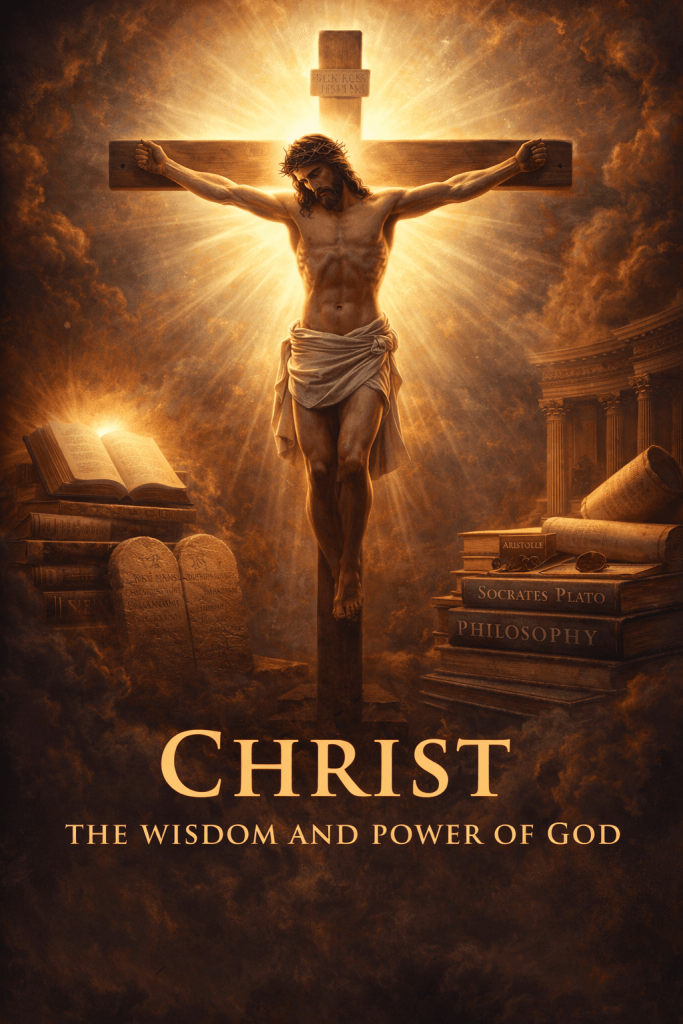
1 Corinthians 1: 22 For Jews demand signs and Greeks seek wisdom, 23 but we preach Christ crucified, a stumbling block to Jews and folly to Gentiles, 24 but to those who are called, both Jews and Greeks, Christ the power of God and the wisdom of God. 25 For the foolishness of God is wiser than men, and the weakness of God is stronger than men.

So why dabble with the holy word of God? I am amazed I haven’t not heard of any dabbing with Koran or the Buddhist book thus far, why? I wonder if the devil knows who is he going after?

To make the matter worse, this scholarship has produced man-made theology twisted to fit their agenda, case in point homosexuality usually be taking the case of slave, women.

Romans 1: 18 For the wrath of God is revealed from heaven against all ungodliness and unrighteousness of men, who by their unrighteousness suppress the truth. 19 For what can be known about God is plain to them, because God has shown it to them.

Calling slaves of the bible is wrong, therefore the whole bible is not from God is so wrong, for instance, because the slavery of the bible is not closed, and its debt paying, while the American slavery of the past is closed (meaning you are in it for life and your children etc.), and also its not debt paying, it’s just bought. Therefore the argument via the slavery just doesn’t stand at all. The case for women, it’s actually the bible teaching that lifted women in the Roman empire days, and its Jesus who included Mary Magdalene, it’s Jesus who stopped on his way with many men following him, for the bleeding woman who was unclean. It was Jesus who wept after seeing Mary and Martha wept for their brother who was dead. It was Jesus who rebuked Simon the Pharisee who tried to stop the woman pouring her perfume on Jesus’ feet. It was Jesus who chose to appear to women first at his resurrection even before the apostle big names like Peter, James and John. So scholarship has no ground to criticize there Bible as old fashion and out of date for the women.

Twisting the holy Scriptures

To even select a divine book or at least a religious book full of God’s love, glory, passion  and interaction with his people called Bible and to call it as a human author book is a spiritual assault of the divinity of God and his hands on his book. It is inconceivable how Bible has been made to be so broad , in fact as broad as you want, in the way you interpret it to suit one’s agenda! The critical and progressive churches today love to remove the supernatural of Christ, and to remove any scriptures on his resurrection, and to impose their LBGTQ ideology upon scriptures, by bending and twisting the scriptures to fit their quest. Now it’s shocking and deeply disappointing the Church of England Anglican Archbishop of Canterbury has endorse same sex marriage with all his theological training. It tells you something, the liberal theologians have no lack of knowledge, and knowledge itself if not taught properly falls in bad hands. People need to be aware of the warning Jesus gave: Whoever take any word out of this book Bible, I will remove his lampstand form him. If anyone  add one word to the bible, he will add woe to him.

Rev 22: 18 I warn everyone who hears the words of the prophecy of this scroll: If anyone adds anything to them, God will add to that person the plagues described in this scroll. 19 And if anyone takes words away from this scroll of prophecy, God will take away from that person any share in the tree of life and in the Holy City, which are described in this scroll.

Only Divine author can prophesy the future

I love what Dr Belcher said about his exposition on David when he wrote Psalm 23:4, because there is the divine author, he understood that the Messiah will go through the valley of the shadow of death and therefore we today have the assurance of Christ as we are going through tough times and difficulties that Christ has gone thru that before us. We have therefore the assurance he will be with us and pull us through. And that is beautiful. Like professor said if we don’t have a divine author, we won’t see the connection of that Psalm 23 text for God’s people today.

If we take away the divine authorship from the Bible, what is there left for us to find God and seek God from his holy scriptures?

We might as well read out some human author best seller book on how to be a good guy or how to find happiness in life!

Psalm 1 Blessed is the one
    who does not walk in step with the wicked
but whose delight is in the law of the Lord,
    and who meditates on his law day and night.
That person is like a tree planted by streams of water,
    which yields its fruit in season
and whose leaf does not wither—
    whatever they do prospers.

Psalm 1 says blessed be the man who meditates upon the Word of the Lord day and night, he shall be like a tree planted by streams of water, and bear fruits in due season. You know why is it so blessed by reading the bible and meditating it? Because the bible is life. It’s the logos, the Lord Jesus himself, and you draw life, strength, hope, joy from it. Because the author is God himself. And such divine book is no just intellectual book, but its intellectualwith LIFE in it too.

Jesus struck the man of lawlessness on his coming back by the word of his mouth. It’s the word that Jesus and the Father that created the world. Word is so powerful, and we must submit our hearts and love passionately the word of the Lord daily.

Conclusion: Loving the Word, Loving the Author

The Bible is not a museum of religious thought. It is the voice of the living God.
It speaks. It convicts. It heals.

To love the Bible is to love its Author. To submit to its truth is to submit to Christ Himself. Let us therefore treasure it, meditate on it, and defend it — for in doing so, we defend the very revelation of God to the world.

“The grass withers, the flower fades,
but the word of our God will stand forever.”
(Isaiah 40:8)

When the Perfect Comes: Prophecy, Tongues, and the Eschatological Horizon of 1 Corinthians 13:8–11

By Al Ngu


Introduction: A Passage of Controversy

Few passages in the New Testament have sparked as much theological debate as 1 Corinthians 13:8–11. The apostle Paul writes:

“Love never ends. As for prophecies, they will pass away; as for tongues, they will cease; as for knowledge, it will pass away. For we know in part and we prophesy in part, but when the perfect comes, the partial will pass away. When I was a child, I spoke like a child, I thought like a child, I reasoned like a child. When I became a man, I gave up childish ways.” (ESV)

For centuries, these verses have stood at the center of one of the most persistent theological disagreements in church history — the question of whether the miraculous gifts of the Spirit (like prophecy and tongues) continue today or ceased in the early church.

Cessationists argue that Paul foresaw a time when the gifts would no longer be needed, interpreting “when the perfect comes” to mean either the completion of the New Testament canon or the maturity of the early church. Continuationists, however, read the text differently, claiming that “the perfect” refers not to something that has already come, but to the consummation of the age — when Christ returns and believers see Him face to face.

Among modern scholars, one of the clearest voices supporting the eschatological interpretation is Gordon Fee, the late Pentecostal theologian and author of the NICNT commentary on 1 Corinthians. Fee’s reading places this passage firmly within Paul’s grand vision of redemptive history, where the church lives between Christ’s first and second comings — “between the times.”


Love That Never Ends

The context of 1 Corinthians 13 is crucial. Paul is not primarily writing a treatise on spiritual gifts; he is writing about love. His point is that love endures when all other things — even good and spiritual things — fade away. The gifts of prophecy, tongues, and knowledge are not condemned; they are temporal tools, given for a temporary age. Love, by contrast, belongs to eternity. It is the very nature of God Himself (1 John 4:8).

In Corinth, spiritual gifts had become a source of pride and competition. Some believers prized tongues as evidence of superior spirituality. Others exalted prophecy as the highest spiritual experience. Paul redirects their focus. “You want to know what lasts?” he says. “It’s not tongues. It’s not prophecy. It’s love. Love never ends.”

This sets the stage for his deeper argument — not that the gifts are bad, but that they are temporary manifestations of God’s Spirit in a world that still awaits its final redemption.


“The Perfect” — What Does Paul Mean?

Paul writes, “When the perfect comes, the partial will pass away.” The Greek phrase τὸ τέλειον (to teleion) literally means “the complete,” “the mature,” or “the perfect.” It can describe both moral perfection and final completion.

Cessationist interpreters, particularly within certain Reformed traditions, have argued that to teleion refers to the completion of the canon of Scripture — that once God’s revelation was fully written, the partial modes of revelation (like prophecy or tongues) were no longer necessary. Others propose that Paul speaks of the church reaching doctrinal maturity.

But Fee argues that both readings miss the point. The key to understanding Paul’s meaning lies not in the word teleion itself, but in the verbs he uses to describe what happens when “the perfect” arrives. The words katargēthēsontai (“will pass away”) and pauōntai (“will cease”) are eschatological verbs — words Paul uses elsewhere in 1 Corinthians to describe the end of the present age (1:28; 2:6; 15:24–26).

1 Corinthians 2: Yet among the mature we do impart wisdom, although it is not a wisdom of this age or of the rulers of this age, who are doomed to pass away. 1 Corinthians 15: 24 Then comes the end, when he delivers the kingdom to God the Father after destroying every rule and every authority and power. 25 For he must reign until he has put all his enemies under his feet.

These verbs signal a future event of cosmic transformation, not a historical development within the church. Paul’s point, Fee explains, is that the gifts are temporary because they belong to this age, not because they were ever meant to disappear before Christ’s return. They will “pass away” only when the church moves from the partial to the complete, from the present age to the age to come.


Face to Face: The Language of Consummation

Paul clarifies his meaning with the words, “For now we see in a mirror dimly, but then face to face” (v. 12).

This phrase, “face to face,” echoes Old Testament theophany — encounters with the visible presence of God. In Exodus 33:11, Moses is said to speak with the Lord “face to face.” In Numbers 12:8, God distinguishes Moses from other prophets because he alone sees the Lord “clearly.”

For Paul to use this language in 1 Corinthians 13 suggests that he is describing a direct, unmediated encounter with God, not a metaphor for spiritual growth. The “mirror” image reflects the limited nature of our present perception: we see God’s glory reflected dimly through the Spirit’s gifts, through Scripture, and through the church — but not yet with the fullness that will come at the resurrection.

Fee therefore concludes that “the perfect” must refer to the eschaton, the final consummation when believers will see Christ “face to face.” Only then will the gifts — partial reflections of divine knowledge — no longer be needed.


Childhood and Adulthood: A Temporal Analogy

Paul continues: “When I was a child, I spoke like a child… but when I became a man, I gave up childish ways.”

This analogy has often been used to support the idea that the church must “grow up” and leave behind the so-called childish gifts of prophecy and tongues. Yet, in context, Paul’s analogy does not describe individual or corporate maturity — it describes the progression of redemptive history.

Childhood represents the present age of partial knowledge and mediated experience. Adulthood represents the coming age of fullness, when believers will experience direct knowledge of God. The analogy, therefore, is temporal, not moral or developmental. Just as childhood naturally gives way to maturity, the provisional gifts of the Spirit will naturally give way to fullness when Christ returns.


Living “Between the Times”

Fee’s interpretation places the church’s experience of the Spirit squarely within an eschatological framework. Christians live in the tension between the already and the not yet — between the inauguration of the kingdom through Christ’s death and resurrection and its final consummation at His return.

In this “between time,” the Spirit empowers the church with gifts that both reveal and anticipate the coming kingdom. They are signs of the future breaking into the present — prophetic glimpses of the world made new.

To deny the operation of these gifts is to misunderstand the church’s eschatological identity. The gifts are not proofs of immaturity but marks of participation in the age to come. As Fee notes, the charismata “belong to the church’s present eschatological existence, in which God’s newly formed people live ‘between the times.’”

This is why Paul calls them “manifestations of the Spirit” (1 Cor 12:7) — they are visible signs that the Spirit of the risen Christ is already active among His people. The church is a community of the Spirit, empowered for mission until the day “when the perfect comes.”


The Passing Away of Gifts: Not Historical, But Eschatological

When Paul says that prophecy and tongues “will pass away,” he is not predicting an early cessation in church history. He is describing what will happen when history itself gives way to eternity.

In 1 Corinthians 15, Paul uses the same verb katargeō (“to nullify,” “to render inoperative”) to describe the final destruction of all powers opposed to God:

“Then comes the end, when he delivers the kingdom to God the Father after destroying (katargēsē) every rule and every authority and power” (v. 24).

Just as death will one day be “abolished” (15:26), so too will the partial forms of revelation — not because they are defective, but because they will be swallowed up in perfection.

The gifts are not terminated by ecclesial maturity but transformed by eschatological completion. They are temporary only in the same way that faith and hope are temporary (13:13): they will continue until they are fulfilled.

When Christ returns, faith will give way to sight, hope will give way to reality, and the Spirit’s gifts will give way to the direct presence of God.


Implications for the Church Today

If Fee’s reading is correct — and the evidence strongly suggests it is — then 1 Corinthians 13 offers not a rationale for cessation but a theological foundation for continuation.

The gifts of the Spirit are not vestiges of an immature church but instruments of the Spirit’s ongoing work in a world that is still awaiting redemption. They are, as Fee says, “signs of the End already begun.”

In a sense, every act of prophecy, every prayer in tongues, every word of knowledge is an eschatological event — a preview of the future world breaking into the present.

This interpretation also brings Reformed and charismatic theology into conversation. Reformed theology rightly emphasizes the sovereignty of God and the finality of Christ’s redemptive work. Charismatic theology rightly emphasizes the present activity of the Spirit who applies that finished work in real time. Fee’s eschatological reading shows how both are true: the gifts operate not as alternatives to God’s sovereignty but as its outworking in the “already–not yet” age.

The church, therefore, remains both Reformed and charismatic — grounded in Word and Spirit, doctrine and power, revelation and love — until the day “when the perfect comes.”


Conclusion: Awaiting the Perfect

Paul’s argument in 1 Corinthians 13:8–11 is not that prophecy and tongues would fade once the church matured or the canon closed. His vision is far greater. He situates the gifts within the story of redemption itself, as temporary manifestations of the Spirit that serve the people of God until Christ’s return.

When that day comes — when believers see the Lord “face to face” — prophecy will no longer be needed because we will hear God directly. Tongues will cease because all languages will be united in praise. Knowledge will no longer be “in part” because the fullness of divine glory will fill all in all.

Until that day, the Spirit continues to distribute gifts to the church as signs of the coming kingdom. We live between the times — the redeemed people of God, filled with His Spirit, sustained by His love, and awaiting the perfection that only His presence will bring.

Love never ends. But until the perfect comes, the Spirit still speaks.


References (APA 7th ed.)

Fee, G. D. (1987). The First Epistle to the Corinthians (New International Commentary on the New Testament). Eerdmans.

Thiselton, A. C. (2000). The First Epistle to the Corinthians: A Commentary on the Greek Text (NIGTC). Eerdmans.

Carson, D. A. (1987). Showing the Spirit: A Theological Exposition of 1 Corinthians 12–14. Baker.

Wright, N. T. (2012). Paul and the Faithfulness of God. Fortress Press.


Paul—The First Reformed Charismatic

How the Apostle of Grace and the Apostle of Power Shows Us the Way Forward

1. Introduction: The Tension We Feel Today

The modern church often splits: Reformed (truth, doctrine, Word) vs. Charismatic (experience, gifts, Spirit).

The modern church often finds itself divided: Reformed (truth, doctrine, Word) versus Charismatic (experience, gifts, Spirit). Yet Scripture calls the body of Christ to something greater—nothing less than the full maturity of the Word of God:

Ephesians 4:11–13 (ESV)
“And he gave the apostles, the prophets, the evangelists, the shepherds and teachers, to equip the saints for the work of ministry, for building up the body of Christ, until we all attain to the unity of the faith and of the knowledge of the Son of God, to mature manhood, to the measure of the stature of the fullness of Christ.”

Paul reminds us that the church’s maturity is inseparable from the equipping of the saints through the fivefold ministry—apostles, prophets, evangelists, shepherds, and teachers. The goal of this equipping is unmistakable: that the church might attain the unity of the faith and the knowledge of the Son of God. Only in this unity can the body grow into maturity and reflect the fullness of Christ.

This vision has profound implications. Unity in faith and knowledge must be expressed not merely in shared doctrine but also in the lived practice of the church. Theological truth and spiritual gifts are not competing forces but complementary realities by which Christ builds His body. Reformed theology provides the foundation of truth rooted in Scripture, while the exercise of spiritual gifts demonstrates the Spirit’s active presence and power. Both are essential if we are to reach maturity in Christ.

Yet such unity is often absent between two major streams of Christendom: the Reformed and the Charismatic. Both are vibrant, both are biblical, and yet deep divisions and misunderstandings remain. This book argues that the Reformed tradition, without abandoning its theological depth, must recover an openness to the gifts and empowerment of the Spirit. Too often, Reformed churches become rigid and restrained—even to the point where Sunday morning prayers are fully scripted by the pastor. Written prayers have value, but they often lack the immediacy and conviction of prayers birthed in the moment under the Spirit’s leading. Heartfelt, Spirit-led prayer carries a weight and vitality that scripted words simply cannot capture. This is precisely how prophecy functions in the gathered church: men and women moved by the Spirit speaking forth the Word of God in season.

Such Spirit-filled passion is not foreign to Scripture. The Psalms are saturated with David’s raw emotion and Spirit-driven intensity; they model worship infused with both Word and Spirit. What the Reformed tradition needs is not less doctrine, but more Spirit—prayer, preaching, and worship marked by conviction, passion, and prophetic vitality.

Of course, the opposite extreme is also perilous. Spontaneity without grounding can become shallow, repetitive, or dependent merely on emotion. Here, the Word of God provides balance. To personalize prayer and worship through Scripture—especially the Psalms—is to bring Word and Spirit together in power. This is the congruence the church desperately needs: truth anchored in Scripture, yet alive through the Spirit’s present work.

Setting the Stage: Awakening in a Dry Land

The Spiritual Climate of the Colonies

By the early 18th century, the American colonies were marked by spiritual lethargy, formalism in the churches, and moral decline. Into this dry and dusty religious landscape, the Holy Spirit moved with power. The First Great Awakening (1730s–1740s) was not merely an emotional uprising but a sovereign work of God marked by deep repentance, biblical preaching, and spiritual renewal. It stands as an exemplar of revival—one that maintained theological fidelity while opening wide the doors to the supernatural work of the Spirit.

The churches of Edwards’s day were stuck in routine. Spiritual lethargy meant the absence of the convicting power of the Holy Spirit, both personally and corporately. Worship was dry, mechanical, and formalistic. It was precisely in this barren setting that God poured out His Spirit with fresh vigor, igniting revival.

The Marks of True Awakening

The First Great Awakening was not merely emotional, though emotions certainly played a role. Revival touches the whole person—mind, will, and affections. But emotion alone is not revival. True awakening is a sovereign work of God marked by repentance, biblical preaching, and spiritual renewal.

The defining feature of Edwards’s revival was not simply stirring sermons or outward excitement but lasting transformation. Preaching without renewal would have amounted to little more than intellectual “hot air.” But spiritual renewal followed biblical preaching. That is the essence of authentic awakening: repentance undergirded by truth.

The real test of revival is whether new believers persevere in faith and grow in Christ. Are they discipled with grace-filled, God-centered instruction, or left with shallow teaching? A Spirit-born revival must be sustained not only by experience but also by sound doctrine. The First Great Awakening remains astounding for its depth: repentance, tears of remorse, cries to God, and powerful biblical preaching.

This reflects the pattern in Acts 2:

“And they devoted themselves to the apostles’ teaching and the fellowship, to the breaking of bread and the prayers. And awe came upon every soul, and many wonders and signs were being done through the apostles. And all who believed were together and had all things in common.” (Acts 2:42–44, ESV)

The Need for Awakening Today

By comparison, today’s churches fall short. In 21st-century America, do we not also feel spiritual lethargy and moral decline? Perhaps it is less about rigid formalism and more about a pervasive dryness: a lack of passion for God, a weak desire for His gifts, signs, and wonders, and congregations running in “maintenance mode.”

What we desperately need is a fresh spiritual reawakening both inside and outside the church. The First Great Awakening gives us both a model and a warning. It shows us what God can do in a time of deep spiritual drought, and it reminds us not to settle for a faith that is shallow, passionless, or powerless.

Edwards and the Gifts of the Spirit

This Awakening also offers a crucial historical case study for modern Reformed believers wrestling with the legitimacy of charismatic gifts. It demonstrates that the Spirit’s power need not contradict the confessional Reformed tradition but can in fact enrich it.

Jonathan Edwards did not believe the supernatural manifestations of the Spirit were limited to Pentecost or confined to the apostolic age. In A Faithful Narrative of the Surprising Work of God (1737) and other writings, Edwards argued that the dramatic phenomena observed during the Awakening—deep conviction of sin, visions, emotional outpourings—were consistent with the Spirit’s ongoing work in revival, though distinct from the once-for-all, foundational events of Pentecost (Acts 2).

Here Edwards directly challenged a common Reformed cessationist claim: that visions, prophecy, and tongues were confined to the apostolic era for the laying of the church’s foundation, and that once Scripture was complete, such gifts ceased. Edwards disagreed. He personally witnessed and affirmed the Spirit’s extraordinary manifestations and did not believe they were restricted to the first century.

This distinction has massive implications. It clarifies the difference between the revelatory gift of Scripture, which indeed closed with the apostolic age, and the prophetic or supernatural operations of the Spirit, which continue throughout church history.

While Edwards affirmed both the sufficiency and the finality of Scripture, he did not equate every prophetic or supernatural activity with the writing of new Scripture. In doing so, he upheld the authority of the Bible while leaving room for the Spirit’s ongoing, life-giving work—something we too must embrace today.

Conclusion: A Pattern for Reformed Charismatics

The First Great Awakening reminds us that authentic revival is not a contest between doctrine and experience, or between Reformed theology and charismatic gifts. In fact, it shows us that these two realities are meant to converge. The Word of God provides the foundation, guarding us from error and excess; the Spirit of God supplies the fire, preventing our faith from devolving into lifeless formalism.

Edwards’s legacy is a call to hold both together. He upheld the sufficiency of Scripture, yet he welcomed the surprising works of the Spirit. He preached deep, God-centered theology, yet he did not quench the supernatural gifts that brought conviction, repentance, and renewal. This is precisely the pattern modern believers need: a revival that is both theologically rooted and Spirit-empowered.

For Reformed charismatics today, the First Great Awakening is not merely history—it is a prophetic model. It demonstrates that the sovereign God who moved in 18th-century New England is the same God who longs to awaken His church now. The Spirit has not grown weary, nor has He ceased to give His gifts. What is needed is a church hungry for God, grounded in His Word, and open to His power.