God didn’t forsake Jesus on the cross

Page 255 on the book Islamic view of Jesus of the book cross and Crescent responding to the challenges of this Colin Chapman, he writes that the Muslim conviction as summarize by M.Ali Merritt.

The Muslim conviction is… “Strengthened by everything he reads in the Quran , namely, that God does not abandon his own: how then could he have abandoned Jesus, a being whom he produced, miraculously, by his Spirit, when he is singularly favored, conferring on him the remarkable power of giving life and raising from the dead? God cannot hand  over to the fury of some executioners and being with a nature like Jesus. Islam refuses to accept the tragic image of the Passion. Not simply because he has no place for the dogma  of the redemption, but because the passion imply that God had failed.Islam rejects the idea of the death of Christ. “ – M. Ali Merad- a Muslim scholar of Algerian origin

To say that how could God abandon Jesus, a man who produced miraculous, etc., based on the doctrine that God does not abandon his own is grossly misunderstanding the God of Christianity! The reality is, God did not abandon Jesus on the cross, but God put Jesus on the cross precisely for the redemption purpose to redeem man by sacrificing his own Son to save mankind. 

John3:16 God so love the world that he gave his only Son, so that whoever believes in him shall not perish but have eternal life. 

They completely misunderstood the redemption of God in Christ Jesus that God “ abandoned Christ” on the cross, when God let the Pharisees and the Romans crucify his Son, so the his Son Jesus Christ becomes a redemption lamb of sacrifice for the whole world.

It’s a matter of fact, it is very interesting that Jesus actually called out “Aba Aba  Why have you forsaken me?”  on the last minute before he died on the cross and that is he felt forsaken by his Father he loved so much and whom loved him so much. But Jesus realized that that’s the only way to save the world, and he has already struggled before coming to the cross in the garden of Gethsemane that he sweated in blood in asking Father to take away this cup of suffering and death on the cross. But he asked the Father, “but your way will be done not mine”,  that it’s a real breakthrough ;  heavenly father sent in angels  to strengthen Jesus at that time.

Reflections on Jesus in Quran

Given some of the things that Quran has written about Jesus, if the reverse were done in the other way round in the Bible regarding Muhammad, big row would have broken out. I find it astonishing the false heretical accusations thrown at Jesus the revered son of God in Christianity in all his glory as the Messiah of the world who died on the cross for humanity, been pushed around in Quran. Surah 5 verse 72 says Christians claim Allah the third of the three wrongly. Christians never claim God is the third of the three they have no understanding of the Bible and yet begin to point finger at the Bible. Trinity is 3 persons , one God.

Surah 4 verse 159 says Jesus will witness against Christians on the last day. I find this incredulous that they have the audacity to rewrite the holy book of Christianity that was already established some 600 years before Quran was written. So Muhammad claimed the revelation from Allah in the Quran that Jesus Christ will come back to this world on his return and witness against Christians on the last day? Really? When Christians are a part of the church which is the body of Christ himself! And Christ died for the church! Christ died for Christians! That’s total nonsense.

And I heard from the lecture that Quran Surah 4 and Surah 5 talked about Jesus a son of Mary told the people to worship Allah God alone.

And now they put on notice regarding Christians and Jews as Muslims’ enemies, Sura 5 verse 51 says Muslims should not take Jews and Christians as allies or friends. More astonishingly, in Surah 9 verse 29 says Muslims should fight Christians who do not believe in Allah and agree to submit! Can you imagine a so-called holy book calling for war against Christians because we Christians don’t believe in the Allah of Quran? Let’s turn it around do we ever say in our Bible or rather did the Lord ever said in our holy scripture the Bible that Christians should fight against Muslims who do not believe in Christ and agreed to submit? You see they don’t seem to understand submission comes in the form of Jesus the Lord of all washed the feet of his disciples and that is the master who washes the feet of his followers. Can you imagine the hearts of the followers how they are melted and submission it’s not even a question because it comes in so much love and adoration and that is Christianity!

From the intellectual point of view, for the Muslim scholars, my question is how do they analyze Quran that was written 600 years after the Bible, starts accusing the truth of the holy book of Christianity in a way to dispute the recorded teachings of Christ and the recorded Christ death and resurrection, they are not only disputing it but they are actually rewriting some of the major parts of the holy Bible and when they touched the son of God Jesus Christ in Quran in depicting him as mere man and a messenger prophet, how do Muslim scholars intellectually reconcile the validity of such assertions in Quran? The experiential part of the death and restoration can be taken care of quite easily, whether to believe and dispute, I get that as many sciences and modernity dispute that, but to reword and rewrite the teachings of Christ as to even label Christ to tell people to worship Allah (Islam god) alone, isn’t this almost feels like a fantasy talk of a recorded worldwide event that happened 600 years ago by Quran? Because this teaching has nothing to do with Quran per se, but it’s like taking an attack mode on another religion in middle East? You can disagree with Bible’s words on teaching of Jesus, but to change what Jesus actually teaches in the Bible is another thing!

Choosing the lesser of two evils

Choosing the lesser of two evils is really an exercise of wisdom in the normative priority, situational priority, and existential priority. In Matthew 23:23 Jesus criticized the teachers of the law and Pharisees as hypocrites, as they gave a tenth of the spices but they neglected the more important matters of the law call mark justice, mercy and faithfulness. So clearly there’s a different level of priority in the duties and the laws of God.

So choosing the lesser of the two evils is a very situational situation. For example Jesus said the Sabbath was made for men, not man for the sabbath so the son of man is the lord even of the sabbath in Mark 2:27-28. Situationally Jesus broke the sabbath to eat in the sight of the Jewish pharisees. And also in Acts 15:20, the Apostolic committee told the gentiles that they should abstain from food polluted by idols, from sexual immorality, from the strangled animals and from blood which is not part of the law, but a situational priority.

Now we can apply the comparison contrast for “less than two evils” for example Nazis at the door knocking at the door, “would you hand over the innocent Jews?” You either lie or protect the Jews. It’s a matter of prioritizing seeking the greater good and the higher law. In the same situation in Exodus 1, Frame wrote about the Hebrew wives lied to Pharaoh in order to save Hebrew babies. And God praised the Hebrew midwives for saving the Hebrew babies, but if you look at it, the Hebrew midwives lied which is supposedly a sin. This clearly speaks of the lesser evil of the two, either to lie or kill the babies. Same case for Rahab who lied to the army of Jericho about the two Jewish spies that hid in her artic, because she feared God of Israel. It’s a common sense to know that killing babies is a far greater evil than to lie. If we extend that to the election we get to look at the casting our vote for example, for the lesser of two evils, and coincidentally, we are faced with policy of killing babies by abortion or looking at the character of another candidate some decades ago.

This is a well framed answer, but as a response, how do you ensure this approach is not susceptible to pragmatism or avoid the charge that it selects its ethics on the basis of each person’s situation?

Clearly there are different levels of sin, some sins are worse than the others. (Frame, Doctrines of Life, 225). Westminster larger catechism 151-52 tells us that some sins are worse than others. Jesus also said in Luke 10: 11 ‘Even the dust of your town we wipe from our feet as a warning to you. Yet be sure of this: The kingdom of God has come near.’ 12 I tell you, it will be more bearable on that day for Sodom than for that town.

Luke 12:47–48 (ESV)

47 And that servant who knew his master’s will but did not get ready or act according to his will, will receive a severe beating. 48 But the one who did not know, and did what deserved a beating, will receive a light beating. Everyone to whom much was given, of him much will be required, and from him to whom they entrusted much, they will demand the more.

Therefore we can legitimately argue for the lesser of the two evils and its completely found in scriptures, in fact, both from the Lord Jesus himself.

So this is clearly beyond just the situational perspective. Interestingly, the just concluded presidential election has torn Christianity apart in supporting them. I would argue we should vote for the lesser of the two evils. In terms of policy, one has only good and hardly any evil, and the other is literally overflowing with evils form abortion till 12th week, to transgenderism using tax dollars, and cheating using illegals to bolster their vote, of a level unseen or heard in any country that I know of.

How do you struggle to take delight in the Lord’s Day?

How do you struggle to take delight in the Lord’s Day? How could the WCF’s teaching on the Lord’s Day be applied to your life, or the lives of those in your church to help in seeing the beauty of the Sabbath?

I will admit that it is a challenging and difficult process to take delight in the Lord’s day in the sense of what Westminster confession talking about keeping the Sabbath holy unto God By making preparation of our heart and ordering our common affairs beforehand, and observe a holy rest all the day from our works, words, thoughts and our worldly employments and recreations. But also, to be taken up the whole time in the public and private exercise of his worship in the duties of necessity and mercy.

This is a very strong dedication and setting aside the Lord’s day as a Sabbath day holy unto God that require essentially almost a complete holy rest from all our works so as to be taken up in worship on the Lord’s day. This practically is almost impossible because of the heavy schedule of bi-vocational seminary student and a full-time job so as to catch up all the assignments and paper and preparation on the weekend is crucial just to barely stay on top of it.

I would say Isaiah 58:13-14 helps me a lot in the perspective in terms of the word “delight”. Isaiah writes that if we turn back our foot from the Sabbath, from doing our pleasure on God’s holy day, and call the sabbath a delight, and the holy day of the Lord honorable, if we honor it, not going our own ways or seeking our own pleasures then we will take delight in the Lord, then God will make us ride on the heights of the earth.

To me this is insanely motivating and powerful to make us ride on the height of the earth just by putting pleasure on God’s Sabbath as a day of the Lord. I see this as God wanting our heart for a day that He sets apart every week instead of taking our own ways, this surely bring much pleasure to the heart of God. It’s like my way of God’s ways and if I submit to God’s way on the day of holiness called Sabbath day, He promised that we will take delight in him. I think it is more than just honoring the Sabbath day, makes us delight in the Lord, but it is the process of setting our time for God weekly is in in itself taking delight in God!

I believe we will grow overtime in it. Now the question of how we do that practically on the Lord’s Day i.e. Sunday is that I quite agree with Dr Duncan’s lecture saying that a great way of spending Sabbath day is have two worship services on Sunday morning and Sunday evening, that pretty much fill up and dedicate the day of the Lord and keep it holy to the Lord.

I look forward to writing on the height of the earth in the Lord. Amen.

Isaiah 58:13–14 (ESV)

13    “If you turn back your foot from the Sabbath,

from doing your pleasure on my holy day,

       and call the Sabbath a delight

and the holy day of the Lord honorable;

       if you honor it, not going your own ways,

or seeking your own pleasure, or talking idly;

14    then you shall take delight in the Lord,

and I will make you ride on the heights of the earth;

       I will feed you with the heritage of Jacob your father,

for the mouth of the Lord has spoken.”

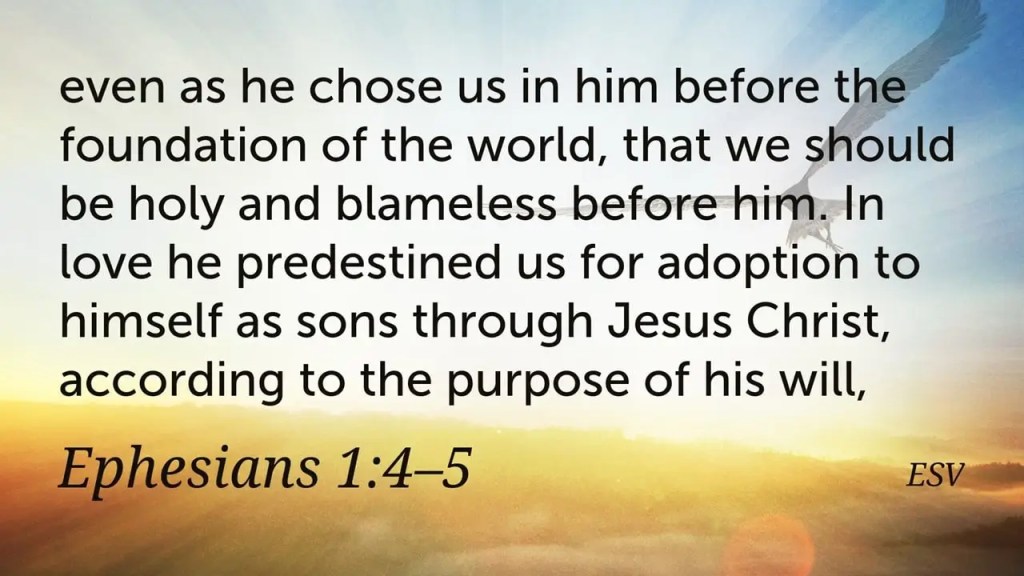
How to explain and actually use “Election & Predestination” in our thinkings and ministry

Some have argued that the topics of election and predestination should be avoided in preaching due to their complex and difficult nature, and even that they are a hindrance to evangelism. Do you agree or disagree? Provide rationale for your position.

I would say that it is not easy to talk about election and predestination in our evangelism correct, however there are some phenomenal truths that can be very appealing to the non-believers in evangelism. For instance God from all eternity by His most wise and holy council of his own will, freely and unchangeably ordained whatsoever comes to pass and yet he is not the author of saying, and also he does not violate the free will of the creatures, neither is the liberty and contingency of secondary courses being taken away but rather established. That to me is a very appealing voice of the attribute and the character of God. Because he’s totally in charge in control and yet he gives us the free will to respond he doesn’t control his creation robotically. And also the liberty or contingency of the secondary causes are not taken away but rather established. That means what we do matter and we are not going towards fatalism.

JI Packer also expounded that the whole Bible is the outworking of God’s sovereign purpose for his world, the purpose that led him to create, the sin that disrupted, and his work of redemption is currently restoring. I think that’s a really appealing message that in this broken world which non believers will acknowledge, to know that God is currently restoring the world, it is a real message of comfort and encouragement and relevance of God. And the purpose of all this restoration is the endless expression and enjoyment of love between God and his rational creatures- love shown in their worship, praise, thanks, honor, glory, and service given to him, ending the fellowship, privileges, jaws, and gifts they give to them. Bible tells us that what God has done to advance God’s redemptive plan for sin damaged planet earth, and they look ahead to the day of its completion, when planet earth will be recreated in unimaginable glory. They proclaim God as the almighty creator Redeemer and do all constantly of the multifaceted works of grace that God performs in history to secure for himself a people, a great company of individuals together, with whom his original purpose of giving and receiving love can be fulfilled. God has shown himself absolutely in control in bringing his plan to the point and working out everything according to his own will and completing his redemptive project.

Considering the area of pastoral care alongside of preaching/evangelism (you hint at an answer, but aim it toward this question): How might you discuss election & predestination with someone faithfully attending your church, who did not grow up in a Reformed church, but who wants to talk to you about how they believe “election and predestination don’t have any practical use,” instead, they say: “these doctrines just seem to make people complacent in their faith”?

Topics of election and predestination should be avoided in preaching due to their complex and difficult nature?

I would say that while election and predestination is highly mysterious, and we cannot deny it as its plainly written in the Bible. And WCF has really articulated it beautifully, though, hard to swallow sometimes, because, the reality is its still hard to understand fully, but we have to remember that we are his creature, and He is God. And He reserves the right to mystery that He hasn’t revealed, and He has the perfect right to reveal what He chooses to His creatures, as in: Deuteronomy 29: 29 “The secret things belong to the Lord our God, but the things that are revealed belong to us and to our children forever, that we may do all the words of this law.

An important point is that God doesn’t violate our free will. WCF: “God does not violate the free will of the creatures, neither is the liberty and contingency of secondary courses being taken away but rather established.”

That settled, I would then focus on the restoration of this broken world, as JI Packer puts it, “The whole Bible is the outworking of God’s sovereign purpose for his world, the purpose that led him to create, the sin that disrupted, and his work of redemption is currently restoring.”

God’s sovereign purpose and work now is the work of redemption that’s currently restoring what’s been destroyed by sin, and it’s that restoration, we believers in Christ, we are honored and called, to take part in. And it’s the highest calling for all of us all.

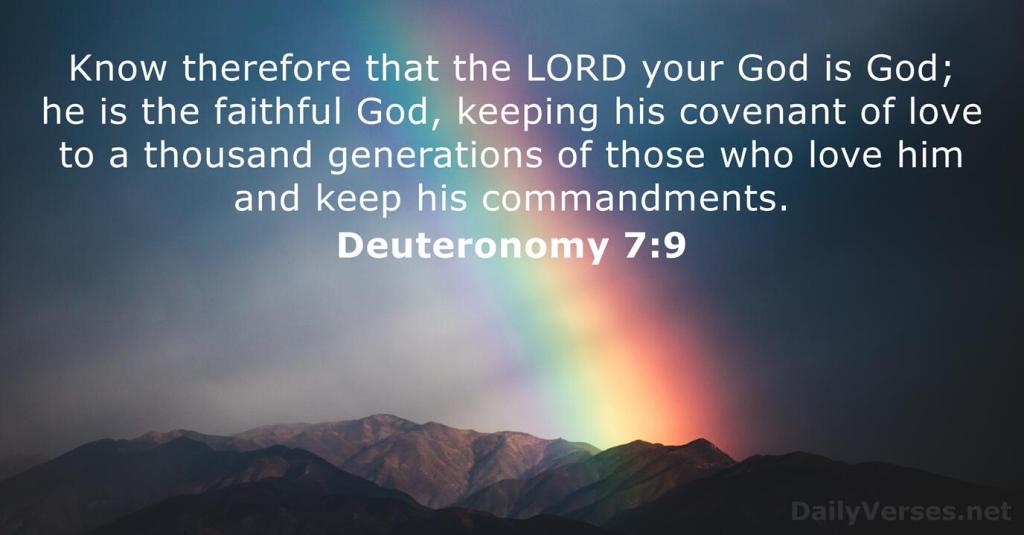
God’s covenant with us enables us to experience Christ’s salvation for us

First of all the distance between God and humans is so great that we can never have any fruition of him as our blessedness and reward except by God’s condescension upon us, which he has expressed by way of covenant. So, God has chosen to relate with us and to reveal himself to us through a covenantal way like the Abrahamic covenant, Mosaic covenant, and eventually the new covenant by the son of God our Lord Jesus Christ himself. All these covenants are in fact the covenant of grace not of law. So, covenant is the means whereby we enjoy God as our blessedness and reward. Therefore, our justification and sanctification in life completely depends on the revelation and the relationship of God with us through the covenant which is the only means we can enjoy his blessings and reward.

Our justification is completely dependent on Christ’s fulfillment of the covenant works which is the first covenant God made with man whereby life was promised to Adam, and in him his posterity, upon condition of perfect and personal obedience. That covenant of works points to the terms of conditions on which the blessings of the covenant continues. Man by his fall has made himself incapable of life by that covenant of works, the Lord was pleased to make a second, commonly called the covenant of grace; Whereby he freely offered unto sinners life in salvation by Jesus Christ; requiring them of faith in him, that they may be saved and promising to give unto all those who are ordained unto eternal life his Holy Spirit, to make them willing, and able to believe. Now this is a huge promise because fallen man like all of us will not be able to be willing to believe in Christ if it were not for the work of the Holy Spirit in our lives, those of us who are the elect. In the covenant of grace, there is blessing despite disobedience. The covenant of grace conditions are fulfilled by Jesus on our behalf. Our faith is required of us in the covenant of grace but it is not the basis of salvation. It is merely the means to receive the blessing which Jesus has obtained on our behalf. Therefore our obedience is tied up with Christ’s fulfillment of the conditions.

The only way we can go on in our lives sanctified is by and through the mediator of our Lord Jesus Christ to stay in grace. Like Westminster says we are brought into this covenant by grace and stay in it by our mediator our Lord Jesus Christ. Our ongoing sanctification depends on our obedience to Christ. Our obedience can only follow from the active and passive obedience of Christ because Christ fulfilled the conditions of the covenant of works, our salvation is by grace alone and by faith alone in Christ who has obeyed perfectly the covenant of works on our behalf.

This is hugely encouraging to folks in church to understand that it is not by our effort to continue to be sanctified and walking with Christ but it is rather Christ has already won the battle on the cross by his perfect obedience, and that we are drinking in that benefit and walking in him by the Holy Spirit, commonly called abiding in Christ. And then we are justified by Christ because he fulfilled all the conditions of the works of covenant which our forefather Adam failed. And now we can continue to be sanctified because of his complete obedience that our obedience is tied up with Christ fulfillment of the conditions and because he has fulfilled it, we can be overcomers in our Christian walk with God.