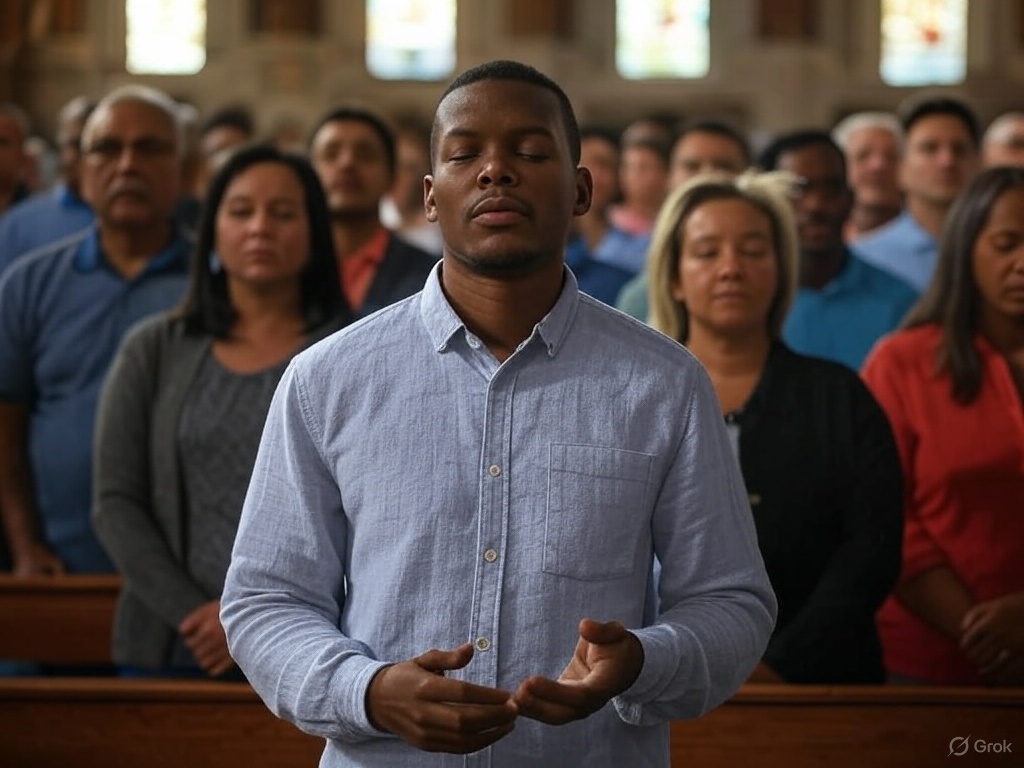
🕊️ Lingering in the Presence: Worship Beyond Emotionalism

“But now bring me a musician.”
Then it happened, when the musician played, that the hand of the Lord came upon him.
2 Kings 3:15 (NKJV)


Introduction

Why do many modern churches end worship so quickly?
Why are moments of musical lingering—those quiet stretches when hearts are still and the Spirit seems near—often labeled emotional manipulation?

Yet, throughout Scripture, music was never simply emotional; it was spiritual. It was the place where the Word met the Spirit, where prophecy was born out of melody, and where God’s presence rested among His people.


1. Music, Presence, and Prophecy in the Bible

From the Old Testament to Revelation, music repeatedly becomes the setting of divine encounter:

  • David’s harp brought peace and deliverance to Saul (1 Samuel 16:23).
  • Elisha’s musician prepared his heart to hear the voice of the Lord (2 Kings 3:15).
  • The Psalms are Spirit-inspired songs meant to awaken holy affection (Ephesians 5:19; Colossians 3:16).
  • In heaven, the worship of the Lamb resounds with harps and songs (Revelation 5:8–14).

When music is offered under the anointing of the Spirit, it becomes more than sound—it becomes a sanctuary of revelation.


2. Why Modern Churches Resist Lingering Worship

Many pastors and worship leaders hesitate to let the congregation linger in the presence of God after the songs end. Here’s why:

a. Reaction Against Abuse

Some have seen emotional manipulation in worship—music used to stir tears rather than truth. In response, churches tighten control, choosing safety over sensitivity.

b. Fear of Subjectivism

Reformed theology rightly centers faith on objective truth—Christ’s finished work. Yet some fear that deep emotional worship could make faith feel subjective, dependent on moods rather than on Scripture.

c. Cultural Minimalism

We live in a culture that prizes schedules, not stillness. Extended worship doesn’t fit the production model of many Sunday services.

d. Misunderstanding the Role of the Spirit

There is often discomfort with the tangible, experiential work of the Holy Spirit—His power to touch, heal, or inspire during worship. It feels “too unpredictable.”


3. Emotion vs. Emotionalism

The issue is not emotion itself—it’s emotionalism.

Emotion, when grounded in revelation, is the proper response to the glory of God. Emotionalism seeks feeling for its own sake.

As Jonathan Edwards wrote:

“True religion, in great part, consists in holy affections.”

Genuine worship should move both mind and heart—truth embraced by the intellect, igniting holy passion in the soul.


4. Lingering as Spiritual Formation

Lingering in the presence of God is not emotional manipulation—it’s spiritual formation.

When we wait on the Lord through music and silence, truth travels from head to heart. The Spirit uses that sacred pause to convict, comfort, and renew.

In those moments, worship ceases to be performance—it becomes participation.
We are not merely singing about God; we are meeting with Him.


5. The Congruent Path Forward

The way forward is not to choose between Word and Spirit, but to unite them.

  • The Word anchors us in truth.
  • The Spirit breathes life into truth.
  • Music bridges the two—helping the soul encounter what the mind believes.

When David played, peace came.
When Elisha listened, prophecy flowed.
When the church lingers, the Spirit moves.

So let us not rush the sacred. Let us linger in His presence—until the Word we sing becomes the Word we live.


Closing Reflection

Perhaps the most countercultural act of worship today is not louder music or faster songs, but stillness.
To pause long enough for the Holy Spirit to speak—that is not manipulation.
That is communion.


Regulative Worship Vs Normative worship

I have grown up in a Methodist Church as a kid switched over to intervarsity Christian fellowship in school in the middle school time and onwards, and essentially I’ve always been exposed to the normative worship. Normative worship includes elements not explicitly forbidden by scripture, as long as they are consistent with biblical principles and promote edification. That will cover the whole spectrum of interdenominational worship, even high church like Anglican high church with liturgical worship as long as they are related and in being consistent with biblical principles and promote edification, I will have no problem in fact I will have great affinity and for it.

What is and why Regulative Worship

But what is regulative worship? I never heard of it until I entered seminary on my last year I took a two-hour credit hours class on the regulative worship by Dr Duncan and to my amazement there is such a thing called regulative worship. Essentially the argument for such is actually found in:

Exodus 20:1–5 (ESV)

And God spoke all these words, saying, “I am the Lord your God, who brought you out of the land of Egypt, out of the house of slavery. “You shall have no other gods before me.“You shall not make for yourself a carved image, or any likeness of anything that is in heaven above, or that is in the earth beneath, or that is in the water under the earth. You shall not bow down to them or serve them, for I the Lord your God am a jealous God, visiting the iniquity of the fathers on the children to the third and the fourth generation of those who hate me,

In Exodus 20, God established the 10 commandments for Moses to tell all the Israelites, and before that he gave them background why the Ten commandments to the nation of Israel. I love the fact that God started off saying, “I am the Lord your God who brought you out of the House of slavery, you shall have no other gods before me.”  He established his credibility, He established who He is before telling Israel what to do. I believe that that’s the cool thing about Christianity is you need to know who the God of Christianity is before trying to do the morals and the commandments of Christianity. If you try to do or obey the 10 commandments yourself thinking that that will please God and get yourself a ticket to go to heaven, without knowing the God who gives the Ten commandments, you are really deeply wrong and in trouble. This is what you call legalism, and it is actually pretty rampant in our world today simply because of the ignorance of the truth of the word of God. And that’s why I’m passionate of bringing all this out in my writings and my podcasts and my preaching and teaching.

Now in the next verse God said you shall not make for yourself a carved image or any likeness of anything that is in heaven above or the earth below or the water below and you shall not bow down to them or serve them for I’m a jealous God. I’ve been reading them for the last few decades thinking that God is warning us not to make anything in this world as an idol to bow down and to me that’s pretty clear. And that is connecting to v 3 that says, “you shall have no other gods before me .” In other words don’t make this idolatry of the images of carved images of anything on earth or in the water as God. In our modern-day application it will simply mean don’t love anything or put your hope in anything that’s above who God is like Augustine says our problem is not the love of the world, our problem is the disordered love. Just like if we love money, love worldly comfort that is OK to a great extent, but just don’t make it the same pedestal with God because any love for anything in this world that is on par with or above God will get us into the trouble of breaking this commandment of idolatry.

However in the reformed world the regulative worship principle actually argues that:

“You shall have no other gods before me.“You shall not make for yourself a carved image, or any likeness of anything that is in heaven above, or that is in the earth beneath, or that is in the water under the earth. You shall not bow down to them or serve them, for I the Lord your God am a jealous God, visiting the

When God commanded Israel not to make any imagery of anything on earth or heaven or water below and they shall not bow down to them and serve them, the reformed teachings actually teach us that what God is saying is don’t worship me in the form of a carved image or the likeness of anything on earth in heaven or in the water. Now this is hard to swallow because in verse 5 God said you shall not bow down to them or serve them for I the Lord your God and my jealous God. God didn’t say you shall not bow down to them thinking that I am being expressed in those carved images. God clearly makes a distinction between those idols and him, because he says don’t bow to them or serve them.

There is no indication whatsoever to think that don’t worship the Lord your God in the form of those images.

But anyhow, this is how the regulative worship doctrine comes through by the fact that God commands the way how he is worshipped and not to be worshipped through those images. Case in point perhaps is the golden calf that Israel bowed down to the golden calf, is that an idolatry of the golden calf, or did Israel think that the almighty God manifests himself in the form of golden calf? In my mind the latter is clearly an abomination.

That aside if we go by that argument regarding regularity for worship which means:

  • Regulative Principle of Worship: Worship must include only those elements explicitly commanded or authorized in Scripture. Anything not prescribed is forbidden.
  • Normative Principle of Worship: Worship may include elements not explicitly forbidden by Scripture, as long as they are consistent with biblical principles and promote edification.

Regulative worship includes only those elements explicitly commanded or authorized in scripture. Anything not prescribed is forbidden. That’s why regulative worship is called prescriptive worship. While normative worship may include elements not explicitly forbidden by scripture as long as that consistent with biblical principles and promote edification.

John Calvin, Jonathan Edwards, and Herman Bavinck are all leaning towards regulative worship. However to my pleasant surprise and joy, I found Augustine more leaning towards normative worship.

Augustine & Normative Worship—Heart’s disposition & centrality of scriptures

In works like On Christian Doctrine and City of God, Augustine emphasizes that worship should glorify God and edify the church. He focuses on the heart’s disposition and the centrality of Scripture, preaching, and sacraments (baptism and the Eucharist), but he does not explicitly restrict worship to only scripturally mandated elements. [1]

Augustine emphasizes that worship should glorify God and edify the church, I think he’s got it exactly on the point. Now what he wrote the next line is fascinating because he wrote he focuses on the hearts disposition and the centrality of scripture, preaching and sacraments, and that’s precisely what I would go by. I think the most important point is the word, “hearts disposition and the centrality of scripture.” As long as the worship contains a hearts disposition of the author of the composer and with a genre of the centrality of the holy scripture, I think that will be the best form of worship which happens to be normative. If you look at Augustine, a man who wrote one of the most fascinating and engaging and intense thought-provoking affectionate books in the Christian theology world, The Confessions, it is not hard to see that why he would focus on the heart disposition and the centrality of scripture in worship. In fact I would argue that worship without heart’s disposition would actually make worship to be more rigid and even dry.

I don’t think God wants to take away that hearts disposition from us in our worship towards him and that’s precisely what the entire book of psalms all about. David wrote majority of the worship, adoration, prayer, lament of the book of psalms from deep down his heart and that is heart disposition. We would do well to learn from David and expressed that hearts disposition towards the Lord in our worship, in our writing of songs, and the liturgical worship on Sunday church service. I would argue that David wrote the psalms with his heart’s disposition inspired by the Holy Spirit. I would therefore argue that in modern day God gives us space in room for us to express our hearts disposition in our worship lyrics and liturgical worship with the centrality of scriptures. As long as we are in line with the centrality of scriptures it will make worship so much more authentic genuine and passionate.

Normative Worship in Anglican high church liturgy and contemporary Hill Songs etc.

In fact normative worship includes high church Anglican high church worship with lots of liturgical expression and words which are not directly from the holy scripture but flows in line with the centrality of scriptures and edification of the church, I would definitely support that and go with that. So normative worship is not just songs like Hill Songs, Elevation songs, Bethel songs etcetera. I’m keenly aware of some of the theological faults in some of those churches. But there are good songs from them with spontaneous heart expression or disposition to the Lord with the centrality of scripture albeit somewhat repetitive and less words format it, nevertheless, is superb worship in fact I think that’s what draws in a lot of young people to church.


[1] Augustine, On Christian Doctrine and City of God

“Do not worship God in the form of an image of a creation or do not worship any idol?” (Exodus 20:4-5)

Exodus 20:4–6 (NIV)

“You shall not make for yourself an image in the form of anything in heaven above or on the earth beneath or in the waters below. You shall not bow down to them or worship them; for I, the Lord your God,

So the question is simply when you red Exodus 20:4 which is the 2nd commandment of the Ten Commandments, do you take that as “do not bow down to idols”? Or do you read it as “Do not make for yourself an image and take that as its Yahweh form”?

Exodus 20:4–6 (NIV)

“You shall not make for yourself an image in the form of anything in heaven above or on the earth beneath or in the waters below. You shall not bow down to them or worship them; for I, the Lord your God, am a jealous God, punishing the children for the sin of the parents to the third and fourth generation of those who hate me, but showing love to a thousand generations of those who love me and keep my commandments.

Peter Enns expounded: “Second commandment (vv. 4–6). This commandment goes into greater detail than the first, and it seems to follow it logically. But its meaning is not entirely clear. The basic prohibition is against making an idol in the form of any created thing. But does “idol” refer to an idol of one of the gods spoken of inverse 3 (“You shall have no other gods before me.)  or does it include any sort of representation of Yahweh himself? The commandment certainly entails at least the former. Idols that the Israelites had seen were idols of other gods, a ubiquitous ancient custom.”[1]

That’s a valid question: Does the verse “you have no other gods before me” also include any sort of representation of Yahweh himself? My first read and have had that mindset is , v3 & v4 is definitely referring to other “gods” that being worshipped by Israelites or us today, and hence become idols in their hearts. But now Enn’s interpretation takes a twist, or rather he broadened it to also God forbidding anyone to take the idol as a sort of representation of God himself. And that’s exactly what Presbyterian worship called “Regulative Worship” stands on, i.e. you can’t worship God, albeit the right God, i.e. Jesus Christ, in any way or from you like. Because that would be akin to breaking the 2nd commandment. And hence PCA has come up with the doctrine of “regulative worship” i.e., you can worship God in the way He prescribed in the Bible as per Ex 20:4-5.

Enns further writes, “The second commandment, therefore, is to be understood within the framework of the first. It expands the first, which is why the first two commandments have sometimes been thought of as one.10 The Israelites are not to worship other gods; therefore, they are not to make any idol of any kind. They are not to represent these other gods by any earthly, created form. [2]

Exodus 20:2–5 (ESV)

“I am the Lord your God, who brought you out of the land of Egypt, out of the house of slavery.

“You shall have no other gods before me.

“You shall not make for yourself a carved image, or any likeness of anything that is in heaven above, or that is in the earth beneath, or that is in the water under the earth. You shall not bow down to them or serve them, for I the Lord your God am a jealous God, visiting the iniquity of the fathers on the children to the third and the fourth generation of those who hate me,

Enns continues, “Are we to conclude that this prohibition allows the Israelites to make idols of Yahweh. Absolutely not! Part of this command is also to prevent Israel from identifying the true God with any created thing. To identify God with any created thing is merely one step from thinking of God in terms of that image. It would be creating God in the image of his creation, which would put Israel’s God on par with the gods of the nations. Thus, I suggest that this command has a twofold thrust: Israel is not to do as other peoples do by worshiping the idols of their gods, nor are they to do as other nations do by worshiping their own God that way.” [3]

So Enns is saying that there is a possibility that Israel may identify Yahweh, the true God, with a created thing, taking the cue from v3-4. So my thinking is when God says, “You shall have no other gods before me, and you shall not make an image of anything and NOT bow down to them or worship them”, does He actually also include warning Israel not to identify Him to be worshipped in the form of an image from heaven or earth?

This is helpful:  Enns writes, “To identify God with any created thing is merely one step from thinking of God in terms of that image. It would be creating God in the image of his creation, which would put Israel’s God on par with the gods of the nations.”[4]

Enns is writing that God warns that Israel not to identify God as one of the creations in the form of idol to be worshipped. And as he said, that’s thinking of God in terms of that image. It would be creating God in the image of his creation, which is an abomination. I mean how can Israel or us today “create God in the image of God’s creation?” In fact, that’s exactly what modern men and women do, they create their own images of idols in their minds to serve and worship, be it money, ex or power. So that’s creating a form of god in thief reminds in the image of a created ebbing or thing. I think that’s how 2nd commandment makes sense.

But as the regulative worship as per Catechism and PCA worship, this is extended to project a prohibition to worship God in your own fancy way, but it must be based on the scriptures.

Conclusion

Westminster catechism Q50. What does the second commandment require?

The second commandment requires us to receive, respectfully perform, and preserve completely and purely all the regulations for religion and worship that God has established in His word.

The “regulation for religion and worship” comes from the prescription God laid down in 2nd commandment, in my opinion should be subservient to the greater point made in Exodus 20:2-4 and that’s do not make anything into an image and bow down to worship them. It’s not so much do not identify Yahweh as one of the created thing images to be worshipped, but rather do not bow down to any image or idol and worship them, for God is a jealous God.


[1] Peter Enns, Exodus, The NIV Application Commentary, (Grand Rapids, MI: Zondervan, 2000), 414–415.

[2] Peter Enns, Exodus, The NIV Application Commentary, (Grand Rapids, MI: Zondervan, 2000), 414–415.

[3] Ibid

[4] Ibid

My cultural conditioning and cultural context in church planting

I come from a culture in church upbringing of charismatic evangelical church background, and later in involved in planting churches. From the childhood days, I grew up in a Methodist church background with my mom. I would say the charismatic worship in churches have impacted me a lot since university days.

My wife and I have sensed the call of God in planting church and pastoring. It has been a real joy and challenging in the midst of it.  It is without any shadow of doubt it is the Lord who directed our path as a family in doing rather radical things. We are from an international church planting movement, and we have planted churches back in Malaysia, and then God called us to come over here in the US to continue the ministry as a bi-vocational ministry , very much like what’s called tent-making ministry of Paul in the NT. We have seen churches successfully planted and pastored, however the latest one in Manhattan has stalled. So with that background, I have struggled to understand the culture here in New York, and also what I should be doing.  Saying all these we with our children had moved from Malaysian culture to Californian culture, and just over 10 years ago, to the New York culture, it has to be the Lord who strengthens us and been our hope.

In trying to reach out to New Yorkers, it really depends on which part of the city you live in. The city is notoriously expensive, and for any church planting, finance is of the utmost in one’s head immediately. From what I see, most church planters raise funds, forgo their own vocation professional jobs, and heavily depend on the more lucrative income from their wives., without which it is undoable for the cost of living.  I will list down some of the major cultural adjustment contextualization.

The Culture of Bi-Vocational Ministry

That’s my background and working as an engineer and doing weekend pastoring. Coming to do that in NYC, I can see why church planters flopped. First, it is such a vast city, the transportation commute just takes too long to do any ministry, and hence Keller in City to City has emphasized the need of cultural immersion, i.e. living in the neighborhood where you want to plant. And that’s also in full time capacity, and I see that that’s beyond my reach, just because we are not financially able to do that also considering the school factors for children. So we ended in Long Island to pastor a weekend church in Manhattan, it has been not the most effective. I struggled in this church plant model. I think if we live among the people neighborhood, even with just mainly a weekend ministry, it would have been much more doable. The cultural be with your people is so very important.

Theological & Philosophical Understanding & Equipping

This has been a real joy in worshipping the Lord in the house of God and sustained me a lot in facing setbacks, struggles with ministry, work, relationship etc. It’s the source of encouragement and strength in worshipping that I would never forget.  In the midst of struggling , I have to say the church planting culture that my church movement sent me, is not in line with the style in New York, because you need finance and group support for launching a church, which I have neither. So I was kind of parachuted into Manhattan, and living far away in Long Island, making that church plant incredibly challenging. That’s a huge cultural shock for me, although we had some college students who came and started our church together, but the theology and philosophy of church plant was largely absent from my mind in the American context.

But I would say the lack of theological understanding especially the sovereignty of God in reformed tradition and to be able to see and preach the redemptive narrative of God in Christ are the two most important transformations I received since coming to New York and having met Tim Keller whose sermons are full of these two. After listening to many of his sermon for years, I began to see why it’s so attractive and compelling for people to come to church.

First the divine sovereignty of God

This subject is not something I have ever heard or learnt from my cultural background. My background belongs to the Arminianism theology, with a passion to spread the love of God in Christ and making disciples. And pastors, almost all, do not have formal education training in seminary schools. It’s all about your calling and in trusting God, to plough the land for sowing the seed of the gospel and nurture a church.

Since coming to NYC, I heard enough of Keller’s sermons that I sensed that aspect of who God is missing with me. To see God as sovereign brings a lot of fresh air, comfort and edification to my heart, because I being to realize that, even in the time of failure (my church plant failed), and time of waiting, there is a sense of which, I can rest in Him, and wait for his timing and way to launch. That’s what calmed me down, given me rest in Him.  And that’s the divine providence of God out of his goodness and grace. This changed my outlook tremendously, about life, ministry, and families. It’s hard for people not to be hardened and discouraged at times when things are going tough, without the assurance of the sovereignty and divine providence of God. That’s why many blame God when they don’t get what they asked for after long time, without such understanding and hence trust in the almighty God and all wise God.

Second, the entire theological education

From my culture background, theology training is not held high, because its very practical driven theology, and  experiential type. As long as you love the Lord and serve him, you are good to go, regardless of whatever your theological trancing is. While heart condition is number one in all things with God, knowledge of theology is right there  number two, and without the word of God theology, a good heart can only operate on a far diminished form from the richness of the word of God which has great transformation power. I would say therefore this has brought tremendous blessing to my life. It’s also about that time, Tim Keller brought in RTS to New York city, and when I heard that, I was overjoyed and joined the 3rd cohort. It’s an incredible blessing that I could get my theological training in the fold of Tim Keller. I would say that’s really the divine providence of God, and looking back, that’s probably the best thing happened to my life for a long time. To me, that’s really a turning point tin my life and our ministry. And above all, my own relationship with the Lord has taken on a breath-taking wider horizon, simply because I now know Him much better.

Thirdly on the area of worship

I see that my background worship differs quite substantially from reformed worship which is generally the case with most professors and student in RTS, though there are some charismatics, and Baptists etc. I would say, this is a strange culture, and I do see the beauty of singing hymns, as theology is rich, and combining it with the more contemporary songs with hands lifting and expression of celebration is what I look for. Worship is a place of where we meet God corporately on Sundays, and this can be the most beautiful moment that can be and should be built upon. I do know the regulative worship in PCA, and certainly some charismatic worship songs tend to run too shallow theologically, and this is where I, after all my training in school, would be able to discern and adapt what’s best theologically, and worship tune wise. I think my desire and planning is to see a church that combines both styles of worship, Word based centered, and Spirit empowered.

Fourthly the New York culture is really a very busy hectic culture driven by work in an expensive city.

So for us to reach out to them, I love the most from what Keller teaches as in adaptation to the culture (seeing the common grace), and later the confrontation of their culture idols to meet their real needs. To bring in the redemptive messages to show them what they hope for can never be fulfilled by their normal ways unless they come to the God who created us. This is easy said than done, and requires a lot of relationship building etc. As all known too well, work is among the idols

I do see the possible opening of the gospel and that’s through the daily burdens of life.  There is value system in my background that’s totally different from the post Christian America today.  And to meet the New Yorkers, the personal touch of it doesn’t come easy, obviously a lot of community building is required, and this needs manpower and time.  

Fifth is the area of prayer

This is an incredibly important and powerful area form my church culture background. I see there is hardly any organized meetings for prayer. In our backgrounds, we hold prayer meeting once a week, and we poured our hearts to God together and believe God will do the rest. It’s a real uplifting times as we spend time together and humble ourselves before God. People see the hearts of leadership, and that goes a long way. I would love to gather folks together regularly for prayers. Prayer needs to be seen by people and so we can all ray together, instead of just listening to one person praying. The corporate prayers, or break into small groups prayers, has been. So conducive for church growth and touching the people outside.

Conclusion

In conclusion, I thank God for my upbringing culture. To be able to continue to develop the call of God and in the culture, God has put us in, is the most exciting thing and I look forward to what the Lord has for us coming up. I see the charismatic spiritual gift culture that I received will fit in very well, if operated like 1 Cor 13, coupled with good God centered expositional messages, I foresee a great future reaching the folks right in New York city or anywhere else.  The strength from my cultural background has propelled me and family gone that far with God in this land, however, it will take the next move of God to see the Spirit of God working .