Author: Al Ngu, MDiv
God is Real –Pruning the Soul for the Calling
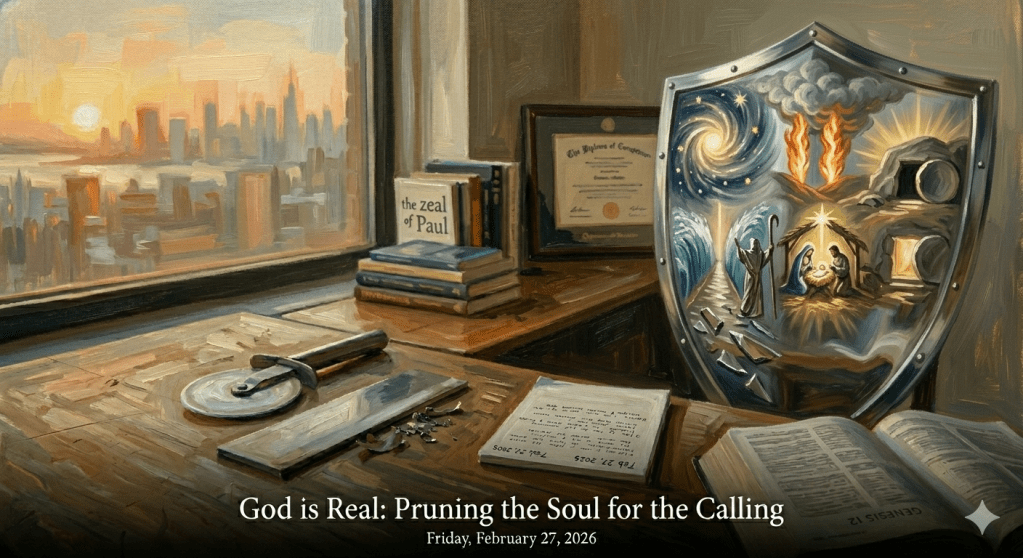
This morning I was in my early morning prayer as usual in my 1 hour prayer, although this morning was a little bit short ,but it was profound experience. I’ve been struggling to do things for God, to serve God , to reach a height that I’ve ever seen before to glorify him not to glorify my ministry per se. Although they always have a linkage between the two.
God promise to make Abraham’s name great
As a matter of fact God spoke to Abraham, “ I will make your name great and I’ll make you to be father of great nations. All nations shall be blessed through you. I will bless you and I will bless those who bless you and curse those who curse you.” This is making Abraham’s name great, not for Abraham’s sake as he is in no way asking for anything of that sort from God, but its really him trying to understand, trying to serve God in his calling in a humble way. But astoundingly God promise to make Abraham’s name great!
In our days it is hard to imagine that you want to ask God to make your name great and they’ll be self-centered, self-egoistic! But this is not that case, this is actually God wanted to make Abraham’s name great so you might understand that’s how I pursue God for all this longest time of period because I want to proclaim his Name make his name great.
In the midst of all this, I feel worn out, tired mentally and spiritually because I’m not seeing anything substantial from God in my drive and zeal to plant church for God. I remember there was a tremendous session taught in our movement before on the chapter called the zeal of Paul. Zealousness is one of the clearest characters in Paul’s life and is displayed as his passion for Christ and he even said, “Woe is me if I don’t preach the gospel.” So I’m zealous by my own nature and passionate and it seems to be a grinding to the ground.
God blessed me to start a work bible group
In fairness by God’s grace, He has blessed me to start a new group Bible teaching group in my office which is truly remarkable because it has never been done in the existence of out company for the last hundreds of years as far as I know! All these are very exciting. I started it in August last year and now it’s about 8 to 10 people and it’s about half a year now time flies. I graduated last May and I have determined in my life I want to be somewhat like Paul when he got converted literally after three days of prayer and fasting when he was liberated from his blindness as he was struck by the Lord Jesus, the minute he opened his eyes he started preaching the gospel. And he was so powerfully effective and anointed and it seems doors are opening all over the place for him. I mean he could just literally walk into a synagogue, and they will invite him to preach. I wish modern day synagogues and churches would do that to me as well today, but there is a dream that never will happen. It’s a laughingstock. So I wanted to start quickly. Time flied pass….it was June ,July I was really seeking the Lord for direction what to do Lord I’ve spent seven years very rigorous Master Divinity (MDiv) in NYC and Orlando, and now am totally ready to blast it out for Jesus. And guess what? Nothing. In fact I was able to preach once a month during my two years of seminaries schools the last two years, and after I graduated last year the strangest thing happened, I was not invited to preach in that church in New Jersey anymore. And prior to that I was like preaching three Sundays a month in Long Island as an interim pastor and that was intense because I was studying in school having a 40 hour full time job and I have a family, although empty nested, and in the midst of juggling all this I was really stretched and I did that for one year the Lord has done a beautiful thing in my life. So it is in that context that I hear nothing, I got nothing. In the church that my wife and I attending, I finally put myself forward and asked by the pastor to teach theology class once and now preaching in a quarterly fashion which is really far from my intensity, but very thankful. And thanks be to God that I am able to teach the word of God bi weekly in my office to a group of 10 people. O Lord may you bless their group the Lord bless the folks who come to my teaching.
The Vision of a Pizza Cutter
So this morning as I was praying so hard I recognized that I have something I can relate to from the church planters forum I attended with for.NYC organization. They were telling us that one of the pastors after seven years of pastoring, he felt the internal state of his soul is worn out, it’s not ready to continue to do the intensity of pastoring. That phrase caught my attention about the internal state of your soul. In fact there were like the lead pastor of this organization shared that he had even experienced: his three church plants were blasting away growing well while his marriage was falling apart. But thanks be to God the grace of God he rectified that and his has great marriage ever since. So I thought to myself maybe God is doing something about my internal state of my being during all this period of searching and knocking at the door and with my zeal for God and passion for the ministry of the gospel, and as I was praying suddenly I saw this vision of something like a metal roller cutter like a like a pizza wheel cutter thing and just rolled over the edge of a metal. And this is like the cutter is cutting off the edges of the metal. I immediately understood and dawned on me that this is God telling me, “You are right, I’m doing something in your internal state and I’m cutting off the rough edges in your life.”
God is real
That means the world to me at that moment and I said, “Lord thank you now I know God is real.” When I say God is real, I mean I always know that God is real, what it means God is real at that moment to me because God can be very silent even though you know he’s there. I’m feeling so much better and I do think that God cares very much how we feel inside our hearts but it takes a while for God to communicate that because it is precisely through this process of the moments we experience that God is actually transforming our lives, transforming our state of our inner being so they will be ready for the calling years for us.
Praise to God!
The Search for the Transcendent: Gen Z and the Return to Orthodoxy
In the landscape of the 21st century, a quiet but profound revolution is taking place. For decades, the prevailing sociological narrative suggested that as societies modernized, they would inevitably secularize—leaving religion behind as a relic of a bygone era. However, recent data from both the United States and the United Kingdom has upended this expectation. A striking trend has emerged: Gen Z men are retaining or adopting Christian identity at rates equal to, or even higher than, their female peers.
This is not merely a statistical anomaly; it is a spiritual homecoming. Many young men today report feeling culturally dislocated, marginalized, or even villainized by progressive secular discourse regarding masculinity. In an era defined by “fluidity”—where identity, gender, and morality are treated as ever-shifting social constructs—young men are finding themselves adrift. In response, they are gravitating toward the ancient, the “thick,” and the traditional. Traditional forms of Christianity, particularly Catholicism and Eastern Orthodoxy, offer a narrative of responsibility, sacrifice, and hierarchy that provides a defined role for men seeking solid ground.
The Crisis of Masculinity and the Divine Design
The modern challenge to masculinity, driven by aggressive progressive cultural forces, has created a deep-seated confusion regarding gender roles. Over the last decade, the cultural “circuitry” of society has been rewired. By attempting to dismantle the traditional understanding of what it means to be a man or a woman, secular society has inadvertently created a “void in the soul” for a generation of men.
When we speak of masculinity today, it is often through the lens of “toxicity.” Young men are told that their natural inclinations toward strength, leadership, and protection are inherently problematic. This has led to a state of cultural dislocation. After years of feeling like they have no place in the modern narrative, Gen Z men are reacting against the chaos. They are finding that the “freedom” promised by secularism feels more like a vacuum.
From a secular sociological perspective, many scholars overlook the fundamental reality of the human condition: the Imago Dei—the image of God—and the “common grace” implanted in the human soul. There is a fundamental tension that occurs when human design is distorted. Much like a high-performance vehicle—if you begin short-circuiting the electrical design or putting the wrong fuel in the tank, the car will sputter, stall, and eventually break down.
Similarly, the human soul becomes restless, tired, and worn out when it operates outside of God’s design. This is the heart of the Gen Z cry. They are tired of the “short-circuiting” of their nature. It is in this state of exhaustion that the invitation of Christ becomes a lifeline:
“Come to me, all you who are weary and burdened, and I will give you rest. Take my yoke upon you and learn from me… for my yoke is easy and my burden is light.” (Matthew 11:28-30)
The Biblical Foundation of Identity
To understand why Gen Z men are returning to the Church, we must look at the foundational architecture of identity found in the Book of Genesis. The Bible establishes that gender is not a social performance, but a divine distinction.
“So God created mankind in his own image, in the image of God he created them; male and female he created them.” (Genesis 1:27)
Crucially, God breathed His life specifically into them—an act not extended to the animals or the plants. This “breath of life” confirms that only humanity is created in the image of God. This truth stretches far beyond the Garden of Eden; it provides the very definition of male and female in this world.
“Then the Lord God formed a man from the dust of the ground and breathed into his nostrils the breath of life… Then the Lord God made a woman from the rib he had taken out of the man, and he brought her to the man.” (Genesis 2:7, 22)
When society pushes a “social construct” agenda to redefine these roles, it leads to the spiritual and social decay described in the first chapter of Romans. Paul describes a society that exchanged the truth of God for a lie and worshiped the creature rather than the Creator. The result was a “giving over” to confusion and disorder.
“They exchanged the truth about God for a lie, and worshiped and served created things rather than the Creator… Because of this, God gave them over to shameful lusts. Even their women exchanged natural sexual relations for unnatural ones. In the same way the men also abandoned natural relations with women and were inflamed with lust for one another.” (Romans 1:25-27)
Yet, it is precisely because of this darkness that the light of the Transcendent is becoming so attractive again. In a world of “liquid modernity,” only the Transcendent offers the certainty and serenity that the human heart craves.
From Judgment to Grace: The Path to Restoration
While the diagnostic portion of the Bible warns of the consequences of turning away from God’s design, the Scriptures do not leave us in the pit of despair. The transition from Romans 1 to Romans 3 is one of the most powerful movements in all of theology.
Paul moves from the judgment of God to the grace of God. He acknowledges that while all have fallen short and experienced the “short-circuiting” of their nature, the grace of God provides a pathway for joy, forgiveness, and total restoration.
“This righteousness is given through faith in Jesus Christ to all who believe. There is no difference… for all have sinned and fall short of the glory of God, and all are justified freely by his grace through the redemption that came by Christ Jesus.” (Romans 3:22-24)
This is the message that Gen Z men are finally hearing. They are realizing that they do not have to be “self-made” men; they can be “God-made” men. Despite the “giving over” to disorder that we see in the culture, the grace of God is working a quiet miracle. The time has come for Gen Z to experience this restoration. They are seeking a framework that is not social, but spiritual; not temporary, but eternal.
The Role of Modern Intellectuals: Re-enchanting the Bible
We cannot discuss this trend without acknowledging the role of public intellectuals, most notably Jordan Peterson. Peterson has played a pivotal role in “re-enchanting” the Bible for a secular male audience that had previously written it off as a book of fairy tales.
By framing biblical narratives as psychological maps for meaning rather than strictly metaphysical claims, Peterson created an “on-ramp” for secular men to enter religious spaces. He spoke to men in a language they understood: the language of competence, responsibility, and voluntary sacrifice. He challenged young men to “stand up straight with your shoulders back”—a call to alertness that mirrors the biblical command:
“Be on your guard; stand firm in the faith; be courageous; be strong.” (1 Corinthians 16:13)
Peterson’s work has paved the way for a religious lifestyle for many who were otherwise lost in the spiritual vacuity of modern life. He helped them realize that the Bible isn’t just a book you read; it’s a reality you inhabit. The keyword here is yearning. There is a profound yearning for meaning in a world that tells young men they are “toxic” or “unnecessary.” By providing a bridge between psychological truth and biblical orthodoxy, these intellectual movements are navigating young men back toward the timeless wisdom of the Scriptures.
Conclusion: The Return to the Ancient Path
The rise of “Digital Orthodoxy” and the return to traditional liturgical worship among Gen Z men is a sign that the secular experiment has failed to satisfy the human soul. The aesthetic of antiquity, the rigor of discipline, and the clarity of the biblical narrative are far more appealing to a young man than the hollow promises of a fluid culture.
The “human vehicle” is being brought back to the Manufacturer. The confusion of gender roles and the “man-made” problems of the last decade are being met with the ancient “God-made” solutions. It is absolutely comforting to know that the time has come for the Gen Z man to react to the void and reach for something solid.
They are moving from the chaos of Romans 1 into the grace of Romans 3. They are finding that in the hierarchy of God, there is freedom; in the responsibility of the Cross, there is strength; and in the image of God, there is a true identity that no social construct can ever take away.
The time has come for Gen Z. Praise the Lord.
Demons Know What Many Christians Forget: The Terrifying Reality of “The Time”
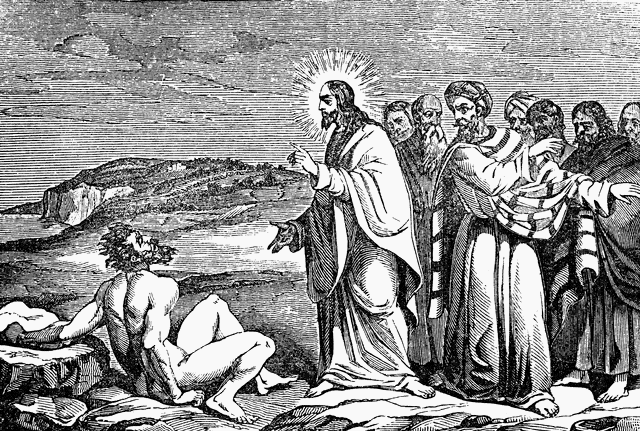
When Jesus and His disciples crossed the stormy Sea of Galilee—after He had rebuked the winds and waves with a word of authority—they stepped ashore in the region of the Gadarenes (or Gergesenes, as some manuscripts read). Immediately, two demon-possessed men came rushing from the tombs toward Him. These men were so fierce and uncontrollable that no traveler dared pass that way anymore. Yet in the presence of Jesus, the demons inside them could not remain silent. They cried out in terror: “What have you to do with us, O Son of God? Have you come here to torment us before the time?” (Matthew 8:29, ESV).
This dramatic confrontation reveals truths that cut to the heart of spiritual reality. First, these demonic beings—ancient, rebellious spirits—instantly recognize and confess Jesus’ divine identity as the **Son of God**. This is the same title Peter proclaimed in faith (Matthew 16:16), the same one the Father declared at Jesus’ baptism (Matthew 3:17), yet it is a truth billions of people in our modern world actively deny, dismiss, or ignore. The demons know what many refuse to accept.
“Have you come here to torment us **before the time**?”
But the second part of their cry is even more unsettling: “Have you come here to torment us **before the time**?” They are not confused or uncertain about the future. They possess clear, terrifying knowledge of an appointed “time”—the final eschatological judgment day when Satan and all his angels will be thrown into the lake of fire and sulfur, tormented “day and night forever and ever” (Revelation 20:10). Jesus Himself describes this as “the eternal fire prepared for the devil and his angels” (Matthew 25:41), a place of unquenchable fire and undying worms (Mark 9:48). In the parallel accounts in Mark 5 and Luke 8, the demons beg Jesus not to send them into the abyss—a temporary place of restraint and suffering before the final sentence falls. Their desperate plea shows they fully expect torment; they simply dread facing it prematurely.
This moment makes the supernatural uncomfortably real. Hell is not a medieval scare tactic, a psychological symbol, or a cultural holdover from less enlightened times. It is a literal, eternal destination for those who persist in rebellion against God. The demons’ fear underscores that spiritual forces operate with full awareness of cosmic justice. They tremble at what awaits them, even though the appointed time may still be centuries or millennia away.
Tragically, many contemporary Christians have largely tuned out this same reality.
We live in an era bombarded by distractions: endless scrolling on social media, the pursuit of financial security, entertainment that numbs the soul, and a prevailing cultural narrative that insists a truly loving God could never allow eternal punishment. The result is a mental compartmentalization—judgment feels distant, abstract, or even incompatible with the compassionate Father revealed in Scripture. Many churches contribute to this by focusing almost exclusively on themes of grace, healing, community, and personal fulfillment (which are all biblical and essential), while rarely addressing demons, spiritual warfare, the wrath of God, or the vivid warnings Jesus gave about hell more often than He spoke of heaven.
A divine wake-up call: the end times are not merely future prophecy; they are a present spiritual reality that must shape our daily priorities, decisions, and mission
This selective preaching is not harmless. If fallen angels—who have rebelled against God for far longer than humanity has existed—shudder at the certainty of coming torment, how much more should redeemed believers, who possess the complete revelation of God’s Word and the indwelling Holy Spirit, live with holy urgency? The Gadarenes encounter is a divine wake-up call: the end times are not merely future prophecy; they are a present spiritual reality that must shape our daily priorities, decisions, and mission.
The personal and communal implications are profound and life-transforming. A genuine, heart-level awareness of eternal judgment would radically alter how we live as followers of Christ. Evangelism would cease to be an occasional activity reserved for special events or mission trips; it would become the natural overflow of our lives—sharing the gospel boldly, relationally, and relentlessly every single day. We would stop wasting energy on petty doctrinal arguments that divide rather than unite, on chasing material gain that rusts and fades, or on conforming to cultural wickedness that dulls our spiritual senses. Instead, we would lift our eyes to the eternal horizon and invest in what truly lasts.
Pause and consider the emotional weight: What if the people we love most—our children, our spouse, our closest friends, our coworkers, our neighbors—are on a path toward eternal separation from God? The image is heartbreaking, almost unbearable. Yet it is precisely this kind of piercing grief that should stir us out of complacency and into fervent action. Love that is truly Christlike does not remain silent in the face of danger; it warns, pleads, and pursues.
“Write the vision; make it plain on tablets, so he may run who reads it.
The prophet Habakkuk received a similar divine mandate in a time of impending judgment: “Write the vision; make it plain on tablets, so he may run who reads it. For still the vision awaits its appointed time; it hastens to the end—it will not lie. If it seems slow, wait for it; it will surely come; it will not delay” (Habakkuk 2:2–3, ESV). This vision included both the certainty of judgment on sin and the promise of God’s ultimate justice and restoration. When the message is proclaimed clearly and faithfully—without dilution or apology—it produces action. “Run” is not a suggestion; it is an imperative verb calling for urgent, purposeful movement.
Yet so many believers today remain spiritually sedentary, passively waiting rather than actively running. The reason is clear: the church has too often watered down the full counsel of God, choosing “winsome” politeness over the confrontational boldness Jesus modeled. He did not hesitate to call out hypocrisy, warn of judgment, or speak of Gehenna’s fire in ways that offended religious leaders and casual hearers alike. We must recover that same courage.
The terrified confession of the demons in the Gadarenes lays bare the unseen battle raging beneath the surface of ordinary life.
This must change—now. The terrified confession of the demons in the Gadarenes lays bare the unseen battle raging beneath the surface of ordinary life. Judgment is real. The appointed time draws nearer every day. And the gospel of Jesus Christ remains the only rescue from the wrath to come.
Let us therefore reclaim the whole truth of Scripture: a love so deep it willingly bore the cross to save sinners from deserved wrath; grace so powerful it transforms rebels into saints; and an urgency so compelling it drives us to proclaim Christ boldly, urgently, and unapologetically while there is still time.
May we write—and live—this vision plainly today. Let it awaken hearts, ignite passion, and send us running toward eternity, reaching the lost before the time arrives. The demons know the stakes. It is time for the church to remember, to repent of our slumber, and to respond with the fervor the gospel demands.
Where Have the Signs and Wonders Gone? Reclaiming the Congruent Power Promised to Us
Al Ngu, Jan 9, 2026
The New Testament bursts with accounts of signs and wonders—not only through Jesus Christ, the Son of God, but also through ordinary men like the apostles. Peter raised the dead (Acts 9:36–42), Paul healed the sick and cast out demons (Acts 19:11–12), and the early church witnessed healings, deliverances, and bold proclamations that turned cities upside down. These were not rare anomalies; they were the expected outflow of the Holy Spirit’s power.
Yet today, in many corners of the church, such demonstrations feel distant—sporadic at best, absent at worst. Why? Why do we read of an overwhelming abundance of miracles in Scripture, yet see so few in our own lives and ministries? This question haunts me, especially as someone who has ministered in charismatic contexts and now lives in the bustling, skeptical heart of New York City.
Jesus promised this power explicitly: “But you will receive power when the Holy Spirit has come upon you, and you will be my witnesses in Jerusalem and in all Judea and Samaria, and to the end of the earth” (Acts 1:8, ESV). The purpose is unmistakable: Holy Spirit empowerment for witness-bearing, from our local streets to the ends of the earth. When was the last time you stepped out to share the gospel in your city and felt genuinely electrified, expectant, and empowered? For too many of us, the answer is dishearteningly rare. We’ve grown accustomed to disappointment. Signs and wonders seem to have faded into the background, leaving us frustrated that the very power promised for evangelism is so often lacking.
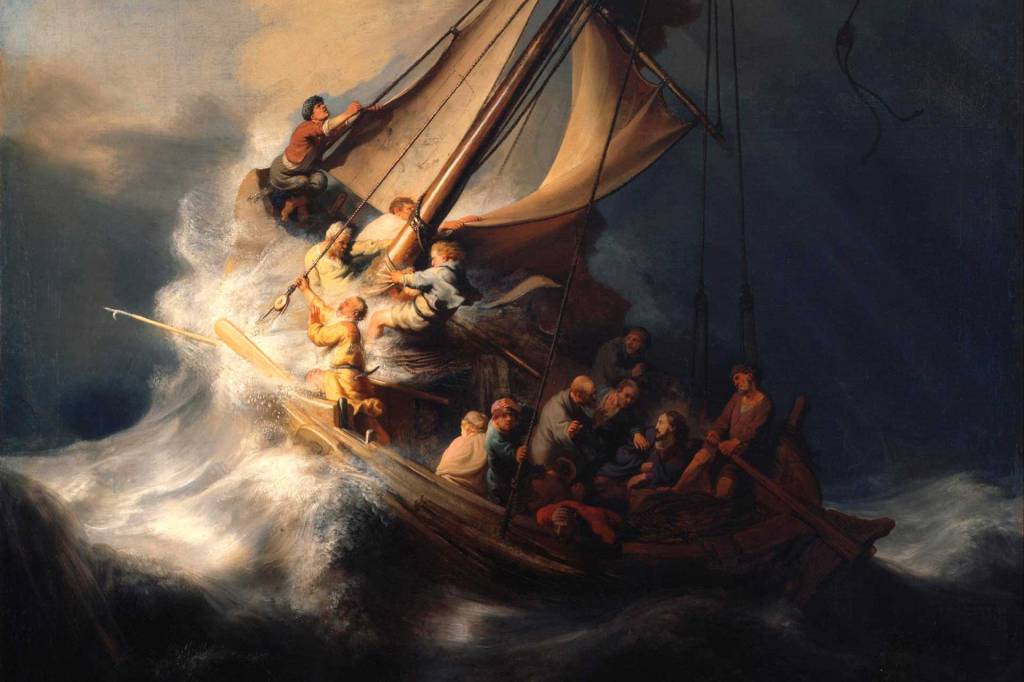
This tension finds its mirror in Matthew 8:23–27, the account of Jesus calming the storm:
And when he got into the boat, his disciples followed him. And behold, there arose a great storm on the sea, so that the boat was being swamped by the waves; but he was asleep. And they went and woke him, saying, “Save us, Lord; we are perishing.” And he said to them, “Why are you afraid, O you of little faith?” Then he rose and rebuked the winds and the sea, and there was a great calm. And the men marveled, saying, “What sort of man is this, that even winds and sea obey him?”
The disciples panicked as the waves crashed over them. They cried out in fear: “Lord, save us! We are perishing!” Jesus’ response is piercing—first a rebuke: “Why are you afraid, O you of little faith?”—and only then a command that brought instant calm. The disciples marveled at the authority of the One in their midst.
If we were in that boat, how would we react? Honestly, most of us—pastors, theologians, everyday believers—would likely do the same: cry out in terror. Yet Jesus held them to a higher standard. He expected faith that trusted His presence and authority, perhaps even faith to rebuke the storm themselves in His name.
Why this expectation? Because Jesus was physically there, mere feet away. Today, He is ascended, but the Holy Spirit dwells within every true believer (Romans 8:9–11; 1 Corinthians 6:19). So why the scarcity of signs and wonders?
The roots run deep. The Enlightenment of the 17th and 18th centuries shifted Western thought toward rationalism, empiricism, and a suspicion of the supernatural. Miracles came to be viewed as violations of natural law—improbable, superstitious, or impossible. Thinkers like David Hume argued that miracle reports could never outweigh the uniformity of nature. This mindset permeated education, culture, and eventually theology.
Thomas Jefferson famously created his own edited version of the New Testament, *The Life and Morals of Jesus of Nazareth* (completed around 1820), by literally cutting and pasting passages to remove all miracles, references to Jesus’ divinity, and the resurrection—focusing solely on moral teachings. Later, in the late 20th century, the Jesus Seminar—a group of scholars—voted on the authenticity of Gospel events, dismissing most miracles as legendary inventions.
These efforts reflect a broader cultural trajectory: the supernatural was sidelined to make faith more “palatable” in a scientific age. Universities filled with secular professors and textbooks promoted worldviews that often excluded God, sometimes leaning toward materialism or even Marxist influences. The church was not immune. Many congregations gradually abandoned praying for the sick, prophetic ministry, and expectant faith for miracles. Services became centered on preaching and singing—good things, but often without the demonstration of power.
Is it any wonder signs and wonders are rare? Expectations have plummeted because teaching has shifted. As Paul reminds us, “Faith comes from hearing, and hearing through the word of Christ” (Romans 10:17). When we cease proclaiming a God who still intervenes—who calms storms, heals bodies, and empowers witnesses—faith naturally weakens.
The solution lies in a full reboot: a renewed mind, a philosophical and theological return to Scripture’s full witness, and a complete surrender to the Lord. We must embrace the congruent power of Spirit and Word—the Holy Spirit’s dynamic presence working through the authoritative Scriptures. This is the God who performed mighty acts through Christ and the apostles, and who still desires to do so today for His glory and the advance of His kingdom.
Let us pray for revival: that our churches would once again expect, pursue, and witness the signs and wonders that authenticate the gospel. In our cities, our nations, and to the ends of the earth—may the power promised in Acts 1:8 be unleashed anew.
Amen.
The imperative for Christian theologians & pastors to step boldly into the world—engaging, challenging, and shaping cultural thought

From a biblical theological perspective, the imperative for Christian theologians and pastors to step boldly into the world—engaging, challenging, and shaping cultural thought—is not merely a strategic option but a divine mandate rooted in the very nature of God’s redemptive mission. Scripture reveals a God who is profoundly involved in the world He created, calling His people to participate in that involvement as ambassadors of His kingdom. To retreat into academic silos or Christian echo chambers is to abdicate this calling, leading to dire spiritual and cultural consequences. The gospel’s inherent offense cannot be softened into perpetual “winsomeness” without blunting its transformative edge. Yet, this engagement must be shrewd and innocent, not gratuitously confrontational. Let us unpack this biblically, drawing from the overarching narrative of Scripture: creation, fall, redemption, and restoration.
At the heart of biblical theology is the Great Commission (Matthew 28:18-20), where Jesus commands His followers to “go and make disciples of all nations, baptizing them… and teaching them to obey everything I have commanded you.” This is no passive invitation to introspection; it is an active thrust into the ethne—the peoples, cultures, and intellectual arenas of the world. Theologians and pastors, as stewards of God’s revealed truth, bear particular responsibility here. They are equipped to articulate the gospel’s implications for every sphere of human thought, from ethics and philosophy to science and politics. In Acts, the apostles model this: Peter preaches boldly in Jerusalem’s public squares (Acts 2-3), confronting cultural and religious leaders with the scandal of a crucified Messiah. Paul, the theologian par excellence, engages the Epicurean and Stoic philosophers at the Areopagus in Athens (Acts 17:16-34). He doesn’t retreat to a synagogue safety net; he steps into the marketplace of ideas, quoting pagan poets like Aratus and Epimenides to bridge to the resurrection. This is theology in action—shaping culture by exposing its idols and pointing to the “unknown God” they unwittingly worship.
Jesus Himself exemplifies this worldly engagement without compromise. As you note, He offended the Pharisees repeatedly, calling them “whitewashed tombs” (Matthew 23:27) and “brood of vipers” (Matthew 12:34), not out of spite but to unmask their hypocrisy and legalism that distorted God’s law. The gospel is inherently offensive because it declares human wisdom foolish and demands repentance from self-sovereignty (1 Corinthians 1:18-25). Paul echoes this: “The message of the cross is foolishness to those who are perishing, but to us who are being saved it is the power of God.” If theologians and pastors sanitize their message to avoid offense—opting for a lame, perpetually “winsome” approach—they dilute the gospel into moralism or therapy, rendering it “good for nothing” like salt that has lost its savor (Matthew 5:13). Winsomeness has its place in relational wisdom, but it cannot supplant the prophetic edge. Jesus overturned tables in the temple (John 2:13-17), yet He wept over Jerusalem (Luke 19:41-44) and dined with sinners (Luke 15:1-2). The balance is not avoidance but fidelity to truth, delivered with love that seeks redemption, not mere approval.
Christ’s command in Matthew 10:16—to be “shrewd as serpents and innocent as doves”—captures this nuance perfectly. Serpents symbolize cunning wisdom, navigating dangers with strategic insight; doves represent harmless purity, free from deceit. Theologians and pastors must embody both: shrewd in discerning cultural currents, crafting arguments that expose secular fallacies (e.g., the emptiness of autonomous humanism or relativistic ethics), yet innocent in motive, aiming not to win debates but to win souls. Staying quiet or retreating denies the opportunity to exercise this shrewdness. As Proverbs 1:20-21 personifies Wisdom crying out “in the public squares… at the head of the noisy streets,” so must theologians and pastors proclaim God’s truth where ideas clash. The early church didn’t huddle in fear after Pentecost; empowered by the Spirit, they infiltrated Roman culture, influencing everything from law to philosophy. Think of Tertullian or Origen, who engaged pagan intellectuals head-on, or Augustine’s City of God, which critiqued Rome’s crumbling empire through a biblical lens. **In the same spirit, the Reformed theologian and statesman Abraham Kuyper captured this comprehensive claim of Christ’s lordship when he declared: “There is not a square inch in the whole domain of our human existence over which Christ, who is Sovereign over all, does not cry: ‘Mine!’”** Retreating into “academic safety nets”—Christian universities or journals alone—is unbiblical because it ignores the incarnational pattern of Christ, who “became flesh and dwelt among us” (John 1:14), entering the mess of human culture to redeem it.
The consequences of failing to engage are stark, both theologically and practically. Biblically, disobedience to the call invites divine judgment. In the parable of the talents (Matthew 25:14-30), the servant who buries his gift out of fear is called “wicked and lazy,” cast into outer darkness. Theologians and pastors who hoard their insights within safe confines squander God’s entrusted wisdom, facing accountability at the judgment seat (2 Corinthians 5:10). Culturally, the vacuum left by Christian absence allows godless ideologies to dominate. As in the days of Noah (Genesis 6:5), when “every inclination of the thoughts of the human heart was only evil all the time,” unopposed worldly wisdom leads to moral decay. Envision a future where Gen Z and beyond—shaped by elite academia’s secular echo chambers—embrace ideologies that redefine humanity apart from God’s image (Genesis 1:27). Without theological counterpoints, critical theory supplants biblical justice, leading to fragmented identities and endless grievance cycles. Secular humanism’s “autonomous wisdom” (as in 1 Corinthians 1:19-21) thwarts gospel penetration, hardening hearts like Pharaoh’s (Exodus 7-11). Societies drift toward the idolatry warned against in Romans 1:18-32, exchanging truth for lies, resulting in cultural breakdown: family erosion, ethical relativism, and ultimately, judgment as in Sodom or Babel.
Historically, when Christians withdraw, darkness advances. The pre-Reformation church’s retreat into scholasticism allowed corruption to fester, necessitating Luther’s bold theses. In the 20th century, German theologians’ silence enabled Nazism’s rise, as Bonhoeffer lamented. Today, if we don’t engage, we cede ground to ideologies that mock the cross—leading to a church irrelevant, a culture unredeemed, and generations lost. But engagement bears fruit: William Wilberforce’s biblically fueled abolitionism reshaped empires; Martin Luther King Jr.’s theological vision transformed civil rights.
Thus, theologians and pastors must step out—publishing in secular venues, debating in public forums, mentoring in elite institutions—with shrewd, dove-like faithfulness. Not seeking confrontation for its sake, but proclaiming the offensive gospel that saves. The Spirit empowers this (Acts 1:8), and God’s promise endures: “I am with you always” (Matthew 28:20). The alternative is disobedience and cultural loss. What biblical examples most inspire you for this engagement, and how might we practically embody shrewd innocence in today’s polarized arenas?
The Cross in the Culture Wars: Paul’s Warning to Evangelicals in 2026

A Polarized Moment: Academia and Political Power in Early 2026
As 2026 dawns, American evangelicals stand at a peculiar crossroads of cultural influence and caution. The early days of January have already seen renewed debate over higher education’s ideological landscape, prompted by the lingering effects of the Trump administration’s 2025 “Compact for Academic Excellence.” This initiative, designed to tie federal funding to reforms promoting merit-based admissions, balanced hiring practices, and greater viewpoint diversity, was ultimately rejected by most elite institutions. Critics framed it as government overreach threatening academic freedom, while supporters viewed it as a necessary corrective to longstanding imbalances. Yale University’s December 2025 Faculty Political Diversity Report—released just weeks ago—has fueled the conversation. Analyzing 1,666 faculty members across undergraduate departments, law, and management schools, the report revealed Democrats outnumbering Republicans by more than 36:1 overall, with an astonishing 27 of 43 undergraduate departments registering zero Republican faculty members. Peer institutions tell a similar story: Harvard’s Faculty of Arts and Sciences continues to show roughly 63–70% identifying as liberal in recent surveys, Princeton maintains comparable left-leaning ratios in key disciplines, and Columbia’s humanities departments reflect the national trend where conservative voices are often outnumbered by margins exceeding 10:1.
Simultaneously, evangelical proximity to political power has reached levels not seen in decades. Defense Secretary Pete Hegseth, a prominent evangelical voice, has continued hosting high-profile Christian worship services at the Pentagon—a practice begun in 2025 that blends military tradition with explicit faith expression. These gatherings, attended by service members and occasionally livestreamed, have reignited longstanding debates over church-state boundaries and the rising visibility of Christian nationalism. Influential figures connected to Doug Wilson’s network in Moscow, Idaho, have gained advisory roles in policy circles, celebrating what they see as a long-overdue reclamation of cultural influence. For many believers, this feels like a moment of vindication after years of perceived marginalization. For others, it raises uncomfortable questions about the entanglement of faith and state power.
Paul’s Framework: The Power of the Cross Over Human Wisdom
In this charged and polarized atmosphere, the apostle Paul’s words in 1 Corinthians 1 provide a strikingly relevant framework for discernment: “For Christ did not send me to baptize but to preach the gospel, and not with words of eloquent wisdom, lest the cross of Christ be emptied of its power” (1 Cor. 1:17, ESV). Paul, writing to a fractured church in cosmopolitan Corinth, deliberately rejected the rhetorical sophistication prized in Greco-Roman culture. A former Pharisee with impeccable credentials, he could have dazzled with philosophical arguments or impressive oratory. Instead, he chose simplicity—not out of anti-intellectualism, but to ensure that faith rested solely on God’s power rather than human persuasion.
Craig L. Blomberg, in his commentary, explains that 1 Corinthians 1:18–2:5 expands this theme, contrasting divine wisdom with human wisdom while directly addressing the Corinthian problem of self-centered factionalism.[1] Believers were dividing into rival camps, boasting loyalty to charismatic leaders: “I follow Paul,” “I follow Apollos,” “I follow Cephas.” This wasn’t mere personality preference; it reflected a deeper captivity to worldly values—valuing eloquence, status, and human achievement over the unifying reality of Christ crucified. Paul’s response was uncompromising: the message of the cross, which appeared as foolishness to Greek philosophers seeking wisdom and as weakness to Jews expecting miraculous signs, is in fact God’s profound wisdom and power.
Dual Temptations: Silence and Over-Alignment
Two millennia later, evangelicals navigate strikingly parallel temptations amid 2026’s cultural battles. One path leads to retreat and relative silence. Despite possessing rigorous biblical and theological training—MDiv programs, seminaries, and doctoral work producing thousands of graduates annually—many pastors, scholars, and lay leaders with intellectual depth remain largely absent from public discourse on pressing issues. Topics like education reform, human sexuality, religious liberty, immigration policy, and bioethics often see robust secular commentary but muted evangelical contributions. This isn’t universal; voices exist on podcasts, books, and niche platforms. Yet in mainstream media, legislative hearings, or university panels, theologically informed perspectives are frequently underrepresented. Possible explanations abound: exhaustion from the culture wars of previous decades, fear of professional backlash or church splits, or a well-intentioned but narrow focus on “gospel ministry” that avoids “political” topics. The result, however, is consequential: younger generations within the church risk growing up spiritually vibrant yet intellectually under-equipped to engage a world shaped by sophisticated secular narratives.
The opposite temptation is over-alignment with worldly systems of power. When evangelical leaders celebrate political appointments, policy wins, or public displays of faith in government settings as unambiguous kingdom advances, Paul’s caution against “eloquent wisdom” takes on fresh urgency. Proximity to power can subtly shift dependence from the cross to human mechanisms—electoral strategies, institutional leverage, or cultural dominance. History offers sobering precedents: whenever the church has tied its fortunes too closely to empire, the gospel’s scandalous offense gets softened, its call to repentance muted, and its transformative power redirected toward maintaining influence rather than confronting sin in all quarters.
Paul drives this home in verse 19, quoting Isaiah 29:14: “I will destroy the wisdom of the wise, and the discernment of the discerning I will thwart.” Blomberg notes that God actively frustrates superficial religion and prideful autonomy, clearing space for genuine revelation.[2] The “wisdom” Paul targets isn’t neutral intelligence but humanity’s rebellious attempt to define truth apart from the Creator—a pattern Paul traces in Romans 1:18–32, where suppression of truth leads to divine judgment. True wisdom, by contrast, begins with reverent submission to God (Prov. 1:7; 9:10).
The Academy as Carrier of Worldly Wisdom
Elite academia today often functions as a primary carrier of this autonomous wisdom. The ideological homogeneity revealed in Yale’s report and similar studies isn’t merely statistical; it profoundly shapes institutional culture. Curricula prioritize certain frameworks—critical theory, progressive views on gender and sexuality, secular humanism—while biblical perspectives are often sidelined or framed as outdated. Students graduate equipped with sophisticated tools for cultural critique but little exposure to robust Christian alternatives. This isn’t conspiracy but consequence: when one worldview dominates hiring and promotion, echo chambers form, and dissenting voices self-censor or leave. The Compact for Academic Excellence sought to address this, however imperfectly, yet its rejection underscores how deeply entrenched these patterns have become.
Paul’s point, however, is ultimately hopeful rather than defeatist. God thwarts worldly discernment precisely so that “those who are called, both Jews and Greeks” might recognize in the cross “the power of God and the wisdom of God” (v. 24). What the world dismisses as folly—a suffering Messiah executed as a criminal—becomes the very means of reconciliation, resurrection, and renewal. The Spirit illuminates hearts across ethnic, intellectual, and cultural divides, revealing Christ’s death as the ultimate demonstration of divine love and justice.
Probing Questions for the Church Today
This biblical dynamic raises probing questions for evangelicals navigating 2026’s realities. If Scripture—from the prophetic confrontations of the Old Testament to the ethical teachings of the New—consistently addresses justice, human dignity, authority, family, and the common good, why do so many theologically trained voices remain on the sidelines? The prophets challenged kings; Jesus engaged Pharisees and Roman officials; Paul reasoned in synagogues and marketplaces. In a nation that still constitutionally protects free speech and religious expression, the relative absence of biblically grounded contributions risks ceding moral and intellectual formation to systems fundamentally at odds with Christian truth. An entire generation within the church could emerge passionate about worship yet unprepared to articulate faith in public square conversations.
Conversely, when faith becomes a tool for political branding—Pentagon services as photo ops, policy victories as spiritual triumphs—the cross risks being emptied of its offense. It ceases to confront all powers, including those friendly to the church, and instead serves human agendas.
Signs of Hope: Vitality on Campuses
Yet amid these challenges, encouraging signs are emerging, particularly on the very campuses often seen as lost causes. Despite faculty imbalances, 2025 witnessed continued vitality in student-led faith movements. Cru (formerly Campus Crusade) reported record participation in evangelistic outreach and discipleship programs, with thousands of students making faith commitments. InterVarsity Christian Fellowship expanded chapters and multi-ethnic witnessing communities, emphasizing biblical justice alongside personal salvation. Catholic campuses saw surges in Mass attendance and RCIA inquiries, with some diocesan reports noting double-digit percentage increases in young adult engagement. Apologetics-focused groups like Ratio Christi equipped students to engage professors and peers intellectually, hosting debates that drew hundreds. Events like UniteUS gatherings united thousands in prayer and worship, echoing the 2023 Asbury outpouring while sustaining momentum into the new year.
These developments reveal a generational hunger for authentic spirituality that transcends ideological conformity. Gen Z students, often portrayed as secular or disillusioned, are responding to the unadorned message of Christ crucified—finding in it not weakness but power to navigate anxiety, identity questions, and cultural chaos.
Confidence in the Cross
Paul’s message in 1 Corinthians 1 ultimately points beyond diagnosis to quiet confidence. The cross requires no supplementation—neither elite credentials nor political access—to accomplish God’s purposes. It stands as the divine instrument to confound the wise, save the called, and transform societies from the inside out.
For evangelicals in this pivotal year, the challenge is clear: to engage culture with intellectual rigor, prophetic clarity, and gospel humility—neither retreating into silence nor grasping at worldly power. By preaching Christ crucified plainly and trusting the Spirit’s illuminating work, the church can navigate polarization without losing its soul. In doing so, it offers a fractured world what it most needs: not another ideology, but the wisdom and power of God made manifest in a Savior who died and rose again.
[1] Craig L. Blomberg, *1 Corinthians*, NIV Application Commentary (Grand Rapids: Zondervan, 1994), 52.
[2] Ibid
Christ the Wisdom and Power of God: The Enduring Relevance of 1 Corinthians 1 in a Fractured World
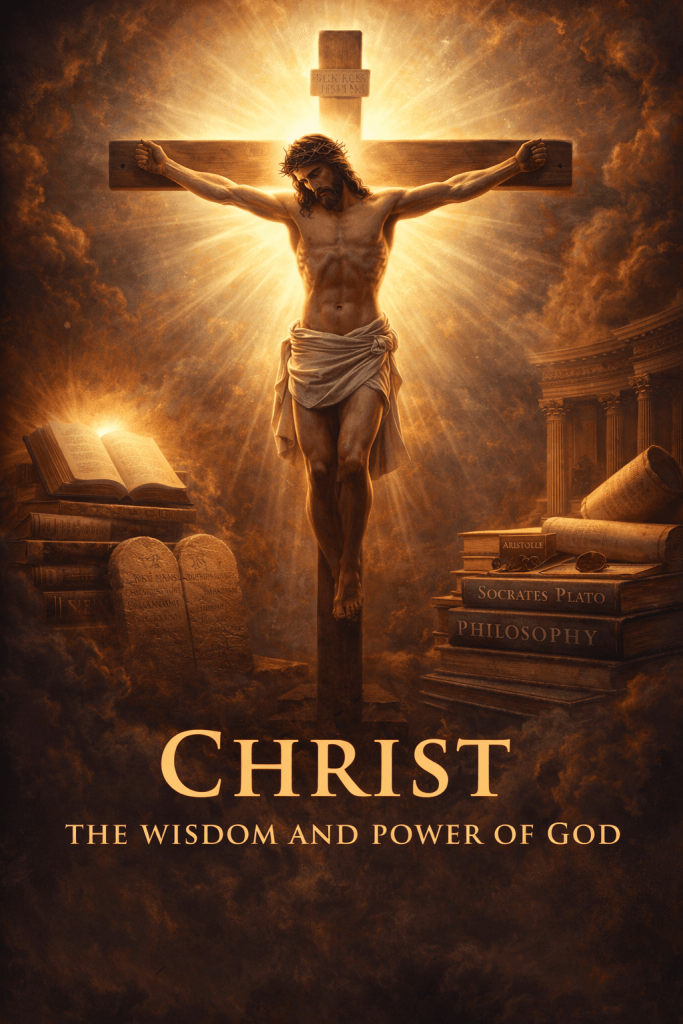
In an age dominated by self-promotion, ideological echo chambers, and relentless pursuit of human acclaim, the apostle Paul’s words in 1 Corinthians 1 cut through the noise with startling clarity. “For Christ did not send me to baptize but to preach the gospel, and not with words of eloquent wisdom, lest the cross of Christ be emptied of its power” (1 Cor. 1:17, ESV). Paul, a highly educated Pharisee turned apostle, deliberately eschews rhetorical flair and sophisticated argumentation—not because wisdom is unworthy, but because reliance on it risks diluting the gospel’s inherent power. The cross, in its apparent foolishness and weakness, stands as God’s ultimate demonstration of wisdom and might.
Craig L. Blomberg, in his commentary on 1 Corinthians, insightfully notes that verses 18–2:5 expand on this theme: “Genuine, full-orbed Christianity stands opposed to the fundamental values of a fallen, sinful world but provides the necessary antidote to the self-centered factionalism of the Corinthians.” This factionalism—divisions along lines of favorite leaders (“I follow Paul,” “I follow Apollos”)—mirrors the prideful rivalries Paul confronts. Extending this to our day, we see similar fractures not only in society but within the church: ministers vying for platforms, influencers building personal empires, and believers splintered by cultural wars. Self-centeredness breeds misery, as it isolates us from the communal joy found in Christ alone. Mortifying this ego-driven mindset is essential to our sanctification; a life orbiting the self is ultimately empty, while one centered on the cross brings true fulfillment.
Paul’s humility is striking. As a renowned apostle addressing a divided church, he could have asserted authority through impressive oratory. Instead, he declares that eloquent wisdom would empty the cross of its power. There is profound poise here: the cross needs no human embellishment. No preacher, no matter how gifted, can claim credit for its efficacy. Glory belongs solely to God, ensuring unity as all boast only in Christ. This culminates in verse 18: “For the word of the cross is folly to those who are perishing, but to us who are being saved it is the power of God.”
Paul bolsters his argument in verse 19, quoting Isaiah 29:14: “I will destroy the wisdom of the wise, and the discernment of the discerning I will thwart.” Blomberg explains this as scriptural support for Paul’s thesis, where God judges superficial religion by upending human pride. The Hebrew term translated “thwart” or “frustrate” implies rejecting, ignoring, or invalidating worldly discernment. This is no petty divine sabotage but a merciful intervention. Worldly wisdom, crafty and seductive, suppresses truth and fuels rebellion (Rom. 1:18–32). By confounding it, God clears the way for revelation—true wisdom that begins with the fear of the Lord (Prov. 1:7; 9:10).
To the ancient world, the gospel was scandalous. Greeks sought philosophical sophistication; Jews demanded miraculous signs. A crucified Messiah—a suffering God, a criminal executed on a Roman cross—seemed absurd and weak. Yet Paul proclaims that human wisdom, in rejecting God, invites divine judgment: salvation through a cursed death appears foolish, confirming humanity’s blindness.
For “those who are called, both Jews and Greeks, Christ the power of God and the wisdom of God” (v. 24). This calling is the Spirit’s work, convicting and illuminating hearts to see the cross as transformative. As Blomberg observes, the Spirit touches lives across ethnic divides, revealing Christ’s death as God’s profound wisdom (reconciling sinners through atonement) and power (conquering sin and death via resurrection).
This message resonates powerfully today. Our world, like Corinth’s, idolizes human wisdom: expertise, credentials, viral rhetoric. Elite institutions embody this “wisdom of the wise.” Recent reports highlight stark ideological imbalances in American higher education. At Yale University, the Buckley Institute’s 2025 Faculty Political Diversity Report analyzed 1,666 faculty members across undergraduate departments, law, and management schools. Findings reveal over 82% registered as Democrats or primarily supporting them, with Republicans comprising just over 2%—a 36:1 ratio. Notably, 27 of 43 undergraduate departments have zero Republican faculty. Similar patterns persist at peer institutions: Harvard’s Faculty of Arts and Sciences surveys show around 63–70% identifying as liberal in recent years, with conservatives often under 5%. Princeton and Columbia exhibit comparable left-leaning skews, contributing to a national trend where liberal faculty outnumber conservatives significantly in humanities and social sciences.
This entrenchment of secular worldviews in academia echoes Paul’s “wisdom of this age”—philosophies that marginalize biblical truth and promote self-autonomy. Generations are shaped by ideas dismissing the cross as folly, prioritizing human speculation over divine revelation. No wonder Christianity has retreated from many campuses; naive approaches—relying solely on emotional appeals or spiritual experiences—fall short against sophisticated intellectual challenges.
Yet Paul’s words compel engagement, not withdrawal. God intends to “destroy the wisdom of the wise” precisely through the gospel’s proclamation. Christians must confront worldly intellect with redeemed minds: robust apologetics, deep theological literacy, and confident articulation of Christ’s superiority (Col. 2:8). The book of Proverbs reminds us wisdom starts with fearing God; only then can we dismantle crafty ideologies.
Encouragingly, signs of vitality persist. Campus ministries thrive amid secular dominance. Organizations like Cru, InterVarsity, and Reformed University Fellowship report growth, with bold preaching, worship, and evangelism drawing students. Catholic Newman Centers and evangelical groups provide communities where faith flourishes. Recent revivals—as at Asbury—highlight Gen Z’s hunger for authentic spirituality. Christian universities see enrollment surges as students seek meaning and connection in faith-based environments.
Despite imbalances, God’s promise endures: He thwarts human discernment to exalt Christ. The cross remains the antidote to factionalism, pride, and emptiness—both in Corinth and today.
Paul’s approach models faithful ministry: preach Christ crucified plainly, trusting the Spirit’s power. No eloquent additives needed; the message itself transforms. In churches plagued by celebrity pastors and in societies fractured by ideology, this humbles us all. No one steals glory from the cross—not Paul, not modern influencers.
As we navigate intellectual battles and cultural shifts, let us embrace the “foolishness” of the gospel. To the called, Christ is wisdom and power, satisfying the soul’s deepest longings. May we proclaim Him unadorned, uniting believers and confounding the wise, until He returns.
 Al Ngu sermons & devotion