She Grabbed Two Flags

On Natasha, public love, and what God has been waving at us all along.
Screenshot

Al Ngu

The truck was already moving.

Borechka stood in the back with the other soldiers, headed toward the front lines, carrying whatever a young man carries when he knows the next weeks could be his last. The night before had ended badly. Natasha had come to him in the dark, afraid and wanting closeness, and he had pulled away. Not because he didn’t love her — she knew he did. He just couldn’t say it. Couldn’t cross whatever line lived inside him between feeling and declaring.

So she had gone back to her room. She told him she wouldn’t see him off.

She lied.

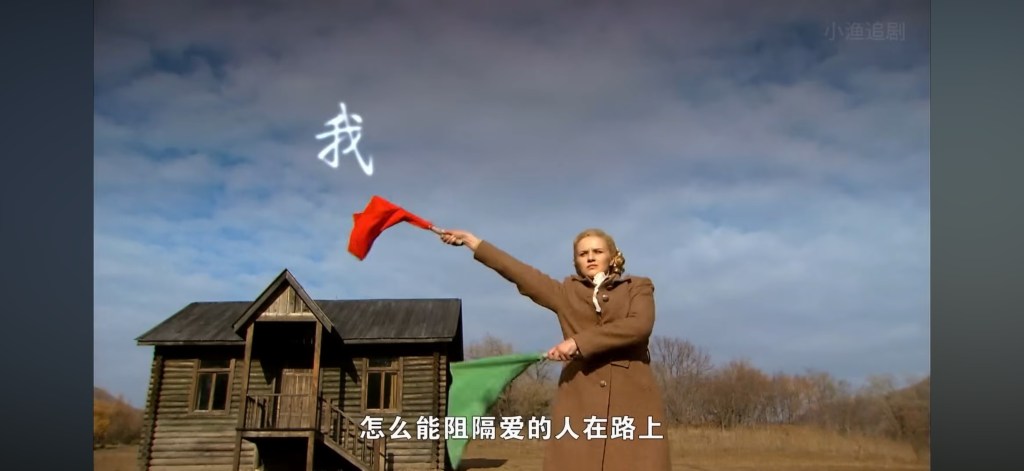
Because when the convoy rolled past the edge of the field, there she was. Standing alone. Holding two flags. Waving them in wide arcs with everything she had, spelling out in the open air what he had refused to say in the dark of a quiet room:

I love you, Borechka.

Three trucks full of soldiers saw it. They started hollering — hey, someone’s got a girl — and Borechka looked, and for a moment I think the whole world stopped. Then something broke open in him. He grabbed two flags of his own and started waving back. Not whispering. Not hinting. Waving. In front of everyone.

Natasha. I love you too.

She saw it. Her tears came down. She waved: I will wait for you.

He waved back: I promise I will return.

I was somewhere around episode twenty when this happened. I had followed these two people through all their hesitations, all their silences, all the cultural weight Borechka carried that kept him from doing the simple human thing of saying I love you to someone who needed to hear it. And then this. In a field. With flags. In front of an audience he never asked for.

I wept. I’m not ashamed to say it. I wept because it was beautiful, and because it was true, and because something in me recognized what I was watching.

The Man Who Couldn’t Say It

The Chinese man struggling to say what he felt — I understand that. Culture buries things. Propriety builds walls. Coming from a Chinese background myself, I recognize it. There is a silence that is taught, absorbed into the bones before you are old enough to question it. Expression of the heart, especially love, especially to a woman, especially in public — it stays locked inside. Not because the feeling isn’t there. Because the door has been sealed by something heavier than individual will.

So why would a woman fall for a man like that? A man who never once said I love you, who showed signs of affection — you could gather enough from his eyes, his presence, the way he stayed — but who would not cross the line into declaration?

I genuinely don’t know. I think love sometimes moves on a frequency that bypasses the rational mind entirely. Natasha saw something in Borechka that the silence couldn’t hide. She believed in what she felt more than she was discouraged by what he wouldn’t say. And then she went to a field with two flags and said it first.

That is what I want to stay with for a moment. Not his silence. Her courage.

She didn’t wait for him to become brave. She became brave herself and made space for him to follow. She took the risk of humiliation — of waving her heart across a field at a man who had already refused to meet her in the dark — and somehow that risk unlocked him. He grabbed two flags and stood up in front of every soldier in that convoy and he said it.

Love does that. It doesn’t just feel. It acts. And when it acts publicly, when it plants a flag in open ground and says this is what I believe, it invites others into their own courage.

I keep thinking about that field. I keep thinking about what it cost her to stand there.

What Gen Z Is Actually Crying Out For

There is something I keep noticing in Union Square on the mornings I stand there with my Bible.

The young people pass — Gen Z, mostly, twenties, some younger — and if you watch their faces long enough you stop seeing the phones and the headphones and the carefully constructed indifference. What you see underneath is something older and more urgent than any generational label.

They are looking for someone to love them.

Not romantically, necessarily. Or not only. But deeply. Unconditionally. Without the fine print. They want to belong somewhere that won’t eventually let them go. They want to be known and not discarded. This is true of Millennials too. It is true, at the core, of every generation that has ever lived — the longing for love and identity and belonging runs through all of us. But something about this moment feels more exposed, more raw. The cultural scaffolding that used to hold these longings at a manageable distance has come down. What’s left is the need itself, blinking in the open, enormous and unanswered.

This horizontal longing — what the Greeks called phileo, the love between persons — is real and it matters. Community, friendship, being seen: these things are not trivial. God wired us for them.

But I want to go deeper than the horizontal. Because at the very core of human longing — beneath the desire for belonging, beneath the hunger for intimacy, beneath even the need to love and be loved by another person — there is something that human love, however beautiful, cannot finally satisfy.

There is a shape of longing in us that is the exact shape of God.

The Love That Goes Public

Here is the thing about Christianity that I find myself returning to again and again:

The gospel is not a private transaction.

God did not slip a note under the door. He did not whisper something in the dark and then pull back in the morning. He went public. He went so public that two thousand years later we are still talking about it, still writing about it, still trying to comprehend the scale of the declaration.

For God so loved the world.

The cross is a flag in a field. It is the most exposed, most humiliating, most costly public declaration in all of human history. It is God standing in front of every soldier in every convoy that has ever passed, with both arms stretched wide — not waving flags, but nailed there, which is more extreme than flags, which is the most extreme gesture of love this universe has ever witnessed. Somebody preached once that the image of Christ on the cross, arms spread wide, bleeding, is the most potent visual declaration that has ever existed. Arms open as if to say: this is how much. This far. This wide. This costly.

I love you.

Not to a category. Not to humanity in the abstract. To you. To the Gen Z kid scrolling at midnight who doesn’t know if anyone sees them. To the one who has been told they don’t belong. To the one who is performing belonging so well that no one knows they’re dying inside. To the Millennial grinding through exhaustion, not sure what they’re building toward or whether it matters. To every human heart that has ever wanted to be loved the way Natasha wanted to be loved — fully, publicly, without reservation.

That love was declared before any of us arrived. The cross was planted in the ground before you knew you needed it.

The Width and Height and Depth

Paul prays in Ephesians for something that sounds almost impossible — that we would be able to comprehend the width and length and height and depth of the love of Christ. He doesn’t pray that we would understand the doctrine. He prays for supernatural capacity, because what God feels toward us exceeds the natural bandwidth of a human heart. You need the Spirit of wisdom and revelation even to begin to register it. It is that large.

I read that prayer and I feel something in me ache. Because most days I live as though the love of God is a theological category rather than a living force. I know it the way I know the boiling point of water — accurately, usefully, and at a certain remove.

But Natasha didn’t just know Borechka loved her. She was captivated by it. So captivated that she grabbed two flags and ran to a field.

When I was young and falling in love with the woman who became my wife, I drove two hours each way to see her on weekends. Two hours there. Roses. Two hours back. I did not experience this as a burden. I barely noticed it. Love recalibrates the cost of everything. What looks like sacrifice from the outside looks like obvious necessity from the inside.

Of course I drove four hours. I love her.

That is what the cross looks like from inside the love of God. Not reluctant sacrifice. Not divine duty performed with gritted teeth. Of course I went. I love you.

Augustine said it: our heart is restless until it rests in you. He didn’t say our theology is restless. He said our heart. Because the longing that drives us toward God is not an intellectual problem to solve. It is a love story we are already in the middle of, whether we know it or not.

The Lover and the Beloved

There is a book in the Bible that has always made cautious readers nervous. Song of Solomon — this ancient love poem full of perfume and longing and bodies and desire — sits in the middle of the Hebrew scriptures like a burning coal. The beloved longs for her lover with a hunger that is almost unbearable to read. She wakes up in the night reaching for him. She searches the city for him. She is undone by his absence and restored by his presence.

Christian interpreters from Origen to Bernard of Clairvaux read that and said: this is us. This is the longing of every human soul for the one who made it, the one it was made for. The man as lover is God. The beloved, the woman, is the church. You see how far God has gone in the public expression of his affection. He didn’t just write a theology of love. He wrote a poem about longing.

The Bible says Christ is the bridegroom and the church is the bride. We are waiting for his return. The parable of the ten virgins is about exactly this — the bride community watching, waiting, keeping their lamps lit for the one who is coming back.

Natasha waited for Borechka in silence for years. Decades. Not knowing if he was dead or imprisoned or simply gone. I wrote in an earlier essay about the particular cruelty of that silence — how not knowing is in some ways harder than loss, because grief without a clear object has nowhere to land. She hung on not because she had evidence but because she believed in the love. The love she had seen with her own eyes, felt in her own chest, received in those waving flags in that open field.

She trusted the declaration.

I think about the Christians I know who are white-knuckling their faith through silence — through prayers that seem to hit the ceiling, through years of waiting for something to break. And I want to say: you are not crazy for hanging on. You are Natasha in the years of not knowing. And the man in the truck waved. He waved in the most unmistakable way possible. He promised he would return.

He will return.

But more than that: he loves you now. In the silence. In the waiting. In the years when you don’t feel it tangibly. His love is not a human love that fluctuates with mood and circumstance. It is higher than that, stranger than that, more reliable than anything you have felt from another person.

What Happens When Love Actually Lands

Here is what I have found to be true: when you actually encounter the love of Christ — not just hear about it but encounter it — you cannot sit still anymore.

Something breaks open. The same way something broke open in Borechka when he saw Natasha in that field waving her flags. All the cultural silence, the restraint, the careful management of exposure — it couldn’t hold against what he saw. He grabbed two flags and stood up in front of every soldier in that convoy and he said it.

That is what the love of Christ does when it actually lands on you. It makes you restless. Not restless in the anxious way, but restless in the Natasha way — restless with something you cannot keep to yourself. It makes you want to go out and tell people. Not as a duty performed without conviction, not as language detached from experience, but as someone who has been found by something real and cannot keep quiet about it.

Paul didn’t pray merely that the Ephesians would have good doctrine about love. He prayed that they would be filled — flooded — with the Spirit of wisdom and revelation, so that they could know. Know it the way Natasha knew it in that field. Know it the way I knew it driving four hours with roses. Know it in the body, in the chest, in the parts of you that are beyond argument.

That knowing transforms. We need not more cultural accommodation or religious performance or superficial familiarity with God. We need an explosion of his love hitting us — invading us — the width and height and depth of it breaking through the crust of our routine and landing somewhere real.

Because love like that overcomes every barrier. Cultural barriers. Spiritual barriers. The silence of years. The fear of public exposure. The weight of not knowing. It overcame all of it for Natasha. It overcame all of it on the cross.

Come and Stand in the Field

In Union Square Park, I stand in front of strangers and I talk about Jesus. I think sometimes about what that looks like from the outside — a man in a park with a Bible, which is maybe the least fashionable thing possible in lower Manhattan. And I feel something of what Natasha must have felt in that field. The exposure of it. The risk of looking ridiculous.

But she grabbed the flags anyway.

Because the alternative — staying in her room, preserving her dignity, letting the trucks roll past without a word — was unbearable. She loved him too much to play it safe.

I love him too much to play it safe.

And so I stand in the park. And I wave.

He loves you. I have seen the declaration. It is public and permanent and it has not been revoked. It was made on a cross with nailed hands and it has been echoing across two thousand years of human history, reaching into every generation’s longing, answering the cry underneath the cry. The Gen Z young person scrolling at midnight, looking for someone to finally see them — he sees them. The Millennial carrying exhaustion like a second skin, wondering if any of this means anything — it means everything. The person from any generation who has ever wanted to be loved the way Natasha wanted to be loved: fully, publicly, without reservation.

You are the beloved. He is the bridegroom. The declaration has already been made.

I’m starting a community in Union Square Park called Hearts Burn NYC. We gather in the open — Gen Z, Millennials, people who have walked away from faith and people who have never touched it, people who are lonely, people who are searching, people who don’t yet have language for what they’re looking for. We stand in the same kind of field where the flags would have been waving if this were that story.

I believe we are in that story.

I believe God is still in the field, arms wide, spelling out the same message he spelled out on the cross.

I love you. I will return. Wait for me.

Come and stand in the field with us.

More is coming. I’m not done waving.

— Al Ngu

Hearts Burn NYC | Union Square Park | heartsburnnyc.com
The River Doesn’t Answer

by Al Ngu April 6, 2026

There is a scene I cannot get out of my mind.

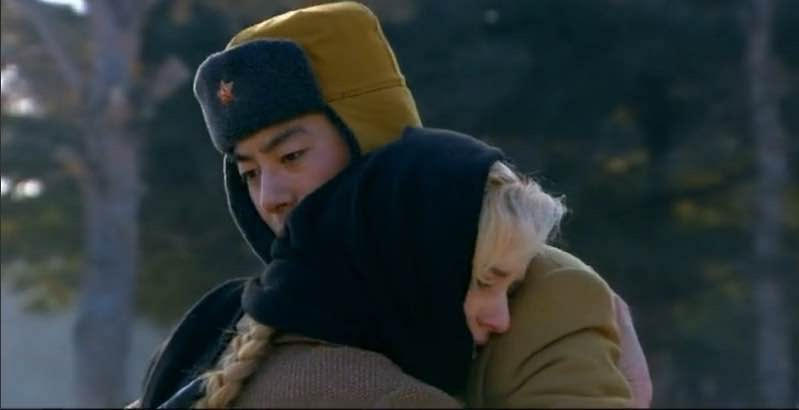
A young Russian woman — I’ll call her Natasha — stands on the bank of the Amur River in the dead of a northern winter. The temperature is subfreezing. The river is vast. On the other side, China. She is waving. She has been waving across this river for weeks, and somehow it has become their language — the two of them on opposite banks, separated by the water and the politics and the soldiers, communicating in the only way they can: color, motion, presence. You wave, I wave back. I am here. You are there. The river is between us but we are not gone.

And then one day she comes to the bank and waves.

And the other side is silent.

He had been taken. Chinese soldiers had come for him — a young man in love with a Russian woman, waving across a militarized border during the Sino-Soviet split, which in the eyes of the state made him exactly one thing: a spy. He disappeared. No warning, no explanation, no goodbye. Just gone. And Natasha stood there on the Russian bank in the subfreezing cold, waving at nothing, tears pouring down her face, waiting.
She was pregnant with his child.

I watched this on a documentary. I don’t know with certainty whether every detail happened exactly this way — it may be dramatized, reconstructed, the way all memory and film and love stories are. But what I know is that it is true in the way that the most important things are true: it names something real about the human condition, about what love costs, about what silence does to a person who is waiting.

What followed was more than twenty years of silence.

Not five years. Not ten. Twenty years. Two decades in which Natasha did not know if he was alive or dead, imprisoned or freed, if he ever thought of her, if he had been broken into forgetting her. Two decades in which she raised a child who had never met his father. Two decades of going to a river bank, I imagine, and looking across at a country that had swallowed the person she loved and refused to give him back.

How does love survive that?

I’m asking seriously. I don’t have a clean answer. But I think that question is one of the most important questions a human being can sit with.

The border in question is the Amur River — called the Heilongjiang, the Black Dragon River, in Chinese. For over a thousand miles it runs as the contested frontier between China and the Soviet Union, and by the 1960s that frontier had become one of the most militarized stretches of land on earth. What had been a fraternal communist alliance had collapsed into mutual suspicion and ideological warfare. The Soviet Union massed sixteen divisions, over a thousand aircraft, and more than a hundred medium-range missiles along that border. China mobilized its own forces in response. Both governments were contemplating the unthinkable. Ordinary people who lived along that river found themselves suddenly stranded at the edge of a potential nuclear confrontation between two superpowers.

Into that, two young people fell in love.

They met somehow — the way people meet, in the ordinary porousness of border life before the clampdown fully came. Something kindled. They found ways to be near each other. And when the border hardened and the armies came and physical crossing became impossible, they improvised the only communion they could: they stood on their respective banks in the northern cold and they waved. Whole conversations conducted in color and gesture across a width of freezing water. Weeks of this. Something tender and absurd and completely serious, the way love always is when it refuses to accept the terms that the world is offering.

And then he was taken.

And the river went silent.

I need to say something about silence. Not the comfortable silence of a peaceful room, but the silence that answers you when you have called out to someone you love and they do not respond. That silence is its own kind of violence. It does something to a person. It raises questions that cannot be answered and therefore cannot be put down: Are you there? Did something happen? Did I do something? Do you still exist? The not-knowing is, in some ways, worse than the worst news, because at least the worst news is a fact you can grieve. Silence is a wound that stays open because nothing has come to close it.

Natasha waited through that silence for more than twenty years. I keep turning that number over. Twenty years is not an abstraction — it is a specific length of time that I can feel. Twenty years ago from today, I was in a completely different chapter of my life. Twenty years from now, if God grants it, I will be a different person in a different season. Twenty years is long enough for a child to be born and grow up. Long enough for certainty to erode, for memory to blur at the edges, for the world to insist — gently, persistently, reasonably — that it is time to move on. To stop standing at the river. To accept that some stories end badly and this is one of them.

She did not move on.

I don’t fully understand how. I suspect she didn’t fully understand how either. Love at that depth is not really a decision you make every morning — it is more like a fact about you that you keep discovering, even when you wish you could undiscover it. She loved him. The river did not answer. She loved him anyway.

Here is where I have to be honest about why this story hit me the way it did — and it is not because my situation resembles hers in any external sense. I have a wife I adore. God has been remarkably kind to me in marriage, and I do not take that for granted for a single day. The love story I am living is not a love story of anguish.

But there is another love in my life. A calling. A conviction that God has placed on me to build something in this city — a faith community for a generation that has largely written the Church off, that carries wounds from institutions that failed them, that hungers for meaning but flinches at the word “church.” I moved to New York. I planted a flag. I stood in Union Square with a folding table and a gospel and an open hand.

And ministry, I am learning, has its seasons of silence.

Not always dramatic silence. Not soldiers and borders and disappearances. But the quiet that settles when the response is small, when the crowd doesn’t come, when you have poured yourself into something and the river doesn’t wave back. The silence of faithfulness without visible fruit. The silence of calling without confirmation. The silence that makes a reasonable person ask: are you sure this is what you’re supposed to be doing? Shouldn’t something have happened by now?

I watched Natasha wave across the frozen river at nothing, and I felt the question form inside me in a different register — not about human love, but about divine love. About the love between a soul and God.

Can you love God through twenty years of silence?

This is, it turns out, not a new question. The Psalms are full of it. My God, my God, why have you forsaken me? That is not a statement of unbelief — it is a cry from someone who believed so hard they went looking for God and found an empty bank. The prophets knew it. Elijah, fresh off the fire of Mount Carmel, collapsed under a juniper tree and told God he was done. Job argued his case to a heaven that seemed to be ignoring him for chapters upon chapters. The saints across the centuries have named it — the dark night of the soul, the long season when prayer feels like waving at a river that doesn’t wave back.

What strikes me about every one of these figures is that they did not resolve the silence by pretending it wasn’t there. They named it. They raged against it. They sat in it. And somehow — not always with explanation, not always with a tidy resolution — they came out the other side still in love with the God who had seemed, for a season, to go quiet.

The resurrection of Jesus is the ultimate answer to this question, but it is an answer that arrives after three days of the most absolute silence imaginable. The disciples on Holy Saturday did not know a resurrection was coming. They knew a tomb. They knew silence. They knew that the one they had staked everything on was gone, and the river wasn’t waving back. The road to Emmaus is a story of two people walking away from Jerusalem in that silence — and the miracle is not just that Jesus appears, but that he walks with them in the direction they are already going, in their grief, in their confusion, in their having-already-given-up. The love came to them. The love did not wait for them to get their hope back before it showed up.

But I want to sit a moment longer in the silence before I get to the resurrection, because I think we move too quickly past the Saturday. The question Natasha poses from the bank of the Amur River is the Saturday question: can love hold on when it has no evidence to hold on to? Not when the miracle comes. Not when the answer arrives. Not when he finally reappears after twenty years and she finds out he was alive and he was faithful and the love was real. But in the middle years, the frozen years, the years of waving at nothing — can love endure that?

I believe the answer is yes. But I want to be honest that it is not a comfortable yes. It is a costly one.

What I am trying to build in this city is small right now. The first gathering was modest. The obstacles are real. There are moments when I stand at the metaphorical bank and wave and wonder if anything is there.

And I think what I am learning — what Natasha’s story is teaching me, what the Psalms are teaching me, what the whole long tradition of faithful waiting is teaching me — is that love is not validated by its results. It is validated by its staying power. The measure of love is not what it produces in the seasons of abundance but what it does with the silence. Does it keep showing up? Does it keep waving? Does it believe, against all visible evidence, that the other side of the river is not empty — that there is a presence there that has not forgotten, has not abandoned, is still oriented toward you even in the years when you cannot see a sign of it?

Natasha stood on that bank and waved for twenty years because she believed — maybe consciously, maybe just in her bones — that the man on the other side was real, and that he had loved her, and that love of that quality does not simply dissolve because the state makes it inconvenient. She staked her life on the reality of what she had known before the silence came.

That is what faith looks like. Not the triumphant faith of answered prayers and visible miracles — though those are real and I have known them. But the quiet, exhausting, unreasonable faith of someone who keeps showing up at the river because they cannot bring themselves to believe that the love they once knew is gone.
The river didn’t answer Natasha for twenty years. But she was right to keep waving. He was there.

I believe God is there too. I believe the silence is not absence. But I want to go further than that — because the story of Natasha and the young man across the river, as devastating and beautiful as it is, is not the deepest love story there is. It is a shadow of one. And I think we need to feel the full weight of the shadow before we can begin to grasp the glory of what casts it.
Think about what made their love extraordinary. He loved her across an impossible divide. She loved him through twenty years of silence. Neither of them quit, even when every force in the world said to quit. We watch that and we are undone, because we recognize instinctively that this is what love is supposed to look like — stubborn, costly, unreasonable, surviving everything the world throws at it.

Now consider Jesus on the cross.

Natasha loved a man who loved her back. Christ loved people who were killing him. Natasha waved across a frozen river at someone who was desperate to wave back. Jesus stretched out his arms on a cross toward people who put him there, who mocked him while he bled, who had abandoned him when it cost something to stay. Natasha endured twenty years of silence not knowing if she was still loved. Jesus cried out “My God, my God, why have you forsaken me?” — absorbing into himself the full, crushing silence of divine abandonment, so that the people who deserved that silence would never have to hear it.

And then, from the cross, while the nails were still in his hands, while the crowd was still jeering, while the blood was still running — he opened his mouth and said: “Father, forgive them, for they know not what they do.”

I have read that line hundreds of times. I have preached near it. But watching Natasha wave at an empty riverbank, tears streaming down her face in the subfreezing cold, something in that line finally broke open for me in a new way. Because this is not the love of someone waving across a river at the person they adore. This is the love of someone being murdered by the people he is forgiving in real time. This is love with no reasonable basis whatsoever — love that is not a response to being loved, but love that initiates, that absorbs hostility, that refuses to become what it is being treated as. This is love that does not wait for the silence to end before it speaks. It speaks into the worst silence, from the worst place, at the worst moment, and what it says is: I forgive you. I am still for you. You do not know what you are doing, but I do, and I am choosing this.

No human love has ever done that. Not Natasha’s. Not anyone’s. The love between that Russian woman and that young Chinese man across the Black Dragon River is one of the most moving things I have ever encountered on a screen. But it is, in the end, two finite people loving each other across a frozen river. What happened on Calvary is the infinite loving the finite across the ultimate divide — not despite hostility, but through it, for it, willingly, eyes open, arms wide.

That is the love I want to know. Not just know about — know, the way you know a person, the way Natasha knew the man she waved to, the way she knew his presence well enough to feel the agony of his absence across twenty years of silence. I want to know the love of Christ with that kind of depth and that kind of personal, irreducible certainty. And I want that knowing to be so real in me, so alive in my bones, that when I stand in this city and open my mouth, something transcendent comes out — not my eloquence, not my theology, not my best argument, but the overflow of a love I have actually experienced.
That is what I want to proclaim to the people of New York. Not a doctrine. Not a program. Not an institution. The love that said Father, forgive them while bleeding. The love that is more stubborn than twenty years of silence, more willing than any human devotion, more costly than anything Natasha ever paid — and offered freely, without condition, to people who were not waving back.

If that love is real — and I believe with everything I have that it is — then there is no one in this city too wounded, too cynical, too far gone, too long silent to receive it. I want to know it so deeply that when I speak of it, something in the listener recognizes it as true before I have finished the sentence. Because somewhere inside every human being, I think, is a Natasha standing at a frozen river, waving into silence, hoping against hope that love is still on the other side.

It is. And it is greater than she imagined.

That is worth proclaiming. Even in the cold. Even when the other bank looks empty. Even when it has been a very long time.

Al Ngu is the founding pastor of Hearts Burn NYC, a faith community in New York City.

Wedding Sermon Reflection and Plan

Al Ngu       December 14, 2023

My philosophy of performing weddings as a Pastor

I am to officiate the ceremony in the presence of God in front of invited guests and families. In other words to be solemnized.

59-2. Christians should marry in the Lord; therefore it is fit that their marriage be solemnized by a lawful minister [1]

This is based on Genesis 2, when God brought Eve to Adam.

Genesis 2:22–23 (NIV) 22 Then the Lord God made a woman from the rib he had taken out of the man, and he brought her to the man. 23 The man said, “This is now bone of my bones and flesh of my flesh; she shall be called ‘woman,’ for she was taken out of man.”

This is a very important verse or I call it as the foundational principle of marriage, the goal and meaning of it. God brought the woman to the man. That will be the basis of foundational principle of the union between a man and a woman. Its God who brought them together. Not by human effort only. The divine providence and human responsivity working together.  Therefore a flourishing marriage will have to be a God centered marriage. In fact, there is no other definition of marriage. So how would God bring nonbelieving people together? Or one believing person, while the other is not? It would not make sense.

Also marriage is a covenant between a man and a woman before God . It’s not a contract, but a covenant in God’s presence, who also instituted his covenant through the bread and wine with us by our Lord Jesus in the last supper, which we celebrate in all churches monthly if not weekly.

“The covenant made between a husband and a wife is done ‘before God’ and therefore with God as well as the spouse. To break faith with your spouse is to break faith with God at the same time.” [2]

Therefore I would only conduct marriage:

Between two believers, and of course, it will be between a man and a woman, as in the design of God’s bringing a woman to the man. Not two women to one man, but one to one. So in order for marriage to flourish, God will have to be the centrality. Not only that:

24 That is why a man leaves his father and mother and is united to his wife, and they become one flesh.

There will be a leaving of parents and cleaving to his wife in marriage, and that’s from the bible which also prophetically points to the ultimate marriage between Christ and the church.

Logically therefore I would refuse to perform a wedding ceremony to be solemnized in the presence of our Almighty God if they are not believers in Christ and walking in their faith in Christ. Also I will not conduct a wedding ceremony for any other violations of what God instituted as marriage like same sex marriage, as He brought a woman to the man.

BOCO writes: 59-3. Marriage is to be between one man and one woman, in accordance with the Word of God. [3]

Ceremony, music and photography:

Should point to the joyous uniting of a man and a woman as a covenantal way. Commitment is the message in the love and providence of God. Music worship songs should reflect that.

Reflect on your research and develop a personal plan for performing a wedding ceremony

I will quote this verse as a wonderful shower of blessing and joy and confidence to the joyous couple in the presence of the witnesses, friends, and families.

“ The Lord bless you, and keep you; the Lord make His face shine upon you, and be gracious to you; the Lord lift up His countenance upon you, and give you peace (Numbers 6:24-26).[4]

I will also read out the scriptures of the call of God for the husband’s duty towards his wife, and also the wife’s duty towards her husband as in this wonderful, glorious verses.

“Husbands, love your wives, just as Christ also loved the church, and gave Himself for it” (Ephesians 5:26). “Wives, submit to your own husbands, as to the Lord” (Ephesians 5:22).

The happiness contemplated by this union is realized only by those who fully appreciate its sacredness and are faithful in the performance of the mutual obligations growing out of it, and seek daily God’s blessing.[5]

I will expound the significance of this sentence from BOCO which says beautifully that a married couple’s happiness is realized only by those who fully appreciate its sacredness.[6] Marriage is sacred, and therefore it means God is in the center of our blessed marriage, and hence sacred and holy. It’s not some kind of play around, and try around ritual, but a lifelong covenantal commitment.

Also, it says happiness only realized by those who are faithful in the performance of the mutual obligations growing out of it, and see daily God’s blessings. I believe such performance of mutual obligations is only possible as the couple both seek daily God’s blessings. [7]

Finally, as BOCO puts it that the new relation is consecrated by heaven’s benediction. Consecrated means set apart for God and hallowed by all that is tenderest and truest in human affection.[8] I love it that it’s a combination of God’s blessing and consecration, and also blessed by the tender and true human affections. It’s important that couples express their affections towards one another continually through their lives.


[1] THE BOOK OF CHURCH ORDER OF THE PRESBYTERIAN CHURCH IN AMERICA, 59-2

[2]  Tim Keller in The Meaning of Marriage, p 83

[3] Ibid, 59-3

[4] Ibid, Appendix A

[5] Ibid, Appendix A

[6] Ibid, Appendix A

[7] Ibid, Appendix A

[8] Ibid, Appendix A