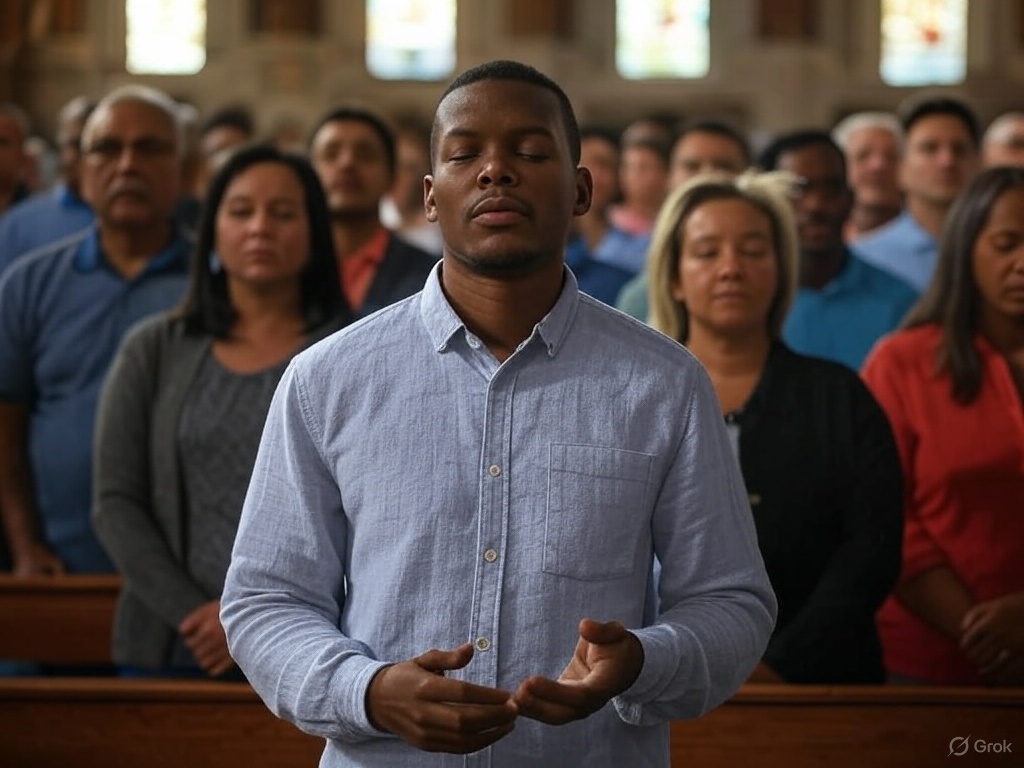
Exodus 20:4–6 (NIV)
4 “You shall not make for yourself an image in the form of anything in heaven above or on the earth beneath or in the waters below. 5 You shall not bow down to them or worship them; for I, the Lord your God,
So the question is simply when you red Exodus 20:4 which is the 2nd commandment of the Ten Commandments, do you take that as “do not bow down to idols”? Or do you read it as “Do not make for yourself an image and take that as its Yahweh form”?
Exodus 20:4–6 (NIV)
4 “You shall not make for yourself an image in the form of anything in heaven above or on the earth beneath or in the waters below. 5 You shall not bow down to them or worship them; for I, the Lord your God, am a jealous God, punishing the children for the sin of the parents to the third and fourth generation of those who hate me, 6 but showing love to a thousand generations of those who love me and keep my commandments.
Peter Enns expounded: “Second commandment (vv. 4–6). This commandment goes into greater detail than the first, and it seems to follow it logically. But its meaning is not entirely clear. The basic prohibition is against making an idol in the form of any created thing. But does “idol” refer to an idol of one of the gods spoken of inverse 3 (3 “You shall have no other gods before me.) or does it include any sort of representation of Yahweh himself? The commandment certainly entails at least the former. Idols that the Israelites had seen were idols of other gods, a ubiquitous ancient custom.”[1]
That’s a valid question: Does the verse “you have no other gods before me” also include any sort of representation of Yahweh himself? My first read and have had that mindset is , v3 & v4 is definitely referring to other “gods” that being worshipped by Israelites or us today, and hence become idols in their hearts. But now Enn’s interpretation takes a twist, or rather he broadened it to also God forbidding anyone to take the idol as a sort of representation of God himself. And that’s exactly what Presbyterian worship called “Regulative Worship” stands on, i.e. you can’t worship God, albeit the right God, i.e. Jesus Christ, in any way or from you like. Because that would be akin to breaking the 2nd commandment. And hence PCA has come up with the doctrine of “regulative worship” i.e., you can worship God in the way He prescribed in the Bible as per Ex 20:4-5.
Enns further writes, “The second commandment, therefore, is to be understood within the framework of the first. It expands the first, which is why the first two commandments have sometimes been thought of as one.10 The Israelites are not to worship other gods; therefore, they are not to make any idol of any kind. They are not to represent these other gods by any earthly, created form. [2]
Exodus 20:2–5 (ESV)
2 “I am the Lord your God, who brought you out of the land of Egypt, out of the house of slavery.
3 “You shall have no other gods before me.
4 “You shall not make for yourself a carved image, or any likeness of anything that is in heaven above, or that is in the earth beneath, or that is in the water under the earth. 5 You shall not bow down to them or serve them, for I the Lord your God am a jealous God, visiting the iniquity of the fathers on the children to the third and the fourth generation of those who hate me,
Enns continues, “Are we to conclude that this prohibition allows the Israelites to make idols of Yahweh. Absolutely not! Part of this command is also to prevent Israel from identifying the true God with any created thing. To identify God with any created thing is merely one step from thinking of God in terms of that image. It would be creating God in the image of his creation, which would put Israel’s God on par with the gods of the nations. Thus, I suggest that this command has a twofold thrust: Israel is not to do as other peoples do by worshiping the idols of their gods, nor are they to do as other nations do by worshiping their own God that way.” [3]
So Enns is saying that there is a possibility that Israel may identify Yahweh, the true God, with a created thing, taking the cue from v3-4. So my thinking is when God says, “You shall have no other gods before me, and you shall not make an image of anything and NOT bow down to them or worship them”, does He actually also include warning Israel not to identify Him to be worshipped in the form of an image from heaven or earth?
This is helpful: Enns writes, “To identify God with any created thing is merely one step from thinking of God in terms of that image. It would be creating God in the image of his creation, which would put Israel’s God on par with the gods of the nations.”[4]
Enns is writing that God warns that Israel not to identify God as one of the creations in the form of idol to be worshipped. And as he said, that’s thinking of God in terms of that image. It would be creating God in the image of his creation, which is an abomination. I mean how can Israel or us today “create God in the image of God’s creation?” In fact, that’s exactly what modern men and women do, they create their own images of idols in their minds to serve and worship, be it money, ex or power. So that’s creating a form of god in thief reminds in the image of a created ebbing or thing. I think that’s how 2nd commandment makes sense.
But as the regulative worship as per Catechism and PCA worship, this is extended to project a prohibition to worship God in your own fancy way, but it must be based on the scriptures.
Conclusion
Westminster catechism Q50. What does the second commandment require?
The second commandment requires us to receive, respectfully perform, and preserve completely and purely all the regulations for religion and worship that God has established in His word.
The “regulation for religion and worship” comes from the prescription God laid down in 2nd commandment, in my opinion should be subservient to the greater point made in Exodus 20:2-4 and that’s do not make anything into an image and bow down to worship them. It’s not so much do not identify Yahweh as one of the created thing images to be worshipped, but rather do not bow down to any image or idol and worship them, for God is a jealous God.
[1] Peter Enns, Exodus, The NIV Application Commentary, (Grand Rapids, MI: Zondervan, 2000), 414–415.
[2] Peter Enns, Exodus, The NIV Application Commentary, (Grand Rapids, MI: Zondervan, 2000), 414–415.
[3] Ibid
[4] Ibid
 Al Ngu sermons & devotion