The Spiritual Climate of the Colonies
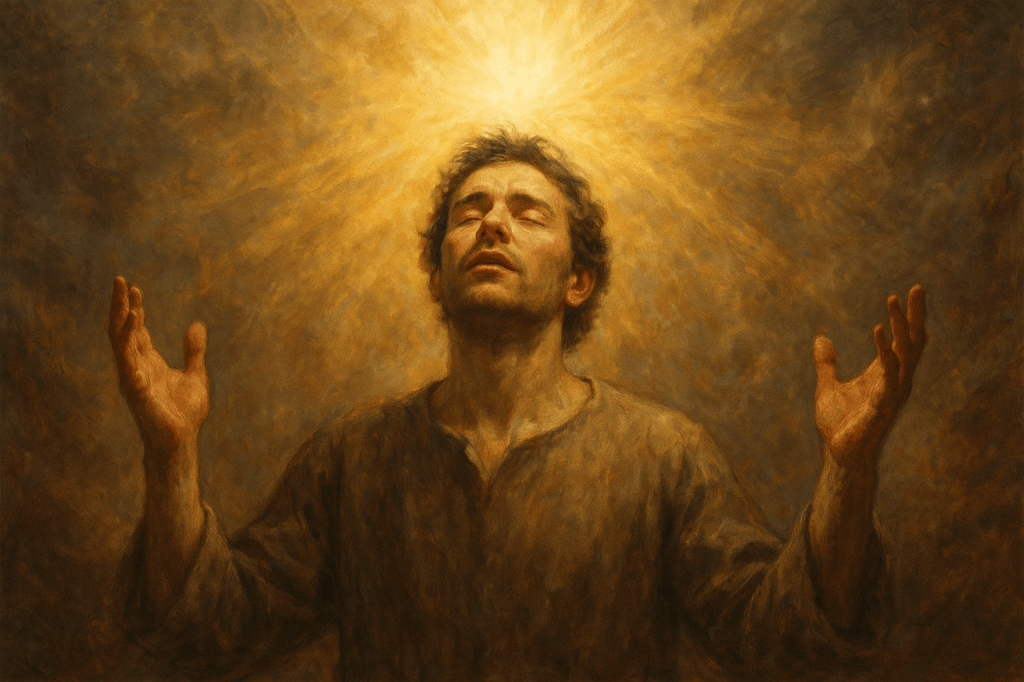
By the early 18th century, the American colonies were marked by spiritual lethargy, formalism in the churches, and moral decline. Into this dry and dusty religious landscape, the Holy Spirit moved with power. The First Great Awakening (1730s–1740s) was not merely an emotional uprising but a sovereign work of God marked by deep repentance, biblical preaching, and spiritual renewal. It stands as an exemplar of revival—one that maintained theological fidelity while opening wide the doors to the supernatural work of the Spirit.
The churches of Edwards’s day were stuck in routine. Spiritual lethargy meant the absence of the convicting power of the Holy Spirit, both personally and corporately. Worship was dry, mechanical, and formalistic. It was precisely in this barren setting that God poured out His Spirit with fresh vigor, igniting revival.
The Marks of True Awakening
The First Great Awakening was not merely emotional, though emotions certainly played a role. Revival touches the whole person—mind, will, and affections. But emotion alone is not revival. True awakening is a sovereign work of God marked by repentance, biblical preaching, and spiritual renewal.
The defining feature of Edwards’s revival was not simply stirring sermons or outward excitement but lasting transformation. Preaching without renewal would have amounted to little more than intellectual “hot air.” But spiritual renewal followed biblical preaching. That is the essence of authentic awakening: repentance undergirded by truth.
The real test of revival is whether new believers persevere in faith and grow in Christ. Are they discipled with grace-filled, God-centered instruction, or left with shallow teaching? A Spirit-born revival must be sustained not only by experience but also by sound doctrine. The First Great Awakening remains astounding for its depth: repentance, tears of remorse, cries to God, and powerful biblical preaching.
This reflects the pattern in Acts 2:
“And they devoted themselves to the apostles’ teaching and the fellowship, to the breaking of bread and the prayers. And awe came upon every soul, and many wonders and signs were being done through the apostles. And all who believed were together and had all things in common.” (Acts 2:42–44, ESV)
The Need for Awakening Today
By comparison, today’s churches fall short. In 21st-century America, do we not also feel spiritual lethargy and moral decline? Perhaps it is less about rigid formalism and more about a pervasive dryness: a lack of passion for God, a weak desire for His gifts, signs, and wonders, and congregations running in “maintenance mode.”
What we desperately need is a fresh spiritual reawakening both inside and outside the church. The First Great Awakening gives us both a model and a warning. It shows us what God can do in a time of deep spiritual drought, and it reminds us not to settle for a faith that is shallow, passionless, or powerless.
Edwards and the Gifts of the Spirit
This Awakening also offers a crucial historical case study for modern Reformed believers wrestling with the legitimacy of charismatic gifts. It demonstrates that the Spirit’s power need not contradict the confessional Reformed tradition but can in fact enrich it.
Jonathan Edwards did not believe the supernatural manifestations of the Spirit were limited to Pentecost or confined to the apostolic age. In A Faithful Narrative of the Surprising Work of God (1737) and other writings, Edwards argued that the dramatic phenomena observed during the Awakening—deep conviction of sin, visions, emotional outpourings—were consistent with the Spirit’s ongoing work in revival, though distinct from the once-for-all, foundational events of Pentecost (Acts 2).
Here Edwards directly challenged a common Reformed cessationist claim: that visions, prophecy, and tongues were confined to the apostolic era for the laying of the church’s foundation, and that once Scripture was complete, such gifts ceased. Edwards disagreed. He personally witnessed and affirmed the Spirit’s extraordinary manifestations and did not believe they were restricted to the first century.
This distinction has massive implications. It clarifies the difference between the revelatory gift of Scripture, which indeed closed with the apostolic age, and the prophetic or supernatural operations of the Spirit, which continue throughout church history.
While Edwards affirmed both the sufficiency and the finality of Scripture, he did not equate every prophetic or supernatural activity with the writing of new Scripture. In doing so, he upheld the authority of the Bible while leaving room for the Spirit’s ongoing, life-giving work—something we too must embrace today.
Conclusion: A Pattern for Reformed Charismatics
The First Great Awakening reminds us that authentic revival is not a contest between doctrine and experience, or between Reformed theology and charismatic gifts. In fact, it shows us that these two realities are meant to converge. The Word of God provides the foundation, guarding us from error and excess; the Spirit of God supplies the fire, preventing our faith from devolving into lifeless formalism.
Edwards’s legacy is a call to hold both together. He upheld the sufficiency of Scripture, yet he welcomed the surprising works of the Spirit. He preached deep, God-centered theology, yet he did not quench the supernatural gifts that brought conviction, repentance, and renewal. This is precisely the pattern modern believers need: a revival that is both theologically rooted and Spirit-empowered.
For Reformed charismatics today, the First Great Awakening is not merely history—it is a prophetic model. It demonstrates that the sovereign God who moved in 18th-century New England is the same God who longs to awaken His church now. The Spirit has not grown weary, nor has He ceased to give His gifts. What is needed is a church hungry for God, grounded in His Word, and open to His power.
 Al Ngu sermons & devotion