Al Ngu, Jan 9, 2026
The New Testament bursts with accounts of signs and wonders—not only through Jesus Christ, the Son of God, but also through ordinary men like the apostles. Peter raised the dead (Acts 9:36–42), Paul healed the sick and cast out demons (Acts 19:11–12), and the early church witnessed healings, deliverances, and bold proclamations that turned cities upside down. These were not rare anomalies; they were the expected outflow of the Holy Spirit’s power.
Yet today, in many corners of the church, such demonstrations feel distant—sporadic at best, absent at worst. Why? Why do we read of an overwhelming abundance of miracles in Scripture, yet see so few in our own lives and ministries? This question haunts me, especially as someone who has ministered in charismatic contexts and now lives in the bustling, skeptical heart of New York City.
Jesus promised this power explicitly: “But you will receive power when the Holy Spirit has come upon you, and you will be my witnesses in Jerusalem and in all Judea and Samaria, and to the end of the earth” (Acts 1:8, ESV). The purpose is unmistakable: Holy Spirit empowerment for witness-bearing, from our local streets to the ends of the earth. When was the last time you stepped out to share the gospel in your city and felt genuinely electrified, expectant, and empowered? For too many of us, the answer is dishearteningly rare. We’ve grown accustomed to disappointment. Signs and wonders seem to have faded into the background, leaving us frustrated that the very power promised for evangelism is so often lacking.
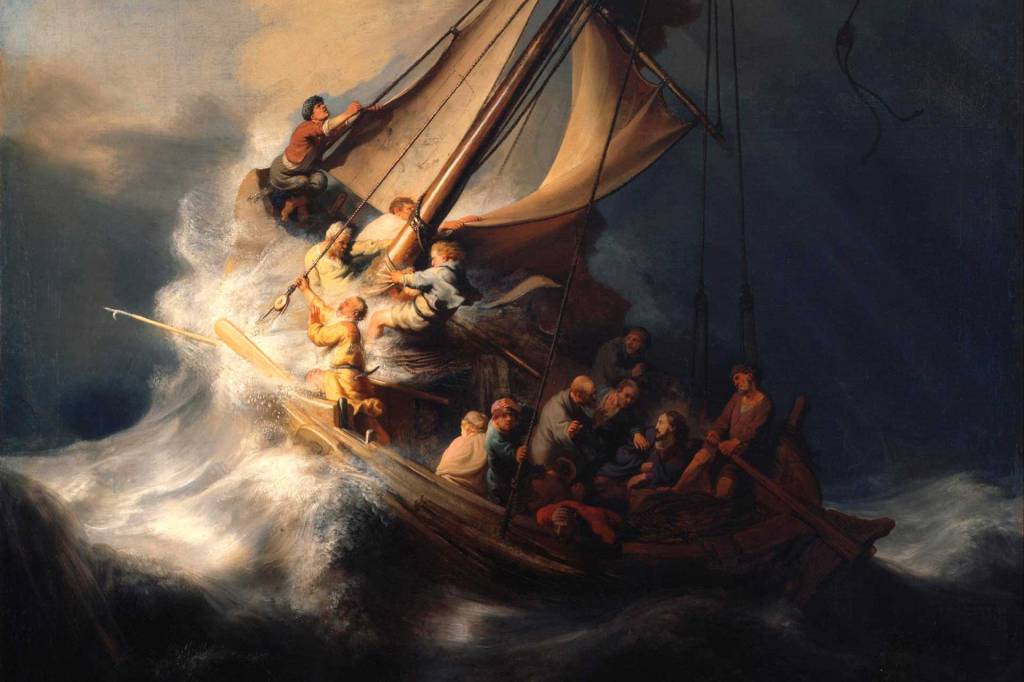
This tension finds its mirror in Matthew 8:23–27, the account of Jesus calming the storm:
And when he got into the boat, his disciples followed him. And behold, there arose a great storm on the sea, so that the boat was being swamped by the waves; but he was asleep. And they went and woke him, saying, “Save us, Lord; we are perishing.” And he said to them, “Why are you afraid, O you of little faith?” Then he rose and rebuked the winds and the sea, and there was a great calm. And the men marveled, saying, “What sort of man is this, that even winds and sea obey him?”
The disciples panicked as the waves crashed over them. They cried out in fear: “Lord, save us! We are perishing!” Jesus’ response is piercing—first a rebuke: “Why are you afraid, O you of little faith?”—and only then a command that brought instant calm. The disciples marveled at the authority of the One in their midst.
If we were in that boat, how would we react? Honestly, most of us—pastors, theologians, everyday believers—would likely do the same: cry out in terror. Yet Jesus held them to a higher standard. He expected faith that trusted His presence and authority, perhaps even faith to rebuke the storm themselves in His name.
Why this expectation? Because Jesus was physically there, mere feet away. Today, He is ascended, but the Holy Spirit dwells within every true believer (Romans 8:9–11; 1 Corinthians 6:19). So why the scarcity of signs and wonders?
The roots run deep. The Enlightenment of the 17th and 18th centuries shifted Western thought toward rationalism, empiricism, and a suspicion of the supernatural. Miracles came to be viewed as violations of natural law—improbable, superstitious, or impossible. Thinkers like David Hume argued that miracle reports could never outweigh the uniformity of nature. This mindset permeated education, culture, and eventually theology.
Thomas Jefferson famously created his own edited version of the New Testament, *The Life and Morals of Jesus of Nazareth* (completed around 1820), by literally cutting and pasting passages to remove all miracles, references to Jesus’ divinity, and the resurrection—focusing solely on moral teachings. Later, in the late 20th century, the Jesus Seminar—a group of scholars—voted on the authenticity of Gospel events, dismissing most miracles as legendary inventions.
These efforts reflect a broader cultural trajectory: the supernatural was sidelined to make faith more “palatable” in a scientific age. Universities filled with secular professors and textbooks promoted worldviews that often excluded God, sometimes leaning toward materialism or even Marxist influences. The church was not immune. Many congregations gradually abandoned praying for the sick, prophetic ministry, and expectant faith for miracles. Services became centered on preaching and singing—good things, but often without the demonstration of power.
Is it any wonder signs and wonders are rare? Expectations have plummeted because teaching has shifted. As Paul reminds us, “Faith comes from hearing, and hearing through the word of Christ” (Romans 10:17). When we cease proclaiming a God who still intervenes—who calms storms, heals bodies, and empowers witnesses—faith naturally weakens.
The solution lies in a full reboot: a renewed mind, a philosophical and theological return to Scripture’s full witness, and a complete surrender to the Lord. We must embrace the congruent power of Spirit and Word—the Holy Spirit’s dynamic presence working through the authoritative Scriptures. This is the God who performed mighty acts through Christ and the apostles, and who still desires to do so today for His glory and the advance of His kingdom.
Let us pray for revival: that our churches would once again expect, pursue, and witness the signs and wonders that authenticate the gospel. In our cities, our nations, and to the ends of the earth—may the power promised in Acts 1:8 be unleashed anew.
Amen.
 Al Ngu sermons & devotion