God of Miracles of Impossibility

Psalms 105:41 (ESV) 41 He opened the rock, and water gushed out; it flowed through the desert like a river.

As I was fasting tonight and praying to God, this verse hit me about the exodus of Israel out of Egypt. The power of God was so mighty striking Egypt that, the strongest nation in the world at that time, Egypt with its Pharaoh, the mightiest king of earth, was glad when Israel, the slaves of Egypt left them!

Psalms 105:37-38 (ESV) 37 Then he brought out Israel with silver and gold, and there was none among his tribes who stumbled. 38 Egypt was glad when they departed, for dread of them had fallen upon it.

Egypt was GLAD when Israel departed from Egypt for dread of them had fallen upon it!

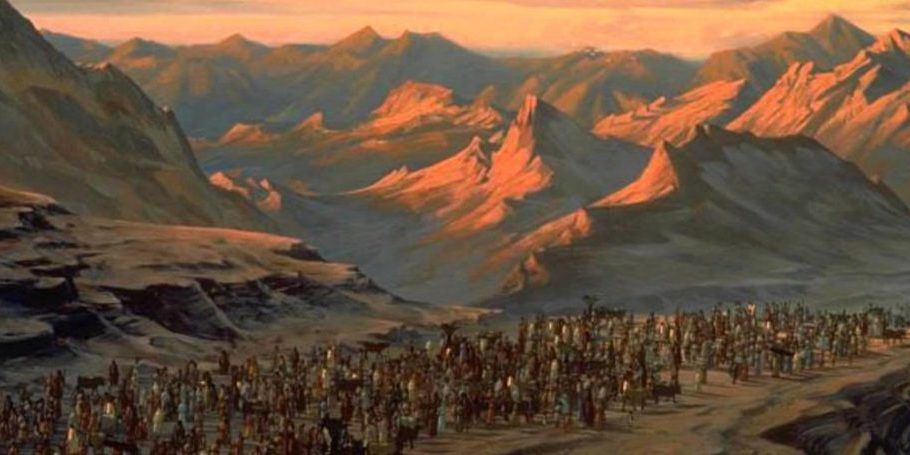
They were on the way out , they went through wilderness, desert, they ran out of food, water, v41 described one of the most amazing verse, miracle happened! God opened the rock, and water gushed out. This is a miracle! Water gushing out of a rock, right in the middle of a desert. This is not an oasis. This is God showing the impossible happened by his miracle, so that Israel will truly know this is humanly impossible, and the only way is God! Have you ever felt you needed a miracle from God? Many of us have, and some do. I do. That’s our God! He is the God of impossibility! When men despair, when Israel and Moses went into despair mode, crying out to God, God stepped in and provided the most miraculous way. He could have commanded water to flow from the sand, but no, from the rock!

Not only that, v41b says it flowed through the desert like a river.

Not only did water gushed out from a rock, and you thought you would be lucky to get a couple of buckets, but no! Again, another convincing and convicting miracle of the immensity of God, the God our providence, caused the water to flow through the desert like a river. Can you see the contrast between a rover and a desert? The two most unlikely things become partners in the grace of the miracle of God!

I am so convicted, and whatever I asked from God, seeking him for his strength,

Psalms 105:3-5 (ESV) 3 Glory in his holy name; let the hearts of those who seek the Lord rejoice! 4 Seek the Lord and his strength; seek his presence continually! 5 Remember the wondrous works that he has done, his miracles

Those who seek the Lord rejoice!

Seek the Lord and his strength, seek his presence continually!!

Is Jesus God & Why is it Important?

For centuries, people have asked and struggled whether Jesus is God. And what’s this concept of being the Son of God? How can one being God as well as being the Son of God. And question is, how can God has Son? These are some of the mystic and penetrating questions people ask, and rightfully so. But why bother knowing so much theology on this? Can’t we just teach Jesus loves, heals, died for us? 

The identity of who Jesus is, defines the whole religion and faith of Christianity

The biggest and most far reaching religion in the world depends on who Jesus actually is. And without knowing the identity of Jesus, we cannot experience justification (salvation), and we cannot experience sanctification (holiness and life transformation). So don’t take this question as purely academic and leave to the seminary, and lets just preach God is good, loving and have faith that He will heal you and lift you up, which are all true and good. Before we jump into applications and exhortations, it behooves us and it’s best, for us to know the source or the substance of such exhortations, the source of that power, the source of that salvation etc. By the way, there is a tendency for a lot of evangelical pastors and especially charismatic churches to do that, that quick application style. (see my other article https://alngu.com/2020/05/20/why-many-pastors-especially-charismatics-ignore-theology-let-my-people-think/).

There are many verses in the Bible we can tackle this question, like in Genesis 1, God says “Let us…make the world”, He was not alone. The Godhead clearly extends to more than one person. John 1 says in the beginning is the Word, the Word is God, and the Word became flesh. Clearly that’s referring to Jesus who became flesh, and it explicitly says the Word is God, i.e. Jesus is God. But I am intrigued with Psalm 45 here, and perhaps I will expound all the other passages mentioned in future articles.

Psalm 45 reveals and exhibits one of the most stunning revelation of Jesus is and as the second person of the Trinity, and proves Jesus is God, in the Old testament 

Psalms 45:6-9 (ESV) 6 Your throne, O God, is forever and ever.The scepter of your kingdom is a scepter of uprightness;7 you have loved righteousness and hated wickedness.Therefore God, your God, has anointed you with the oil of gladness beyond your companions;

It says here “Your throne, O God, is forever and ever.” V5. Then in v7b “ Therefore God, your God, has anointed you with the oil of gladness beyond your companions”. Whoa! What does that mean? God calling out to God? Is there two God? What’s going on here? I love to expound this, after my research paper on the Trinitarian God. Let me expound them as follows:

God the Father calling out to His only Begotten Son as God

Psalms 45:6-9 (ESV) 6 Your throne, O God, is forever and ever.The scepter of your kingdom is a scepter of uprightness;

V6 here is God the Father calling out his Son Jesus Christ. This actually affirms and solidifies the doctrine of our Trinitarian God theology. God is saying Jesus is God and is God forever and ever. This may have missed many pastors sight on this, but God the Father has such high view of God the Son, effectively calls him as equal. This would have caused an uproar among the Pharisees in NT, as they have accused Jesus as blaspheming to call himself as God. John 10:33 (ESV) 33 The Jews answered him, “It is not for a good work that we are going to stone you but for blasphemy, because you, being a man, make yourself God. 

Now why is it a big deal? It is a big deal because that just elevated the man Jesus who walked righteously on earth and then was crucified dead and rose from the dead, is actually affirmatively God himself. Now, that’s hard to swallow, because how can God be mocked, beaten, whipped, spit at, and lie helplessly on the cross at the hands of mortal men? That’s why it is of utmost importance that we understand the two natures of Jesus. While on earth, he was a man, though he is still God. The guy bleeding on the cross, is the man Jesus, not the God Jesus. Let’s be clear, because without the full manhood of Christ, he won’t have been able to save us, because we needed a condemnation on his flesh to take our condemnation away from God. And God cannot be imputed our sins and be condemned, as He is God. But the righteous requirement of God for justification, purification and hence salvation requires an atonement, a punishment for the sins committed. Therefore Jesus took the human body and soul and committed to dying on the cross to save humanity through his incarnation to become a man. Then he was raised from the dead, and now seated on the throne at the right side of the Father. He is still interceding for us in the capacity of man for us the elect in heaven right now. Its mind blowing, I know, but this crucial we understand all these to make sense of the religion or faith called Christianity.

God has anointed his Son as the Man Jesus 

Therefore God, your God, has anointed you with the oil of gladness beyond your companions;

That’s clear this is God the Father anointing Jesus in the form of a man while ion earth carrying out his salvific ministry. It actually says, “ your God”. 

Also, God the Son needs no anointing from the Father, he is full of anointing unlimited. Therefore, again, this is the Man Jesus. Look at this verse, all things on earth and heaven, visible, invisible, thrones or powers or authorities been created in him, through him, and for him. That makes him equal with God the Father. Wow! What else do we need? The Man Jesus is God! Also , the next verse” …in him all things hold together”. ( Colossians 1:15-17)

Colossians 1: 15 The Son is the image of the invisible God, the firstborn over all creation. 16 For in him all things were created: things in heaven and on earth, visible and invisible, whether thrones or powers or rulers or authorities; all things have been created through him and for him. 17 He is before all things, and in him all things hold together. Therefore God, your God, has anointed you with the oil of gladness beyond your companions;

ALL things in the universe are held together in Christ. That means the sun stays its course giving the right amount of light and UV, and the earth rotates the right speed around the sun, and together with thousands or millions of stars in this HUGE cosmos, all happen in Jesus! Is that enough for Jesus to be God? Even our human body, an awesome creation by God in the image of God (Imago Deo), is distinctively marvelous in the lungs that breathe, the intestines in our body that runs longer than a football yard, the eyes that see, etc. etc., is held together in Jesus! 

Amen.

Why we cannot make our own choice or freewill decision to accept Christ?

Why we cannot make our own choice or freewill decision to accept Christ? 

Morally Corrupt

Romans 8:3-8 (ESV) By sending his own Son in the likeness of sinful flesh and for sin, he condemned sin in the flesh, 4 in order that the righteous requirement of the law might be fulfilled in us, who walk not according to the flesh but according to the Spirit. 5 For those who live according to the flesh set their minds on the things of the flesh, but those who live according to the Spirit set their minds on the things of the Spirit. 6 For to set the mind on the flesh is death, but to set the mind on the Spirit is life and peace. 7 For the mind that is set on the flesh is hostile to God, for it does not submit to God’s law; indeed, it cannot. 8 Those, who are in the flesh, cannot please God.

We cannot respond to God’s love, salvation, from our hostile mind towards God 

To judge sins, God must condemn sins in the flesh of mankind. But to do that, there will be no end of destruction of mankind, because, on their own strength, no man can measure up to the righteous decree of God. Eventually God sent his own Son, and condemned sins in the flesh or body of his own Son Jesus Christ!

Before knowing Christ, we all were living according to the flesh, meaning to our human desires, nothing to do with God. And if that’s so, as we lived or live in the fleshly human desires, devoid of God, v5 says that we would set our minds on the flesh or human desires, and v6 says that the consequence of setting our minds on the flesh is death! V7 The mind that is set on the flesh is hostile to God, and it does not submit to God, indeed cannot.

That’s the key words here: the minds that’s set on the flesh, cannot submit to God. This explains why humans on their own, cannot submit to God, and hence never be able to accept Christ as Lord and savior, because his/her mind is hostile to God! You can see why free will of yours can never bring you to accept Christ! Because without God, our minds are hostile to God, and our minds will not, and indeed cannot submit to God.

You can forget about on our own will ever can submit to God and therefore accept Christ into our lives. The notion that we can do that on our own free will is now swept away! Simply not biblical!

But some may argue that when we are moved by the Holy Spirit, we will submit to God and accept Christ! That moved by God, is God drawing us to Christ first, and then we respond to what God is doing in us. 

Okay, I think we can be clear that we cannot respond to God’s love, salvation, from our hostile mind towards God as clearly expounded above from Roman 8:6-7. 

Now do we have free will to choose God, to choose Jesus Christ? 

When we say yes Lord, “I receive you into my life, and accept you as my personal Lord and Savior,” is that from our free will? I would say it’s our will power to choose Jesus after God moved our heart, or the Holy Spirit moved our heart. On our own, we will not, and cannot submit to God on our own as our minds are hostile towards God as per the point apart.

We only choose God after God moved our hearts. Jesus says in John 6: 44 “No one can come to me unless the Father who sent me draws him. And I will raise him up on the last day.” If the Father doesn’t draw you, you won’t be coming to Jesus on the first place. Do you see that? It’s God who makes the first move, not you. Now, God only draws those who are pre-determined by God. 

Ephesians 1:3 Blessed be the God and Father of our Lord Jesus Christ…..4 even as he chose us in him before the foundation of the world, that we should be holy and blameless before him. In love 5 he predestined us for adoption to himself as sons through Jesus Christ, according to the purpose of his will. 

God chose us BEFORE the foundation of the world.

God predestined us for adoption.

The drawing of souls by the Father is chosen by God before the foundation of the world! Before the world was created!

God predestined us for adoption! 

So you can see if its free will to choose after God has done the choosing and predestination. We are responding because God moved us in his predestination before the world was even created.

Amen.

Gender based on Traditions is not out of date

There is a view out there that anyone not flowing into the view of the progressive sexuality today is out of date. We can’t disagree more.

Somehow the trend of trasngenderism, homosexuals has been taken as norm without contest, and they have challenged traditional understanding of sexuality, the Jewish Greco and also most importantly the Bible view.

Many Christian parents with LBGT children struggle as they face the uproar of their kids’ demand to flow in their views of sexuality based on the new society these days. Parents have to deal with this kind of view that has penetrated the academic world, the colleges that parents send their kids to. Unfortunately the liberal progressive think tank has taken captive the worldview on sexuality in the campuses and the media, arguably one of the most important and pressing topics of the 21st century.

To see or hear their college children saying they are into transgenderism, being a male biologically, complaining their desire is to be a woman feeling like trapped in a male body, or vice versa, is foreign and unnatural, and one must ask the question, where do these ideas come from?

A child growing up in a normal family, will never have to ask the question am I a boy or a girl? These questions puzzle everyone. Admittedly, there are cases, as an absolute minority, where kids grow up liking the same sex. The passionate acts between the same sex is described as unnatural in Romans 1 in the Bible. Romans 1:27 (ESV) 27 “and the men likewise gave up natural relations with women and were consumed with passion for one another, men committing shameless acts with men and receiving in themselves the due penalty for their error.” But this view has taken hold of a lot of the millennial generation and even to a certain extent in the evangelical churches. There are churches that have definitely embraced same sex relationship and even endorsed gay marriage and gay priests causing much pain and headache and splitting of churches.

We are talking about the rampant mind sweeping works of the liberal progressive to label things differently from the Bible. For anyone to change Romans 1 in the context of unnatural relationship between man and man, woman and woman, has gone into bible verses twisting and distortion in the most blatant manner.

Christian voice has been a minority voice and stand in this, however, do not forget that we never win any battle with the size of our presence. What wins is if the Lord God Almighty is with us or not? Look at David and Goliath, in terms of presence, size, Goliath towers over David, a teenage young lad. We are like a teenage young lad fighting a giant in the land. David was so sure that God was with him and had trained his hands for war as he overpowered lions as a shepherd boy by himself, he is made ready to war. His indignation for God in the face of insults and mockery thrown at Israel by the Philistine giant Goliath is too much for David to bear, because Goliath insulted not only Israel, but the God of Israel. That touched something, that touched the glory of the holiness of God. David ran towards Goliath, and threw his sling shot at Goliath as that 9 foot tall giant was also running towards David. That sling stone went out of David’s hands and landed exactly at the temple of Goliath’s forehead. And he fell down and was struck dead. One sling, one stone, David killed a formidable enemy. Because the Lord was with him. God helped him.

We need God’s help to fight against this cultural, and in fact, spiritual warfare. On the surface it is cultural, psychological, physiological, but deep down, this is deeply spiritual. We must not be intimated by the forces of culture but stand strong in the winds of the Holy Spirit. Our God is faithful, he fights for us. Amen.

Praying through psalms is a real edifying thing

We just prayed through psalm 37 with a group of parents this morning, and it’s so uplifting and feel connected with God with the saints, as we all took turn to pray. If you haven’t tried it with your loved ones, family, friends, church brothers and sisters, you should. First there is something about hearing someone else verbalizing prayer than just praying on your own, or everyone  prays quietly. Second, there is a common basis of prayer, instead of just prayer requests, like in a market.

Psalms is the best book to pray. There are books written like “praying through Psalms”, and also Tim Keller has written a book on praying on psalms. The benefit is enormous. It’s common knowledge that we don’t pray enough as Christians. We talk, we Facebook, twitter and Instagram’s, but talk to God is left in the background. No! It should be right in the front and center. I do appreciate many churches have online prayer through zooms, or google etc., there is a tremendous power released from the throne of God as we confess who he is, confess our sins, thank God for his love and faithfulness, and submit our supplications. Prayers mature us too. It’s the one thing we lack so much in the Christian community. Psalms declare the majesty of God, his steadfast love, his faithfulness, his justice, and it’s really good to take our eyes off from the political social turmoil of our country and city and focus on the greatness of God! Not saying we should not read special media, news, etc., and connect with our friends etc., twitting ideas and thoughts, but there must be a priority of prayers. Many are put off in prayers because we find it dry and boring, and sometimes I feel it too. That’s why I feel God has given as the book of Psalms of some of the most outstanding cries of help, lamenting, crying, and exalting God and celebrating God’s power, righteousness, faithfulness, justice. All in!

Do we want justice in America now? We been talking about systemic racism for the last 2 months or more in a more intense way after the George Floyd fiasco, and the nation is drowned with such struggle. Churches theology is filled with theology of liberation, confession, racial reconciliation and reparations. Protests fill the streets, on top of that we are still in the process of getting out of Covid. What better place to look for justice and pray through it? Psalms! Not just that, our entire identity, our being, our souls are all connected and displayed in Psalms with God. The disconnection with God is the primary thing that causes so much disruption and grievances. Ranging from racism, backsliding, sexuality, and the list goes on.

America needs a revival, an outpouring of the Holy Spirit in this land. Oh Lord, we are hungry. Pour forth your Spirit upon us as we read, meditate, and pray through your book Psalms.

We are in a spiritual desert like Israel in their exodus in the desert going to the Promised Land

By Albert Ngu          New York        July 14, 2020

Hebrews 3:14 For we have come to share in Christ, if indeed we hold our original confidence firm to the end. 15 As it is said, “Today, if you hear his voice, do not harden your hearts as in the rebellion.” 16 For who were those who heard and yet rebelled? Was it not all those who left Egypt led by Moses? 17 And with whom was he provoked for forty years? Was it not with those who sinned, whose bodies fell in the wilderness? 18 And to whom did he swear that they would not enter his rest, but to those who were disobedient? 19 So we see that they were unable to enter because of unbelief.

This is really important!  If we hear God’s voice today, do not harden your hearts as in the rebellion. Hebrews wants us to understand that as believers in Jesus, we have had a real experience of release from the guilt and power of sin.

Not only that, Hebrews is also comparing us to the exodus of Israel from Egypt, that many of them hardened their hearts and fell along the way in the desert! Those were the ones who were disobedient! Provoked God for forty years! Who heard Moses and rebelled against God and Moses. They were unable to enter God’s rest. Now Hebrews compares that with us today, the believers in Christ, in the same way, we are also out of our spiritual ‘Egypt’ the darkness of bondage to the kingdom of darkness to the Kingdom of light in the Son of God. But we are not there yet! We are on the way, just like Israel was on the way, in the wilderness, desert.

Just as Israel although delivered from slavery from Egypt, was not yet in the promised land but still in the wilderness, so the church has not yet entered into God’s rest, as he calls it. Believers still do not possess the final rest of God in its full and perfect form. We have not yet attained to the experience of salvation that is unthreatened and unchallenged.[1]

And in our journey, pilgrimage, we are exposed to all kinds of difficulties and hardships, and all of that hardship tends towards an ultimate temptation, the temptation to give up, to abandon our confession, not to ‘hold fast’. [2] Hebrews 4:11 Let us therefore strive to enter that rest, so that no one may fall by the same sort of disobedience. Again, Hebrews 3: 12 Take care, brothers, lest there be in any of you an evil, unbelieving heart, leading you to fall away from the living God. And tell us that we are to encourage each other daily.

This letter was written 2000 years ago as exhortations to the early church, and us today, in the 21st century America and the world. Just as the 1st century Mediterranean world when this letter was first written, it is like the Sinai desert. It is a wilderness, a wasteland in the spiritual landscape of today’s world.

Just as them walking through the desert facing mirages and imagine things in the heat of the day, we also face the mass media and our culture today that confronts us. [3] The deception that what the Bible teaches is not necessarily the truth, as the most potent one. Culture teaches that the truth is what I for the moment consider it to be. It’s here today and gone tomorrow. We live in a time when God’s commandments have been replaced by a new morality of mankind’s making, based on our natural impulse of love. [4] In other words, we relabeled against God’s word, redefined the truth in our human’s liking and choice.

We too easily lose sight of the fact that every gift from God has two sides and you can’t separate them. Every gift involves a duty, a responsibility.[5] But we too often like the gift, and neglected the responsibility, ending up what’s called playing Christianity. And we lose sight of the fact that genuine growth as a believer in Jesus Christ is something that only comes by struggle.[6] This is really important to understand and apply in our lives, so we’ll never just so easily get discouraged when God doesn’t answer our prayers, or face tough difficulties, but we will press on in Christ. The reason we can do that is that we recognize the responsibility that comes with the blessings of God. Otherwise, we will never mature and grow up. That’s what Gaffin calls as genuine growth through our struggles. In Chinese language proverb, anyone who’s never struggled in life is like a small flower in a green house or heated space. Never faced the snow, harsh storm of life. So when they come, storms, difficulties, we will press on, and struggle and begin to grow.

Genuine growth only comes as we  open up ourselves to and acknowledge the reality of the desert that Hebrews reminds us of in the text.


[1] Richard B Gaffin, Jr.,  Christ, Our High Priest in Heaven    NWTS 1/3 (Dec 1986) 17-27

[2] Ibid

[3] Ibid

[4] Ibid

[5] Ibid

[6] Ibid

A Topical Outline of the Westminster Confession of Faith

A Topical Outline of the Westminster Confession of Faith

Dr Ligon Duncan

July 10, 2020. https://ligonduncan.com/a-topical-outline-of-the-westminster-confession-of-faith/

1. Holy Scripture
1.1 The necessity of Scripture
1.2 The contents of Scripture (positively stated): canon
1.3 The contents of Scripture (negatively stated): “apocrypha”
1.4 The authority of Scripture
1.5 The authenticity of Scripture
1.6 The sufficiency of Scripture
1.7 The clarity of Scripture
1.8 The immediate inspiration, preservation and translation of Scripture
1.9 The interpretation of Scripture
1.10 The supreme authority of Scripture in all theological controversy

2. God and the Trinity
2.1 God himself
The one, living, true, infinite, perfect God
The spirituality, invisibility, incorporeality, and impassibility of God [and simplicity*]
The immutability, immensity, eternality, incomprehensibility, and omnipotence of God
The unchangeable and righteous purpose of God
The love, grace, mercy, patience, goodness, faithfulness, and forgiveness of God
The generous reward of God
The just and terrible judgment of God
2.2 God in and of himself
The inherent blessedness of God
The all-sufficiency and glory of God
The self-existence (aseity) of God
The sovereignty of God
The omniscience of God
The holiness of God
The worthiness of God
2.3 God the Trinity
The Trinity defined: God is one essence in three persons, consubstantial, co-omnipotent, co-eternal
The personal property of the Father: neither begotten nor proceeding
The personal property of the Son: eternally begotten
The personal property of the Spirit: eternally proceeding from the Father and the Son (filioque)

3. God’s Eternal Decree (comprehensive, eternal, unchangeable, holy, wise, sovereign purpose and plan)
3.1 The scope of the decree defined in relation to sin, choice, and contingency
3.2 The relation of the decree to God’s absolute, exhaustive foreknowledge
3.3 The inclusiveness of the decree (both predestination to life & foreordination to death)
3.4 The absolute unchangeability of the decree as to predestination and foreordination
3.5 The noncontigency of predestination to life, not conditioned or caused by the creature
3.6 The comprehensiveness of the decree, entailing the ends, means and subjects of redemption
3.7 The proximate cause and end of the decree of preterition
3.8 The special pastoral care and prudence required in the handling of this doctrine

4. Creation
4.1 The purpose of creation: the display of the Triune God’s glory
4.2 The creation of man, male and female, in God’s image, with law on their hearts

5. Providence
5.1 The nature of divine providence
5.2 The decree of God, noncontingency, providence and second causes
5.3 The ordinary providence of God, and means
5.4 The providence of God, the fall, and sin
5.5 The providence and the sin of believers
5.6 The providence of God and the sin of the ungodly
5.7 The providence and the care of the church

6. Fall, Sin and Punishment
6.1 The first sin, and the permission, purposes and glory of God
6.2 The consequences of sin for Adam and Eve
6.3 The consequences of their sin for their descendants
6.4 Original corruption and our actual sins
6.5 The persistence of original corruption, even in the regenerate
6.6 The nature and consequences of sin

7. God’s Covenant with Man
7.1 The necessity of God’s covenant as his means for communion and blessing
7.2 The nature of the covenant of works
7.3 The nature of the covenant of grace
7.4 The covenant of grace as testament
7.5 The covenant of grace under the law
7.6 The covenant of grace under the gospel

8. Christ the Mediator
8.1 The election, identity and offices of the Mediator
8.2 The divine-human person of the Mediator
8.3 The unction and vocation of the Mediator
8.4 The willing work of the Mediator
8.5 The atoning work of the Mediator
8.6 The atonement effective for the elect even before the incarnation
8.7 The Mediator’s hypostatic union and the Reformed communicatio idiomatum
8.8 The application of redemption

9. Free Will
9.1 The nature of human freedom
9.2 Human freedom in the state of innocence (posse peccare, posse non peccare)
9.3 Human freedom in the state of sin (non posse non peccare)
9.4 Human freedom in the state of grace (posse non peccare)
9.5 Human freedom in the state of glory (non posse peccare).

10. Effectual Calling
10.1 The subjects and nature of effectual calling
10.2 The effectual call is unconditional, the subjects passive until enabled by the Spirit
10.3 The effectual calling of elect infants and other incapables
10.4 Effectual calling and the non-elect

11. Justification
11.1 The nature of justification
11.2 The alone instrument of justification that is never alone
11.3 The ground of justification in Christ’s obedience and death
11.4 The act of justification is in time, not eternal
11.5 The state of justification and the sins of the justified (simul justus et peccator)
11.6 The nature of justification under the old testament and the new

12. Adoption
12.1 The nature, subjects, basis, and blessings of adoption

13. Sanctification
13.1 The nature of sanctification
13.2 The extent and imperfection of sanctification
13.3 The eventual overcoming in the war of sanctification

14. Saving Faith
14.1 The source of saving faith
14.2 The nature and acts of saving faith
14.3 The degrees of saving faith

15. Repentance unto Life
15.1 The source of repentance, and the necessity of preaching it
15.2 The nature of repentance
15.3 The necessity of repentance
15.4 The warning and warrant of repentance
15.5 The specificity of repentance
15.6 The practice of repentance

16. Good Works
16.1 The nature of good works
16.2 The place and value of good works
16.3 The ability of good works
16.4 The imperfection of good works (supererogation)
16.5 The imperfection of good works (merit)
16.6 The acceptance of good works
16.7 The works of the unregenerate

17. Perseverance of the Saints
17.1 The certainty of perseverance
17.2 The grounds of perseverance
17.3 The trials of perseverance

18. Assurance of Grace and Salvation
18.1 The certainty of assurance
18.2 The nature and grounds of assurance
18.3 The experience of assurance
18.4 The fluctuations of assurance

19. Law of God
19.1 The law given to Adam in the covenant of works
19.2 The moral law, from fall to Sinai
19.3 The ceremonial law (now abrogated)
19.4 The judicial law (now expired)
19.5 The moral law (still binding)
19.6 The usefulness of the moral law
19.7 The moral law not contrary to the grace of the gospel

20. Christian Liberty and Liberty of Conscience
20.1 The nature of Christian freedom
20.2 The nature of freedom of conscience
20.3 The perversion of Christian freedom (licentiousness)
20.4 The perversion of Christian freedom (rejection of lawful civil authority)

21. Religious Worship, and the Sabbath Day
21.1 The duty and terms of worship
21.2 The object and means of worship
21.3 Prayer as an element of worship
21.4 The content of prayer
21.5 The other elements of worship (reading, preaching, hearing of Scripture, singing, sacraments, etc)
21.6 The place of worship
21.7 The day of worship (Christian Sabbath/Lord’s Day)
21.8 The observance of the Christian Sabbath

22. Lawful Oaths and Vows
22.1 The definition of lawful oaths
22.2 The basis of a lawful oath
22.3 The limits of oath-taking
22.4 The obligations of oath-taking
22.5 The definition of vows
22.6 The parties and purposes of vows
22.7 The limits of vows

23. Civil Magistrate (Civil Authority and Government)
23.1 The divine institution, purpose and power of civil government
23.2 The legitimacy and conduct of Christians in public office
23.3 The limits of civil authority in relation to the church
23.4 The duty of the people to civil authority

24. Marriage and Divorce
24.1 The nature of marriage
24.2 The purpose of marriage
24.3 The prerequisites of marriage
24.4 The explanation of forbidden marriages
24.5 The basis of lawful divorce and remarriage
24.6 The grounds and process of divorce

25. The Church
25.1 The identity of the church in all ages (universal and invisible)
25.2 The identity of the church under the gospel (universal and visible)
25.3 The endowment, purpose, and dynamics of the church’s mission
25.4 The varying visibility and purity of the church
25.5 The admixture, degeneration and preservation of the church
25.6 The head of the church

26. The Communion of the Saints
26.1 The basis and nature of the communion of the saints
26.2 The practical expression of the communion of the saints
26.3 Misunderstandings of the communion of the saints

27. Sacraments
27.1 The definition and purpose of sacraments
27.2 The relationship between sign and thing signified
27.3 The efficacy of sacraments
27.4 The number of sacraments
27.5 The relationship of old to new testament sacraments

28. Baptism
28.1 The nature and significance of baptism
28.2 The element and administration of baptism
28.3 The mode of baptism
28.4 The subjects of baptism
28.5 The necessity of baptism
28.6 The efficacy of baptism
28.7 The frequency of baptism

29. Lord’s Supper
29.1 The institution and purpose of the Lord’s Supper
29.2 The nature of the Lord’s Supper
29.3 The administration of the Lord’s Supper
29.4 Practices contrary to the nature of the Lord’s Supper
29.5 The outward elements and sacramental relation of signs and things signified in the Supper
29.6 The error of transubstantiation
29.7 The way in which we receive Christ in the Lord’s Supper
29.8 The danger of unworthy participation in the Lord’s Supper

30. Church Censures (Church Discipline)
30.1 The government of the church appointed by Christ
30.2 The commitment and nature of the power of the keys
30.3 The aims of church discipline
30.4 The types of church discipline

31. Synods and Councils
31.1 The need for wider church assemblies (synods or councils)
31.2 The work and authority of synods and councils
31.3 The fallibility of synods and councils
31.4 The jurisdiction of synods and councils

32. The State of Men After Death and of the Resurrection of the Dead
32.1 The nature of death, and the intermediate state of the dead
32.2 The last day, the living changed, the dead resurrected and reunited body and soul
32.3 The difference between the resurrection of the unjust and just

33. The Last Judgment
33.1 The nature of the day of judgment
33.2 The purpose of the day of judgment
33.3 The practical use of the doctrine of the judgment

Why does God give people up?

God giving up with folks?

It’s common to hear people saying, “I give up”, but to read God saying, “I give up”, is scary, and frightening. I do not mean that God gives up due to his inability, but rather God gives up with certain people. As I read Romans 1, I was astonished to read how many times I read “God gives up”. In fact, that’s the common theme that runs across Romans 1.

We need to deal with it and unpack it. First of all, an omnipotent God who can do anything and everything He wants to, why does He give up? In fact that sentence itself needs to be more nuanced. If you read the OT, God gave up with Israel numerous times, and gave them over to destruction. The sense of God giving up, does show God is not going to forbearingly bends our arms to line up with his wish. He leaves it to our free will, and choice. That’s quite remarkable. As a father myself, I feel frustrated with the strong will and decision of my grown up kids who choose the other way, but as a finite father, all I could do is pray.

When folks reject him relationally

Romans 1:16-17 (ESV) 16 For I am not ashamed of the gospel, for it is the power of God for salvation to everyone who believes, to the Jew first and also to the Greek. 17 For in it the righteousness of God is revealed from faith for faith, as it is written, “The righteous shall live by faith.”

It’s clear, in the gospel, the power of God is revealed for salvation, how? Because in the gospel, the righteousness of God is revealed! It is the righteousness of God that makes the salvation. Whose righteousness? Not yours! Not mine! It’s God’s! Essentially, one needs to be righteous in the sight of God to be saved. I mean who can? No one! That’s why gospel is such good news, because it is not your righteousness, but God’s that came through in Jesus Christ! That’s what set Martin Luther free.

Greek meaning: The word righteousness means: δικαιοσύνη (dikaiosunē) ‘righteousness’ (G1343), what is right, justice, the act of doing what is in agreement with God’s standards, the state of being in proper relationship with God.

Two things we need to highlight here: First, it has to be in agreement with God’s standards, second, it has to be in proper relationship with God. First it’s the standard, or ethics, then it’s the relationship, which is deeply personal. What sets apart this God from other gods, is the intensely personal relationship he has with us, or wants to have with us. We hear God says “we shall be his, and He is our God”. We belong to God, and he is deeply affectionate about us, even to the point of comparing in Songs about the intimate relationship with a lover and his beloved. All this are only a fore shadow of the ultimate coming and which will be fulfilled in Christ Jesus as the groom, and the church as his bride.

1 peter 2:  But you are a chosen people, a royal priesthood, a holy nation, God’s special possession, that you may declare the praises of him who called you out of darkness into his wonderful light.   We are God’s special possession!

God’s wrath is a necessary result of his righteousness towards godlessness

Romans 1:18-19 (ESV) 18 For the wrath of God is revealed from heaven against all ungodliness and unrighteousness of men, who by their unrighteousness suppress the truth. 19 For what can be known about God is plain to them, because God has shown it to them.

Mounce wrote that God’s wrath is a necessary result of his righteousness towards wickedness or godlessness. He calls it benign tolerance otherwise. [1]

God revealed his wrath from heaven all godlessness & unrighteousness on earth now! Who says God is passive? Who says is not involved in this world? He just sits back and watch? No!

Godlessness: ungodliness, godlessness, impiety (in thought and act)
impiety, ungodliness; dishonesty, wickedness Rom. 1:18; 11:26; 2Tim. 2:16; Tit. 2:12; Jude 15,

Unrighteousness: wickedness, evil, wrongdoing injustice, wrong; iniquity, wickedness, evil, falsehood, deceitfulness

Because folks suppressed truth by redefining God

Romans 1:22-23 (ASV) 22 Professing themselves to be wise, they became fools, 23 and changed the glory of the incorruptible God for the likeness of an image of corruptible man, and of birds, and four-footed beasts, and creeping things.

Those idolatries described here do not pretty much apply to us today literally, but what we have today is the idolatry in our minds, in actuality we created our own idols in place of God. Example: Money, career, lust, power, whatever, pleasures seem to overtake the reverence of God.

(WBC62Vol) This failure to give God his due and to receive life as God’s gift is Paul’s way of expressing the primal sin of humankind.

Result of Idolatry is giving over to Homosexuality

26 For this cause God gave them up unto vile passions: for their women changed the natural use into that which is against nature: 27 and likewise also the men, leaving the natural use of the woman, burned in their lust one toward another, men with men working unseemliness, and receiving in themselves that recompense of their error which was due.

Schreiner expounded clearly on the connection between homosexuality and idolatry. He wrote:

Sexual sin is the first consequence of being handed over that Paul mentions (vv24, 26-27). [2] God handed people over to sexual sin because they refused to glorify God and turned to idols. Sexual sin is a consequence, or outworking, of the rejection of God and a failure to honor God. The fundamental sin isn’t sexual but the failure to worship God. All other sins is a consequence of this one. Sexual sin, specifically homosexual relations, is the product of idolatry. [3]

Sexual sin is a consequence of refusing to glorify God and turned to idols. But clearly not all who worship the idolatry in the world are homosexuals. What about Christian homosexuals who do worship God but choose gay lifestyle, by twisting scripture to allow homosexuality. In a way, they do worship God, but if you look deep down, it is impossible to turn to homosexuality if one truly worships God in biblical way or orthodoxy way. They just don’t go together, homosexuality and true worship of God.


[1] Mounce, R. H. (1995). Romans (Vol. 27, p. 76). Nashville: Broadman & Holman Publishers.

[2] Thomas Schreiner, Romans, Baker Exegetical Commentary on the New Testament, p 99, Baker Academic, Grand Rapids

[3] Ibid., p 100

What is most important in life?

Today I got my Air Conditioning contractor in my house to install some heat pump units for summer and also for heating in winter, a much awaited time. While the contractor guys were moving the units into my house, talking with me the location to install etc., I took great note how they do it and where they do it. If I go any further I risk micromanaging them, which is not cool for me and for them!

I realized I needed to pull back and enjoy the fruits of the labor of this hired elite contractor for Fujitsu AC! I began to reflect on my own life, thinking in fact, what’s the point of having the coolest AC units system, and heating, if one gets sick and not able to maintain health? Or relationship brokenness? Then I begin to recoup and think through the bigger pictures of life. Then the more I think over it, the more I go deeper. But the physical health and human relationship definitely is more important than a good cooling and heating system at home, but there is something even more important!

Finally I come to that occlusion our eternal life in heaven is the most important in my life or anyone’s life. I begin to be reminded that’s all we want ultimately in life and for all our family members, friends, and in fact, for anyone! That’s why we do evangelism and outreach. Is there anything more important than that in life? No! Why? Because that’s the only thing that will last. It will be for eternity. Our good health, good air conditioning, good relationship etc., will not last more than 100 years at most! And eternity is a looooong time, far more than 100 years, more than a million years even! Far more than a billion years or zillion years, or…finally running out of breath to count it, it’s called infinity!

With that said in mind, the attention I gave to the AC contractor, should now be amplified like a thousand times and focus in evangelizing and sharing the good news of the gospel to all and wide. But the thing is, we tend to forget in life what’s the most important and get bogged down with far less important. Why? One reason is that’s not tangible. You cannot see the eternal life. You can’t see what’s like. You can see the beauty of comfort living in a nice cool 72F while outdoor soars in the 95F with high humidity, or outside at 7 F, and you are comfortably in a 68 F or 70F living room on the sofa. We are physically wired minded creatures. We tend to be short sighted. We tend to give so much attention to things that are far less important in life. We put in hours and hours and overtime to climb in career in a rat race in New York, or anywhere else, but we don’t put in even half of the time and effort in prayer, reading God’s word, evangelism, building relationship in life which is what really matters! That’s such a mistake in life. Anyone taking that route will deeply regret when gotten old, and looking back, time is gone. So the time to move with the right perspective in life is now as you read this article.

I was reading Psalm 40 this morning and it brings out a beautiful and powerful reminder to me as I was watching this contractor doing my AC works in my house this morning.

Psalms 40:16-17 (ESV) 16 But may all who seek you rejoice and be glad in you; may those who love your salvation say continually, “Great is the Lord!” 17 As for me, I am poor and needy, but the Lord takes thought for me.

You are my help and my deliverer; do not delay, O my God! I am poor (spiritually & physically) and needy, You are my help!

Come to God and focus on him.

Amen.

Why is Jesus still interceding for us in heaven when his redemption work is ‘finished”?

We all face tough times in this world. Our kids, families, spouse, parents, friends, and the world we live in today faces so much turmoil and uncertainty. We ourselves struggle sometimes at work, jobs, relationship with  others, disappointment in ministry, opening, etc. The list goes on.  Where do we get our help from? Well, the Lord Jesus is not done with us yet, he’s still laboring for us, helping us, for us to make it all the way to the finishing line when we will meet him in heaven in the end time, Parousia.

Romans 8:34 Christ Jesus is the one who died—more than that, who was raised—who is at the right hand of God, who indeed is interceding for us.

One of the most moving moments after reading Jesus the High Priest by Richard Gaffin is that he continues to labor for us after he’s accomplished the hardest work for us on the cross in that violent death he bled to death for humanity. I thought that would have be an awesome reward in heaven celebrating with the Father, Spirit, and the angels for a long time before welcoming us actually physically into the eternal bliss of heavenly paradise. Actually his reward is us.

And not stopping working! He still is working away nonstop for us! Imagine that he’s seated on the right hand of God the Father on his throne, he is interceding for us now.

I have two questions. Why is he still interceding when all the job is done for the redemption of mankind? Second, he is God himself, the second person of the Trinity, so why does he need to pray to God? It’s like God the Son praying to God the Father. So what’s going on? And finally why is he still sweating it out after he’s accomplished a humanly impossible task, and heavenly impossible task?

He is interceding for us all, because he knows that we are not out of the wood, so to speak. In another words, we are like Israel delivered from Egyptian bondage and slavery, but not entered into the promised land, and are still in the desert, wilderness. We are exactly like that, we have been redeemed and saved by the blood of Christ once and for all, but we have not entered our promised land. Our salvation is not complete yet. It has started in the process, and that’s why the teaching on Hebrews is totally important.

Hebrews 4:1-2 (ESV) 1 Therefore, while the promise of entering his rest still stands, let us fear lest any of you should seem to have failed to reach it. — Let us fear, or let us worry!

We need help!  That’s a fact. How many Christians today don’t struggle. Struggle in life with trials, hardship is almost a prerequisite for maturity and flow into the will of God.

The parallel between Israel’s exodus story and our story now bears remarkable similarity, but our ending will be much better. Israel went through 40 years of tests in the desert, burning hot in the days, and cold in the nights. We are now going through some ‘hot’ season emotionally, spiritually, time in America too. Do we not sometimes argue with our spouse? Our loved ones? With our friends? Do we get discouraged when we see our ministry is not seeing open door? When we see our kids struggle? When we struggle with job? When we despair when we see racism that’s systemic? Covid Pandemic that ravaged thousands and thousands of deaths in US alone? Anyhow you get the point.

That’s why we need a high priest praying for us. Jesus knows that we are struggling in our journey to our promised land. And there is a verse that explains it well:

14 Therefore, since we have a great high priest who has ascended into heaven,[f] Jesus the Son of God, let us hold firmly to the faith we profess. 15 For we do not have a high priest who is unable to empathize with our weaknesses, but we have one who has been tempted in every way, just as we are—yet he did not sin. 16 Let us then approach God’s throne of grace with confidence, so that we may receive mercy and find grace to help us in our time of need (Heb 4:14-16)

Jesus empathizes with our weaknesses because he himself was a man on earth and have been tempted in every way , just as we are, yet he did not sin. This is in itself very moving and touching that the transcendent Son of God willingly exposed himself to be tempted as a human in every way like us. This is almost unbecoming of him for the glorious one who holds the universe in his hands, should be exposed to discouragement, insults, mocks, sexual, danger temptations, all in his effort to save us to glory! Not only that he conquered them all. Look at the direct conflict between him and the devil in the wilderness after 40 days fast, at his weakest point.

Jesus fully understands our feelings and struggles in life, and he wants to support us. Jesus went through all these, just to be able to help us! Talking about love and friendship!

What does he do praying for us when he is God himself? He is praying for us as the High Priest, not as God, though he is. That’s the complex one because it will be a huge issue called Nicene Trinitarian theology, which I will be writing some other time.

Jesus loves us.