Dale M Coulter在《第一件事》中发表》。我真的很受鼓舞,我读到的我只能说是感谢阁下天主教徒。她实际上是赞美人民的一部分,我已经检查过他们,他们是一个多派别的普世圣约团体,他们想要练习圣灵的恩赐,渴望神的同在,等等。这实际上是在美国,我认为那是在亚洲或拉丁美洲或非洲。我被抽了。我感觉到某种东西正在传入美国!复兴!续订!祈祷大家!
I don’t know if this is prophetic, but I sensed a sense of rejuvenation for charismatics in America when I read the article AMY CONEY BARRETT AND CHARISMATIC CHRISTIANITY published in First Things by Dale M Coulter. I was really encouraged reading that, all I can say is thank you Lord for Catholics. She is actually part of the People of Praise, which I checked out, they are a multi denominational ecumenical covenant group that wants to practice the gifts of Spirit, long for the presence of God, etc. It’s actually in America, I thought that’s in Asia or Latin America or Africa. I am pumped. I am sensing something is coming to America! Revival! Renewal! Pray folks!
From their website: “Jesus desires unity for all people. We live out this unity the best we can, in spite of the divisions within Christianity. We are Roman Catholics, Lutherans, Episcopalians, Methodists, Pentecostals, Presbyterians and other denominational and nondenominational Christians. Despite our differences, we are bound together by our Christian baptism. Despite our differences, we worship together. While remaining faithful members of our own churches, we have found a way to live our daily lives together.” [1]–Amazingly they are a charismatic group consisting of folks form different churches including Presbyterian church, imagine that? There are charismatic Presbyterians!
Coulter wrote: “The modern charismatic movement began in the 1960s, when the spirituality of Pentecostalism influenced mainline Protestantism and the Catholic Church. Central to this spirituality is a focus on “baptism in the Spirit.” While interpretations of this work of God vary within the global charismatic movement, the common elements of the experience are a strong sense of the personal presence of Christ and empowerment through the Holy Spirit, a deep love for others, the exercise of gifts that the Spirit brings, and spoken utterances that approximate human languages (speaking in tongues).”[2]
I thought this is a real refreshing way of summarizing it in one paragraph, especially in a land of America, where literally Pentecostalism is a scarcity, especially in New York.
A strong sense of the personal presence of Christ
This is a hallelujah! A primal moment in every charismatic renewal Sunday service or any other day. The presence of God is the real deal. Everyone hungers for the presence of God. Psalm 63:1–4 (ESV) 1 O God, you are my God; earnestly I seek you; my soul thirsts for you; my flesh faints for you, as in a dry and weary land where there is no water. 2 So I have looked upon you in the sanctuary, beholding your power and glory. 3 Because your steadfast love is better than life, my lips will praise you. 4 So I will bless you as long as I live; in your name I will lift up my hands.
This is like David longing for God’s presence. For the charismatics, it’s all about the presence of God, the glory of God, the power of God, beholding them all, exactly as in verse 2. It’s absolutely biblical. The presence of God is so edifying, personal, electrifying, surreal, and quintessential of the divine. It’s a moment you will look back, recall, soaking in it. I remember after I preached one of my first serious teachings in a church camp years ago, I felt so good through the session, and after the sessions, I walked out to the open air, for some fresh air by the beach, I felt goose bumps over me, just thinking about the time I had in the preaching. I felt the presence of God in a powerful way, that’s the presence of God. More often it would be the time of worship, you feel the presence of God, and your heart is moved, and sometimes with tears rolling down your cheeks, as I have experienced numerous times. That’s the beautiful presence of God.
Empowerment through the Holy Spirit Acts 1:5–9 (ESV) 5 for John baptized with water, but you will be baptized with the Holy Spirit not many days from now.” That’s the promise of the baptism of the Holy Spirit by Jesus right here. 6 So when they had come together, they asked him, “Lord, will you at this time restore the kingdom to Israel?” 7 He said to them, “It is not for you to know times or seasons that the Father has fixed by his own authority. 8 But you will receive power when the Holy Spirit has come upon you, and you will be my witnesses in Jerusalem and in all Judea and Samaria, and to the end of the earth.” 9 And when he had said these things, as they were looking on, he was lifted up, and a cloud took him out of their sight.
Just before the ascension of Jesus,, Jesus promised in v8 “you will receive power when the Holy Spirit has come upon you.” That’s the last promise of God before his ascension back top heaven. It’s his last words to the disciples. Imagine how important is that! That’s usually the most important words. And that’s the power of the Holy Spirit will come upon us. For the longest time growing up in charismatic churches, that’s the power that comes upon you when you are baptized in the Holy Spirit. I am not fully convinced that’s the case, but nevertheless, it helps. But what’s that power for? It’s for us to be witnesses in Jerusalem and all Judea and Samaria, or all over the world. Then he was lifted up to heaven and cloud took him out of sight. This the empowerment of the Holy Spirit!
Acts 2:17–18 (ESV) 17 “ ‘And in the last days it shall be, God declares, that I will pour out my Spirit on all flesh, and your sons and your daughters shall prophesy, and your young men shall see visions, and your old men shall dream dreams; 18 even on my male servants and female servants in those days I will pour out my Spirit, and they shall prophesy.
That’s what we stand on. The last days, which had already begun, we are awaiting and doing prophecy, seeing visions for the Spirit who moves in us.
A deep love for others
Acts 2:42–47 (ESV) 42 And they devoted themselves to the apostles’ teaching and the fellowship, to the breaking of bread and the prayers. 43 And awe came upon every soul, and many wonders and signs were being done through the apostles. 44 And all who believed were together and had all things in common. 45 And they were selling their possessions and belongings and distributing the proceeds to all, as any had need. 46 And day by day, attending the temple together and breaking bread in their homes, they received their food with glad and generous hearts, 47 praising God and having favor with all the people. And the Lord added to their number day by day those who were being saved.
This is the result of the outpouring of the Spirit of God upon the folks in Acts when they met together regularly with many signs and wonders and they had all things in common, meeting together eating food with glad and generous hearts, praising God. They loved one another. This is the beginning of the Pentecostalism worldwide, it started in Acts 2, how early church is that?
The exercise of gifts that the Spirit brings 1 Corinthians 12:4–11 4 Now there are diversities of gifts, but the same Spirit. 5 And there are differences of administrations, but the same Lord. 6 And there are diversities of operations, but it is the same God which worketh all in all. 7 But the manifestation of the Spirit is given to every man to profit withal. 8 For to one is given by the Spirit the word of wisdom; to another the word of knowledge by the same Spirit; 9 To another faith by the same Spirit; to another the gifts of healing by the same Spirit; 10 To another the working of miracles; to another prophecy; to another discerning of spirits; to another divers kinds of tongues; to another the interpretation of tongues: 11 But all these worketh that one and the selfsame Spirit, dividing to every man severally as he will.
It’s all in the Bible: v6 God empowers them. V7 manifestation of the Spirit ; v8 Word of Wisdom; Word of Knowledge; v9 Faith; gift of healing; v10 Working of Miracles; Prophecy; Discerning of the spirits, divers kinds of tongues; interpretation of tongues. All these can’t just be applied to the apostles only. Why would God just give speaking in tongues to the apostles only?? Don’t make sense. If it’s the revelation of the inspired word of God, the canon has closed, I agree. But the gift of healing goes on! It doesn’t stop with the apostles! Miracles etc.
Spoken utterances that approximate human languages (speaking in tongues)
Acts 2:1–8 (ESV) 2 When the day of Pentecost arrived, they were all together in one place. 2 And suddenly there came from heaven a sound like a mighty rushing wind, and it filled the entire house where they were sitting. 3 And divided tongues as of fire appeared to them and rested on each one of them. 4 And they were all filled with the Holy Spirit and began to speak in other tongues as the Spirit gave them utterance.
That’s the beginning of speaking in tongues as the Spirit filled them.
Acts 10:44–48 (ESV) 44 While Peter was still saying these things, the Holy Spirit fell on all who heard the word. 45 And the believers from among the circumcised who had come with Peter were amazed, because the gift of the Holy Spirit was poured out even on the Gentiles. 46 For they were hearing them speaking in tongues and extolling God. Then Peter declared, 47 “Can anyone withhold water for baptizing these people, who have received the Holy Spirit just as we have?” 48 And he commanded them to be baptized in the name of Jesus Christ. Then they asked him to remain for some days.
There is no laying on of hands, merely Peter teaching the word of God. Right in the midst of it, the Holy Spirit fell on all who heard the word, and they started speaking in tongues and extolling God. This is spontaneous. Not organized, not under compulsion, or confusion, or acting up, not coercion. Spontaneous, and organic. This is so spontaneous, leaving no doubt in your mind this is the work of the Holy Spirit, I loved it. Recalling ,I myself being baptized in the Holy Spirit speaking in tongues while I was in Leicester University England in a charismatic church, after being laid hands and prayed for the second time, before I received tongues. There are other specifics of instances of the out-pouring of the Spirit of God elsewhere in the Bible, especially in Acts.
Conclusion
Charismatic Christianity is beautiful, powerful, energetic, filled with the presence of God, longing for more of God and a close knitted community. What has been the negative is the excesses we heard round the world of some bad church leadership, but don’t throw out the whole basket of apples just because of some bad ones. This can all be fixed with proper theology. Also, the other aspect is the theological understanding of the bible has been shallower compared to reformed theology. This can be corrected, and I intend to bridge that. Amen, glory to God.
Ini adalah soalan yang sangat penting dan penting yang mesti dijawab secara alkitabiah. Ini bukan hanya untuk biasiswa akademik. Saya rasa semua pastor perlu mengetahui perkara ini, dan semua orang Kristian juga harus tahu. Banyak orang Kristian evangelis sering mengabaikan keseluruhan’dilahirkan’ ini perkara Yesus yang. Selagi kita tahu bahawa Yesus adalah Anak Tuhan, itu tidak menjadi masalah lagi. Itu juga berlaku untuk pendeta. Saya mohon berbeza di sini. Tidak cukup sekadar mengetahui bahawa Yesus adalah Anak Tuhan, tetapi persoalan sebenarnya ialah Yesus sama dengan Tuhan, dan sebenarnya Tuhan? Sekiranya Yesus tidak dilahirkan selama-lamanya, dan hanya pada suatu saat ia dilahirkan menjadi makhluk, maka dia adalah makhluk, ciptaan Tuhan, seperti manusia, seolah-olah lelaki yang bersih dan benar yang baik. Itulah yang dipercayai oleh ahli teologi liberal. Sekiranya demikian, seluruh agama Kristian akan runtuh. Penebusan dosa umat manusia baru saja dibuang, kerana tidak ada makhluk yang dapat menebus dosa sesama makhluk. Kita mesti mempunyai Manusia-Tuhan untuk menyelamatkan kita, untuk menebus kita.
Konsep Triniti Augustine
Saya begitu tertarik dengan pertanyaan ini sehingga di Kelas Kristologi saya, saya bertekad untuk menulis sebuah makalah yang berjudul “Adakah Yesus Anak Allah setara dengan Tuhan Bapa?” Saya cukup berpuas hati dengan makalah itu, terutama yang saya petik dari Augustine yang menulis pernyataan yang mengejutkan:
Augustine menjelaskan tentang generasi abadi berdasarkan Yohanes 5:26 “Karena Bapa memiliki kehidupan dalam dirinya sendiri, demikian juga Dia telah memberikan Putra untuk memiliki hidup dalam dirinya sendiri.” Itu bukan kehidupan manusia, melainkan kehidupan Tuhan, tidak berubah dan tidak bergantung pada apa-apa di luar Tuhan (Tract 19.8, 149). “[1]
Bapa mempunyai kehidupan dalam dirinya sendiri. Tidak ada makhluk yang memiliki itu, semua kehidupan pada manusia diberikan oleh Tuhan, pada saat penciptaan untuk Adam & Hawa, dan bagi kita, pada masa pembuahan di rahim ibu kita. Itu konsep yang luar biasa. Hidup ada dalam dirinya! Dan Yesus juga diberi kehidupan dalam dirinya sendiri ! Itulah maksudnya ‘dilahirkan’. Dalam bahasa Inggeris, begoten adalah bahasa lama, seperti ayah yang melahirkan anak lelaki, yang bermaksud secara biologi, kesatuan seksual ayah dan ibu menghasilkan kehamilan dan akhirnya melahirkan bayi, dan itulah yang menarik. Tetapi bagi Allah di tempat yang Trinitarian, beranak cara Allah memberi yang hidup dalam diri. Anda melihat ibu dan ayah melahirkan seorang anak, tetapi akhirnya kehidupan itu datang dari Tuhan ciptaan. Tuhan menciptakan kehidupan itu di dalam rahim ibu. Tetapi bagi Triniti, misterinya adalah kata ‘hibah’ – garis bawah, kehidupan Yesus tidak ‘diberikan’ oleh Bapa, dan pastinya tidak diciptakan oleh Bapa, tetapi Tuhan hanya menganugerahkan bahawa Yesus mempunyai kehidupan dalam dirinya sendiri.
Anak dan Bapa bukan hanya memiliki kehidupan, tetapi kehidupan dalam dirinya yang tidak diberikan oleh siapa pun. Pemberian hidup dalam dirinya kepada Anak adalah apa yang Augustine sebut sebagai ‘melahirkan’ atau ‘generasi kekal’. (Jejak 19.13, 152). Augustine menyebutnya “telah diberikan (hibah)” kira-kira setara dengan “dilahirkan”. [2]
Saya suka cara Augustine menjadikannya dapat disampaikan makna ‘begotten’ — itulah maksudnya Yesus dilahirkan.
Saya sangat diberkati ketika dia menangani masalah “Hari ini saya memperanakkan kamu” dengan Yesus sebagai Anak kepada Allah Bapa, namun kita tahu dari Nikaeas Yesus dilahirkan selama-lamanya. Nampaknya ada percanggahan. Namun, dia memetik Roma 1: 3-4 yang menyelamatkan hari untuk saya.
Roma 1: 3-4 (ESV) 3 mengenai Putra-Nya, yang diturunkan dari Daud menurut daging 4 dan dinyatakan sebagai Anak Allah yang berkuasa menurut Roh kekudusan oleh kebangkitan-Nya dari kematian, Yesus Kristus Tuanku.
Yesus “diisytiharkan” sebagai Anak Tuhan oleh Roh oleh kebangkitan-Nya dari kematian. Dia selalu Anak Tuhan, tetapi secara resmi, hal itu dinyatakan pada saat kebangkitannya. Oleh itu, kita dapat menggunakannya untuk “dilahirkan”. ‘Hari ini saya telah dilahirkan’ merujuk pada hari kebangkitan, seperti yang diumumkan, dinyatakan, tetapi dia selalu dilahirkan.
Kesimpulannya
Ini hanya permulaan perjalanan untuk memahami lebih banyak mengenai Tuhan Trinitarian. Yesus adalah Tuhan yang setara dengan Bapa.
[1] Keith E Johnson, Apa yang Akan Dikatakan oleh Augustine kepada Evangelikal yang Menolak Generasi Anak yang Abadi? SBJT 16.2 (2012): 26
[2] Ibid., 29
[3] Charles Lee Irons- Dewa TunggalGenerasi Abadi dalam Nicene Creed, Credo Magazine
This is an incredibly important and significant question that must be answered biblically. This is not just for academic scholarship. I think all pastors need to know this, and all Christians should too. Many evangelical Christians often just gloss over this whole ‘begotten’ thing of Jesus. As long as we know that Jesus is the Son of God, it doesn’t matter anymore. That applies for pastors too. I beg to differ here. It’s not enough just to know that Jesus is the Son of God, but the real question is Jesus equal with God, and in fact God? If Jesus is not eternally begotten, and only at some point he is begotten into being, then he is a creature, a creation of God, like man, as if a super good clean and righteous man. That’s what liberal theologians believe and want you to believe. In that case, the entire Christianity will collapse. The redemption of sins of mankind has just been trashed, because no creature can redeem the sins of fellow creatures. We must have a God-Man to save us, to redeem us.
Augustine’s Trinity Concept
I was so intrigued with this question that in my Christology Class, I determined to write a paper entitled “Is Jesus the Son of God equal with God the Father?” I am pretty satisfied with that paper, especially I quoted from Augustine who wrote a groundbreaking statement:
Augustine expounds on the eternal generation based on John 5:26 “For as the Father has life in himself, so he has granted the Son also to have life in himself.” That is not human life, but rather God’s life, immutable and dependent on nothing outside God (Tract 19.8, 149).”[1]
The Father has life in himself. No creature has that, all life in humans is given by God, at the time of creation for Adam & Eve, and for us, at the time of conception in our mothers’ wombs. That’s an incredible concept. Life is in himself! And Jesus is granted to have life in himself too! That’s what it means ‘begotten’. In English language, begotten is an old language, like father begets son, means biologically, father and mother’s sexual union produces a pregnancy and eventual a baby, and that’s begetting. But for God in the Trinitarian, begetting means God grants that life in himself. You see mother and father begets a child, but ultimately that life comes from God of creation. God created that life in the mother’s womb. But for Trinity, the mystery is the word ‘grant’ –bottom line, Jesus life was not ‘given’ by the Father, and definitely not created by the Father, but God merely grants that Jesus has life in himself.
The Son and the Father do not only possess life, but life in himself that was given by none. That granting of life in himself to the Son is what Augustine calls ‘begetting’ or ‘eternal generation’. (Tract 19.13, 152). Augustine calls it “has been given (grant) ” is roughly equivalent to “begotten”. [2]
I love the way Augustine made it communicable the meaning of ‘begotten’—that’s what it means Jesus was begotten.
I am particularly blessed when he dealt with the “Today I have begotten you” issue with Jesus as the Son to God the Father, and yet we know from Nicaean Jesus is eternally begotten. There seems to be a contradiction. However, he quoted Romans 1:3-4 that saved the day for me.
Romans 1:3-4 (ESV) 3 concerning his Son, who was descended from David according to the flesh 4 and was declared to be the Son of God in power according to the Spirit of holiness by his resurrection from the dead, Jesus Christ our Lord.
Jesus was “declared” to be the Son of God by the Spirit by his resurrection from the dead. He was always the Son of God, but officially, it was declared at his resurrection. So we can apply that to “begotten”. ‘Today I have begotten’ refers to the day of resurrection, like it was announced, declared, but he was always begotten.
Conclusion
This is only a beginning of the journey to understand more about the Trinitarian God. Jesus is God equal with the Father.
[1] Keith E Johnson, What Would Augustine Say to Evangelicals Who Reject the Eternal Generation of the Son? SBJT 16.2 (2012): 26
Yohanes 16: 13 Tetapi ketika dia, Roh kebenaran, datang, dia akan membimbing kamu ke dalam semua kebenaran. Dia tidak akan bercakap sendiri; dia akan bercakap hanya apa yang dia dengar, dan dia akan memberitahu kamu apa yang akan datang. 14 Dia akan memuliakan saya kerana dari saya-lah dia akan menerima apa yang akan Dia ketahui kepada anda. 15 Semua yang menjadi milik Bapa adalah milikku. Itulah sebabnya saya mengatakan Roh akan menerima dari saya apa yang akan Dia ketahui kepada anda. “
Word Commentary menyatakan isi ayat 13 dengan ringkas: “Yesus membawa kebenaran, dan menjadikannya hadir melalui kedatangannya ke dunia; Roh-membuka kebenaran ini dan menciptakan jalan masuk ke dalamnya untuk orang-orang percaya”.[1]
Kebenaran diberikan oleh Yesus, tetapi Roh Kuduslah yang membuka kebenaran ini, sehingga kita dapat memahami bukan hanya dengan pikiran kita, tetapi dengankita hati. Dan kemudian Roh menciptakan jalan masuk ke dalam kehidupan atau hati orang-orang yang beriman. Persimpangan antara Roh dan Firman, atau persimpangan teologi dan pengalaman. Karismatik besar dan kaya dengan pengalaman, tetapi entah bagaimana tidak memiliki kedalaman Firman, sementara Reformed sebaliknya dalam bidang pemberian rohani. Anda melihat betapa pentingnya ajaran dalam kehidupan Kristian kita?
Itulah hubungan dinamis antara Roh Kudus dan kebenaran atau Alkitab yang kita ada sekarang dalam hubungannya dengan Yesus. Saya percaya tidak ada perselisihan mengenai perkara ini antara Reformed dan Charismatics. Namun, ada perbedaan di antara mereka karena tafsiran Reformed benar-benar membuka kebenaran atau Firman Tuhan ke dalam hati kita, sementara karismatik akan memiliki begitu juga dengan mendengar suara Roh, dan kenabian. Pembukaan firman Tuhan kepada orang percaya oleh Roh, adalah apa yang disebut Rhema, firman Tuhan yang dipercepat, per karismatik. Jadi itu adalah perkara biasa bagi kedua-duanya. Namun, karismatik juga mengaitkan ayat ini berdasarkan:
John 10: 27 Domba-domba saya mendengar suara saya, dan saya mengenal mereka, dan mereka mengikuti saya. 28 Aku memberi mereka kehidupan yang kekal, dan mereka tidak akan binasa, dan tidak ada yang akan merampasnya dari tanganku. 29 Bapa-Ku, yang telah memberikannya kepadaku, lebih besar dari semua, dan tidak ada yang dapat merampasnya dari tangan Bapa. 30 Saya dan Bapa adalah satu. “
Domba-domba saya mendengar suara saya, dan saya mengenali mereka, dan mereka mengikuti saya. Itu garis penting dari Yesus. Kita mendengar suara Yesus sebagai domba-domba-Nya, dan Dia mengenal kita, dan kita mengikutinya. Masalahnya, bagaimana anda dapat mengikuti gembala, jika anda tidak mendengar suaranya? Saya melihat model literal ini, bukan hanya dari Alkitab. Tetapi dalam kehidupan nyata, domba yang sebenarnya harus mendengar gembala memanggil mereka, sebelum mereka bertindak. Itulah kebenarannya. Domba tidak bertindak balas terhadap suara yang berbeza dari tuan atau gembala mereka. Mereka mendengar suara yang mereka kenali dan bertindak balas, berjalan ke arahnya. Itulah kehidupan sebenar, juga secara rohani. Kita mengenali suara Tuhan dalam hidup kita. Jadi saya percaya ada ruang untuk suara ‘mendengar’ sebenar dari Tuhan, dan itu akan menjadi dorongan Roh Kudus.
Kisah 16: 9 Dan suatu penglihatan muncul kepada Paulus pada waktu malam: seorang lelaki Macedonia berdiri di sana, mendesaknya dan berkata, “Datanglah ke Makedonia dan tolonglah kami.” 10 Dan ketika Paulus melihat penglihatan itu, segera kami berusaha untuk pergi ke Makedonia, menyimpulkan bahawa Tuhan telah memanggil kita untuk memberitakan Injil kepada mereka.
Ini adalah kejadian jelas Roh Kudus berbicara kepada Paulus dalam penglihatan. Ini adalah arahan utama Tuhan kepada Paulus dalam penanaman gereja globalnya yang memberitakan Injil dan Kerajaan Tuhan. Ia tidak seperti perkara kecil yang kita fikirkan dalam hidup kita mengharapkan Tuhan bercakap dengan kita. Kita perlu mempunyai penghormatan yang mendalam kepada Tuhan dalam sikap kita.
Roma 8 14 Sebab semua orang yang dipimpin oleh Roh Tuhan adalah anak-anak Tuhan.
John 16: 13 But when he, the Spirit of truth, comes, he will guide you into all the truth. He will not speak on his own; he will speak only what he hears, and he will tell you what is yet to come. 14 He will glorify me because it is from me that he will receive what he will make known to you. 15 All that belongs to the Father is mine. That is why I said the Spirit will receive from me what he will make known to you.”
Word Commentary states the content of v 13 concisely: “Jesus brings the truth, and makes it present through his coming into the world; the Spirit-opens up this truth and creates the entrance into it for the believers”.[1]
The truth is given by Jesus, but it’s the Holy Spirit who opens up this truth, so we can understand not only with our minds, but with our hearts. And then the Spirit creates an entrance into the believers lives or hearts. The intersection between the Spirit and the Word, or the intersection of theology and experience. Charismatics are big and rich in experience, but somehow lacks the depth of the Word, while the Reformed the other way around on the realm of spiritual gifts. You see how important doctrine is in our Christian life?
That’s the dynamic relationship between the Holy Spirit and the truth or the Bible we have now in relationship to Jesus. I believe there is no disagreement on this between Reformed and Charismatics. However, there is a difference between them in that the Reformed interpretation is really opening up the truth or the Word of God into our hearts, while charismatics will have that as well as the hearing the voice of the Spirit, and prophetic. The opening up of the word of God to believers by the Spirit, is what is called Rhema, the quickened word of God, per charismatics. So that is common for both. However, charismatics also attribute to this verse also based on:
John 10: 27 My sheep hear my voice, and I know them, and they follow me. 28 I give them eternal life, and they will never perish, and no one will snatch them out of my hand. 29 My Father, who has given them to me, is greater than all, and no one is able to snatch them out of the Father’s hand. 30 I and the Father are one.”
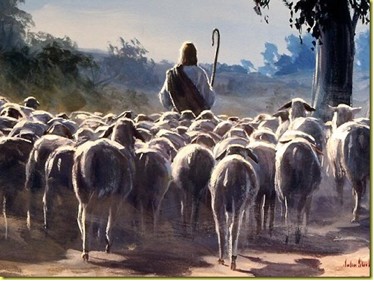
My sheep hear my voice, and I know them, and they follow me. That’s a really important line from Jesus. We hear Jesus’ voice as His sheep, and He knows us, and we follow him. The thing is, how can you follow the shepherd, if you don’t hear his voice? I am looking at this literal model, not just from the bible. But in real life, real sheep has to hear the shepherd calling them, before they act. That’s the truth. Sheep don’t respond to voices that are different from their master or shepherd. They hear the voice they recognize and respond, walking towards him. That’s the real life, also spiritually. We recognize the voice of the Lord in our lives. So I believe there is room for actual ‘hearing’ voice from the Lord, and that will be a prompting of the Holy Spirit.
Acts 16: 9 And a vision appeared to Paul in the night: a man of Macedonia was standing there, urging him and saying, “Come over to Macedonia and help us.” 10 And when Paul had seen the vision, immediately we sought to go on into Macedonia, concluding that God had called us to preach the gospel to them.
This is a clear incidence of the Holy Spirit speaking to Paul in a vision. This is a major direction of the Lord to Paul in his global church planting preaching the gospel and the Kingdom of God. It’s not like a petty stuff we think in our lives expecting God to talk to us. We need to have deep reverence to God in our attitude.
Romans 8 14 For all who are led by the Spirit of God are sons of God.
Mazmur 121 3 Dia tidak akan membiarkan kakimu tergelincir – dia yang mengawasi kamu tidak akan tidur; 4 Sesungguhnya, dia yang mengawasi Israel tidak akan tidur atau tidur. 5 Tuhan mengawasi kamu- Tuhan adalah tempat teduhmu di sebelah kananmu; 6 Matahari tidak akan membahayakan kamu pada siang hari, dan juga bulan pada waktu malam. 7 TUHAN akan menyelamatkan kamu dari segala bahaya – Dia akan mengawasi hidupmu; 8 TUHAN akan memerhatikan kedatanganmu dan pergi sekarang dan selama-lamanya.
Tuhan mengawasi kamu. Sangat betul. Kerana Tuhan itu hebat, dia sangat setia, cintanya yang teguh melampaui awan. Mazmur 108:4 Kerana kasihmu yang mantap itu besar di atas langit; kesetiaan anda sampai ke awan.
Bagaimana rupanya?
Tetapi seperti apa itu? Ketika Tuhan mengawasi Anda, itu bukan hanya untuk perlindungan, tetapi juga untuk pengudusan, yang bermaksud perubahan dalam hidup kita menjadi lebih saleh dan lebih seperti Kristus.
Ketika seseorang mengalami kesusahan, dia didorong untuk mencari Tuhan, dan melalui masa-masa itu, terutama jika orang itu menjawab untuk berpuasa dan berdoa, Tuhan memperhatikan bahawa, ada ketenangan yang menimpa orang itu, berbicara dari pengalaman. Tetapi lebih dari itu, kerana ketika kita berseru kepada Tuhan, merendahkan diri kita, dengan doa dan puasa, kerana kita tahu tidak ada jalan keluar, saya merasakan ego saya mulai menguap. Apabila ego menguap, saya merasakan suasana peribadi yang sangat berbeza, dalam keadaan yang lebih rendah hati. Itulah sebabnya pengalaman biara sangat berharga, untuk kita melarikan diri dan hanya fokus pada bermeditasi mazmur dan kitab suci, serta doa dan ibadah. Ini adalah pengalaman rohani yang menyegarkan, dan saya telah melakukannya beberapa kali. Ia adalah sikap yang indah untuk berada di hadapan Tuhan. Mazmur mengatakan bahawa Tuhan ada bersama orang-orang yang lemah lembut. Mazmur 57 17 Pengorbanan Tuhan adalah semangat yang hancur; hati yang patah dan menyesal, ya Tuhan, kamu tidak akan memandang rendah.
Mereka yang percaya diri, sombong atau tidak peduli, penuh dengan diri mereka akan berbohong rendah, tetapi mereka yang rendah hati akan diangkat. Mat 23 12 “Bagi mereka yang memuliakan diri mereka akan rendah hati, dan mereka yang merendahkan diri akan ditinggikan.”
Masalahnya ialah Tuhan sedang melakukan sesuatu yang indah ketika kita melalui masa-masa sukar, atau disiplin. Saya melihat bahawa sebagai satu batu dua burung. Yang pertama, tentu saja kita berseru, meminta pertolongan Tuhan, seperti yang selalu dilakukan Daud dalam Mazmur, dan yang lain sebenarnya melalui proses itu, ia membawa transformasi ke dalam hati kita. Kita menjadi kurang gelisah, lebih tenang, dan lebih pada belas kasihan Tuhan kita. Ini adalah ketika kita memusatkan perhatian pada rahmat, kebaikan, belas kasihan dan kedaulatan Tuhan dalam kerendahan hati seperti doa dan puasa. Sama seperti di Israel ketika mereka berdosa terhadap Tuhan, dan Tuhan menghakimi mereka dengan membiarkan mereka kalah, mereka akan mengenakan kain kabung dan abu di kepala mereka dalam berkabung dan menangis kepada Tuhan. Ia sama. Perkara yang indah adalah “Tuhan mengawasi kita”. Betapa indah dan menghiburkan apabila anda mengetahui bahawa Tuhan mengawasi anda semasa naik turun. Yang paling buruk ialah Tuhan itu menyedihkan, tidak peduli kita naik atau turun. Anda tidak mahu itu. Yang paling penting ialah anda tahu Tuhan Tuhan kita mengasihi kita dan mengawasi kita, walaupun di luar dia kelihatan pendiam. Dan itu kerana, menurut saya, dia suci, dan mulia, dan tidak dapat dimengerti oleh pemahaman dan persepsi daging manusia, kita memerlukan Roh Kudus untuk menyatakan hatinya kepada kita. Itulah sebabnya kita tidak dapat merasakannya setengah masa atau lebih, jujur, kerana Tuhan kita ilahi dan transenden, dan kita hanyalah manusia yang diselamatkan oleh rahmat Tuhan yang mutlak, rahmat-Nya, seratus persen, tidak ada yang telah kita lakukan .
Jadi tidak kira berapa lama, akan ada titik balik, akan ada cahaya di hujung terowong. Tuhan tidak akan meninggalkan kita sendiri, tetapi akan selalu bersama kita ketika seorang gembala mengawasi domba-dombanya. Masalahnya adalah persepsi kita tentang dia, hanya karena kita tidak melihat kehadirannya bersama kita, bukan berarti dia tidak mengawasi kita oleh Roh-Nya. Dia selalu ada. Roh Tuhan tinggal di dalam kita sekarang. Kita bahkan dapat bersedih dengan Roh-Nya ketika kita melakukan dosa. Apalagi dia memerhatikan kita. Persepsi kita tentang dia akan semakin diperkuat dengan doa dan puasa kita dan merendahkan diri kita secara berkala. Itu ditambah dengan meditasi harian firman Tuhan adalah satu penurunan. Tuhan mengasihi umat-Nya datang kepadanya dan berseru kepadanya, dan berkomunikasi dengannya. Dia benar-benar relasional, tidak legalistik.
Selalunya daripada itu, Tuhan tidak dapat mengubah hati kita dengan spesifik tertentu, walaupun kita mungkin merenungkan firman Tuhan setiap hari, satu-satunya cara untuk dia melakukan itu adalah melalui masa-masa pencobaan dan yang memaksa kita untuk mencarinya. Dia mendapat perhatian kita, ketika kita tidak punya cara untuk berpaling. Tetapi yang menakutkan adalah ketika kita begitu tidak peka terhadapnya, ketika dia memanggil kita untuk menyisihkan waktu untuk mencarinya, memerlukan situasi yang lebih buruk untuk menarik perhatian kita. Itu menunjukkan betapa lemahnya kita, sehingga terbiasa dengan dunia saat ini, kemalasan kita, kurangnya motivasi, dan perniagaan, semuanya menjadi halangan terhadap apa yang Tuhan ingin lakukan dalam diri kita.
Mazmur 105
Oh bersyukurlah kepada Tuhan; memanggil namanya; beritahu perbuatannya di kalangan masyarakat! 2 Nyanyikan kepadanya, nyanyikan pujian kepadanya; menceritakan semua karya luar biasa! 3 Kemuliaan dalam nama suci-Nya; biarkan hati mereka yang mencari Tuhan bersukacita! 4 Carilah Tuhan dan kekuatannya; cari kehadirannya secara berterusan! 5 Ingatlah karya-karya luar biasa yang telah dilakukannya, mukjizat-mukjizatnya, dan penghakiman yang diucapkannya, 6 Wahai keturunan Abraham, hambanya, anak-anak Yakub, yang dipilihnya!
Bersyukur kepada Tuhan, berseru kepada Tuhan! Maklumkan perbuatannya! Nyanyikan kepadanya, kemuliaan atas nama kudusnya; biarkan hati mereka yang mencari Tuhan bersukacita! Carilah dia dan kehadirannya secara berterusan! Ingatlah karya luar biasa yang dilakukannya! Saya suka semua ini!
Tuhan adalah pahala bagi mereka yang mencarinya
Ibrani 11 6 Dan tanpa iman tidak mungkin menyenangkan dia, kerana siapa yang akan mendekat kepada Tuhan harus percaya bahawa dia ada dan bahawa dia memberi ganjaran kepada mereka yang mencarinya.
Anda mesti mempunyai rasa kebaikan ilahi untuk mencari Tuhan. Tuhan membalas kita yang mencarinya. Calvin dengan tepat menulis, “… tidak ada yang akan berada dalam keadaan hati yang sesuai untuk mencari Tuhan kecuali rasa kebaikan ilahi sangat dirasakan, untuk mencari keselamatan darinya.”[1]
Calvin menulis dengan indah mengenai fakta bahawa jika anda tidak memiliki rasa kebaikan Tuhan, jika anda tidak merasakannya, tidak akan ada keadaan hati untuk mencarinya. Itulah sebabnya Ibrani 6 adalah mengenai iman dan mengatakan bahawa tanpa iman tidak mungkin mencari dia. Kita mesti mencarinya kerana kita percaya Dia baik, Dia adalah sumber semua kebaikan yang dapat kita temukan dalam kehidupan ini, kebaikan yang sebenarnya. Bukan sebagai pendapat, tetapi kepercayaan dan keyakinan yang mendalam. Banyak orang percaya bahawa Tuhan adalah sumber kebaikan, tetapi mereka tidak berpaling kepadanya, untuk mencarinya. Tetapi pastikan anda mengetahui bahawa bukan karya pahala kita yang pantas kita selayaknya mengawasi kita dari Tuhan, tetapi kepercayaannya kepada kita yang menjembatani kita dan Tuhan.
Shalom, dan bagi Allah kemuliaan. Amin.
[1] Calvin, J., & Owen, J. (2010). Ulasan mengenai Surat Paulus Rasul kepada orang Ibrani (hlm. 271). Bellingham, WA: Perisian Bible Logos.